Grade 2 Math Practice for Arkansas Second Graders
Grade 2 Math Practice for Arkansas Second Graders: this Effortless Math guide explains the topic in plain language, shows how it works through solved examples, and gives you free practice to try immediately, so the idea sticks instead of staying abstract.
Free printable worksheets that turn everyday math moments into real understanding.
There’s a particular kind of quiet that settles over a second grader working a word problem. They read it once, frown, read it again, and then their face changes, “Oh, I need to add!” Watching a child decide what a problem is actually asking is one of the best parts of second grade math. It’s the year reasoning starts to show up.
If you’re an Arkansas parent or teacher hoping to give a second grader steady, friendly math practice, these worksheets are here to help. They’re free and printable, every one a PDF with its own answer key built right in. No account, no email, no signup wall. You find the page you want, print it, and you’re ready.
Second grade asks a lot of young mathematicians, in a good way. Kids work with numbers up to 1,000, get fluent with addition and subtraction, tell time, count money, measure things, read graphs, and discover patterns in rows and columns. None of it is too much when it comes one piece at a time.
These worksheets are aligned with the Grade 2 math standards Arkansas has adopted, and they’re organized so you can move through skill by skill at whatever speed works for your child.
A Look at What’s Included
The collection is divided into eight chapters. Each chapter takes on a major part of second grade math, and the skills within build from easier to harder. The chapters stand alone, though, so you can begin wherever your child needs the most support.
Every worksheet starts with a Key Ideas box, a short, plain-language explanation of the skill, followed by worked examples and then practice problems. The answer key is at the bottom of each page. Here’s the full lineup.
Place Value and Number Sense
- Understanding Place Value, Learning that a digit’s position tells you its value.
- Reading and Writing Numbers to 1,000, Going back and forth between words and digits confidently.
- Expanded Form, Stretching a number into hundreds plus tens plus ones.
- Skip Counting, Counting by 5s, 10s, and 100s, a pattern that helps for years.
- Comparing and Ordering 3-Digit Numbers, Telling which number is larger and ordering a set.
Addition and Subtraction
- Addition Facts Within 20, Building fast, dependable recall of the basic sums.
- Subtraction Facts Within 20, Practicing the matching take-away facts until they’re quick.
- Adding Within 100, Two-digit addition, regrouping and all.
- Subtracting Within 100, Two-digit subtraction with borrowing, laid out clearly.
- Adding Within 1,000, Taking addition into three-digit numbers.
- Subtracting Within 1,000, Three-digit subtraction with careful, steady support.
- Mentally Adding and Subtracting 10 and 100, Adjusting numbers by tens and hundreds in your head.
Word Problems and Equations
- One-Step Word Problems, Solving a short story problem with one operation.
- Two-Step Word Problems, Two-part problems that reward a moment of planning.
- Finding the Unknown Number, Working out the missing value in an equation.
Odd, Even, and Arrays
- Odd and Even Numbers, Sorting numbers by whether they pair up with none left over.
- Even Numbers as Equal Addends, Showing an even number as two equal parts added together.
- Rectangular Arrays, Lining objects up in rows and columns to count them faster.
- Repeated Addition with Arrays, Adding equal rows again and again, the bridge to multiplication.
Measurement and Length
- Measuring Length with Tools, Using rulers and measuring tapes the right way.
- Estimating Lengths, Guessing a length first, then measuring to check the guess.
- Comparing Lengths, Working out how much longer one object is than another.
- Adding and Subtracting Lengths, Solving word problems by combining or comparing measurements.
- Length on a Number Line, Picturing length as a move along a number line.
Time and Money
- Telling Time to the Nearest Five Minutes, Reading clocks down to the five-minute mark.
- A.M. And P.M., Knowing whether a time means morning or evening.
- Counting Coins, Adding pennies, nickels, dimes, and quarters into a total.
- Money Word Problems, Figuring out totals and change in everyday shopping.
Data and Graphs
- Line Plots, Marking measurements above a number line and reading them.
- Picture Graphs, Reading graphs where each picture stands for a set number.
- Bar Graphs, Comparing groups with bars and answering questions about the data.
Geometry
- Recognizing and Drawing Shapes, Identifying and sketching shapes by their sides and corners.
- Partitioning Rectangles into Rows and Columns, Cutting a rectangle into equal squares and counting them.
- Equal Shares: Halves, Thirds, and Fourths, Dividing shapes into fair pieces, a gentle start on fractions.
How to Use These Worksheets the Smart Way
A pile of worksheets isn’t a plan. A few good habits turn these pages into real learning.
Do one worksheet at a time. Second graders focus best in short stretches, and a single page worked carefully will teach more than a thick stack rushed through. Open each session by reading the Key Ideas box together, out loud, even on a skill your child thinks they’ve got. Then walk through the worked examples together, so the first practice problem isn’t the first time they meet the method.
When the page is done, look at the answer key together. A wrong answer isn’t a failure, it’s information. Ask your child to talk through how they solved it, and the misunderstanding usually shows itself, ready to be cleared up.
One more habit worth keeping: revisit. If comparing 3-digit numbers was rocky this week, hand over a fresh worksheet on it the following week. That little gap between practice sessions is part of what makes the skill stay.
A Few Honest Words About the ATLAS Test
Arkansas uses ATLAS, the Arkansas Teaching and Learning Assessment System, to measure student progress. And here’s the reassuring truth: ATLAS math testing starts in third grade. Your second grader will not take a state math assessment this year.
That makes second grade the foundation year, and a calm one. There’s no test on the horizon, only time to build the skills the third grade assessment will lean on later. Place value, addition and subtraction fluency, careful word-problem reading, measurement, and reading graphs, those are exactly the things ATLAS will eventually check. A second grader who finishes the year comfortable with this material steps into third grade prepared, not panicked.
So treat this year as building, not testing. Relaxed, steady practice now is what makes ATLAS feel like no big deal when it arrives.
Frequently Asked Questions
Are these worksheets free, with no strings attached?
Yes. Each one is a free printable PDF. No payment, no subscription, and no signup. Print what helps and leave the rest.
Do we have to follow the chapter order?
No. The eight chapters are arranged logically, but each one works on its own. Start with whatever your child is learning or struggling with right now.
How often should we practice?
A few short sessions each week is a good rhythm. Regular and brief beats long and occasional. One focused page is a fine day’s work.
What should I do when a problem stumps my child?
Pause and reread the Key Ideas box and examples together. If it’s still hard, set the page aside and try again another day with fresh eyes. Frustration teaches very little.
Do these line up with what Arkansas schools teach?
Yes. The topics follow the Grade 2 math standards Arkansas has adopted, so they support the work your child is doing in class.
Onward, One Worksheet at a Time
Your Arkansas second grader is building something real this year, the number sense and confidence that everything after second grade depends on. These free worksheets are here to make that work a little smoother and a lot friendlier. Pick a chapter that fits your child today, print a page, and sit down together. Steady practice, an open answer key, and a bit of encouragement, that’s all it takes.
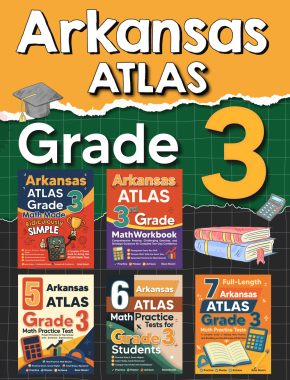
Ready for Grade 3 Math? The Arkansas Grade 3 Math Bundle
Second grade is the build-up year, and when your child is ready for what comes next, this bundle makes the jump to Grade 3 math feel easy. It packs full practice-test books, complete answer keys, and step-by-step explanations for the Grade 3 math skills just ahead.
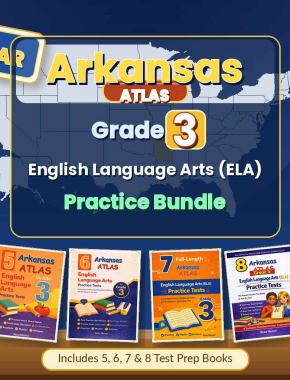
Getting Ready for Grade 3 English, Too? The Arkansas Grade 3 English Bundle
Reading and writing grow right alongside math. If your second grader could use a head start in English as well, this Arkansas Grade 3 English bundle covers it — practice tests, answer keys, and friendly explanations in one download.

Related to This Article
More math articles
- Complete Guide to Biconditionals: Definitions and Usage
- How to Find Fractions of Time Units
- The Best Grade 3 Math Book for Wyoming Students
- SSAT Upper-Level Math Worksheets: FREE & Printable
- The Best Grade 3 Math Book for Arkansas Students
- TSI Math FREE Sample Practice Questions
- The Expansion of Voting Rights in the United States
- Economic Causes of War and Industrial Change
- The income effect follows real purchasing power
- FREE CLEP College Algebra Practice Test









What people say about "Arkansas Grade 2 Math Worksheets: Free PDFs"?
No one replied yet.