Rivets, Nails, and Wood Joints
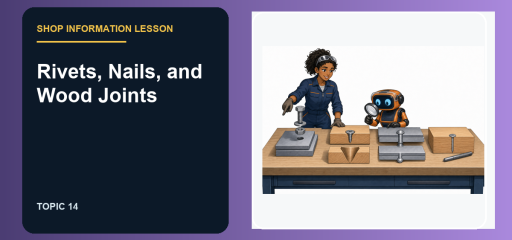
The phrase one-sided access is a strong clue. A blind rivet can fasten material when you cannot reach both sides in the usual way. In wood, the shape of the joint and the fit of its surfaces matter before adhesive or fasteners are added.
Treat one-sided access, a small finished nail head, overlapping parts, or a named wood-joint shape as the lead evidence. It points toward the setup that will let the operation happen with control rather than guesswork.
What does rivets, nails, and wood joints mean?
Permanent joining choices depend on material, access, and the finished result. A nail is driven into wood, a rivet fastens parts without threaded removal, and a wood joint gains strength when its surfaces fit correctly and the joint shape matches the load and purpose.
Which clues should you notice first?
Before choosing an answer, translate the picture into a job statement. one-sided access, a small finished nail head, overlapping parts, or a named wood-joint shape should make you think about the action, the workpiece, and the amount of control required.
- Working clue: one-sided access, a small finished nail head, overlapping parts, or a named wood-joint shape
- Best next move: choose the joining method that fits the material and access condition
- Why it matters: the right setup protects the work, the tool, and the person using it.
How do the close choices differ?
| Tool or idea | What it does |
|---|---|
| Blind rivet | can be installed from the accessible side |
| Bolt and nut | normally need access to both sides |
Close choices often reward a vague answer such as “either one could work.” Compare Blind rivet and Bolt and nut by the result each one produces, then choose the one the task actually requires.
Put the clue into a shop decision
Imagine that a question or illustration gives you one-sided access, a small finished nail head, overlapping parts, or a named wood-joint shape. Before you look for a familiar name, say what the work actually needs: choose the joining method that fits the material and access condition. Then test each choice against the physical result. A choice that cannot produce the needed result is out, even if it belongs to the same general family. This is also where the difference between Blind rivet and Bolt and nut becomes useful. One clear reason is enough to reject a close distractor.
Watch the skill in context
A Step-By-Step Guide on How to Use POP Rivets | Fasteners 101 by Albany County Fasteners is a useful visual companion to this lesson. While you watch, pause when the working end contacts the material and name the action before the presenter explains it.
Use this four-step routine
- Identify material and access.
- Decide whether the joint must come apart.
- Match the fastener or joint shape to the load.
- Check the fit before applying force or adhesive.
Try the decision, then check your reasoning
- You see one-sided access, a small finished nail head, overlapping parts, or a named wood-joint shape. What detail should lead your decision? The condition that changes the tool choice or safe setup is the first clue.
- What is the best response when the task calls for one-sided access, a small finished nail head, overlapping parts, or a named wood-joint shape? Choose the joining method that fits the material and access condition.
- How is Blind rivet different from Bolt and nut? Blind rivet can be installed from the accessible side; Bolt and nut normally need access to both sides.
- What should you do if the tool, setup, or workpiece does not match the job? Pause and correct the mismatch before applying more force.
Keep building your shop vocabulary
Use the ASVAB topic archive to move through the lessons in a practical order. A productive study habit is to describe the clue aloud before checking the answer. That turns recognition into a repeatable decision.
Related lessons:

Related to This Article
More math articles
- The Ultimate 6th Grade MCA Math Course (+FREE Worksheets)
- South Carolina SC READY Grade 7 Math Worksheets: 95 Free Printable PDFs by Skill
- Judicial review
- Free Grade 7 English Worksheets for Idaho Students
- The Ultimate 7th Grade NDSA Math Course (+FREE Worksheets)
- Algebra 1 Worksheets: FREE & Printable
- Estimate Differences for 4th Grade
- How to Understand the Key Properties of Trapezoids
- The Best Grade 8 ELA Practice Tests for Alabama Students
- SAT Math Vs. High School Math



















What people say about "Rivets, Nails, and Wood Joints"?
No one replied yet.