What Is the Hardest Math on the GED Test?

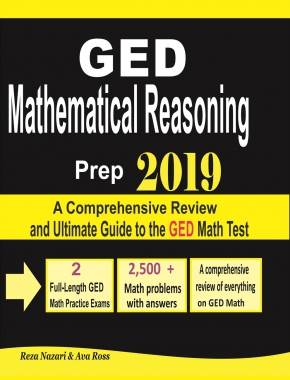
If you’re preparing for the GED (General Educational Development) math test, you may wonder which topics are the most challenging. The GED Mathematical Reasoning test covers a wide range of concepts, but certain areas consistently give test-takers the most trouble. Understanding what’s hardest can help you focus your study time effectively.
The Most Challenging GED Math Topics
1. Algebra and Algebraic Reasoning
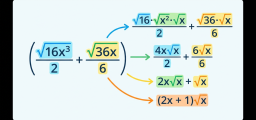
Many test-takers find algebra the hardest. This includes solving equations, inequalities, working with expressions, and understanding functions. Word problems that require setting up and solving equations are especially tricky. Practice with our GED math worksheets to build confidence.
2. Quadratic Equations and Functions
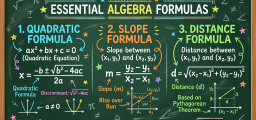
Quadratics—equations with x²—require factoring, the quadratic formula, and understanding parabolas. These concepts build on algebra basics, so a weak foundation makes them even harder.
3. Geometry and Measurement
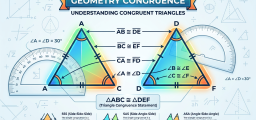
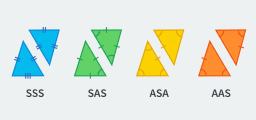
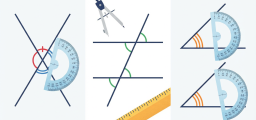
Area, perimeter, volume, and the Pythagorean theorem appear frequently. Applying formulas to word problems and visualizing shapes can be difficult. Our math resources include geometry practice for the GED.
4. Data Analysis and Statistics
Interpreting graphs, finding mean/median/mode, and understanding probability require careful reading and reasoning. Misreading a graph or mixing up statistical measures is a common mistake.
5. Multi-Step Word Problems
Perhaps the biggest challenge isn’t a single topic but word problems that combine multiple skills. You must read carefully, identify what’s being asked, choose the right approach, and execute several steps correctly.
Why These Topics Are Hard
Many adult learners have gaps from earlier schooling. Algebra and geometry build on arithmetic and fractions—if those foundations are shaky, advanced topics feel impossible. The good news: with focused practice, these skills can be rebuilt. Check out our GED math books for structured preparation.
How to Tackle the Hardest Parts
- Start with basics: Strengthen fractions, decimals, and percent before algebra.
- Practice word problems daily: They’re the most common format on the test.
- Use the calculator wisely: The GED provides an on-screen calculator—know when and how to use it.
- Take full-length practice tests: Build stamina and identify weak areas.
Is the GED math test mostly algebra?
Roughly 45% is algebraic reasoning, 55% quantitative problem-solving (which includes number operations, geometry, and data). Both areas matter.
Can I pass the GED math without knowing quadratics?
You can pass, but quadratics do appear. A basic understanding improves your score and confidence.

Related to This Article
More math articles
- CBEST Test Facts and FAQs
- How to Use Area Models to Subtract Fractions with Like Denominators
- Reciprocals
- Top 10 6th Grade FSA Math Practice Questions
- Riemann Sums Made Easy: Step-by-Step Tutorial
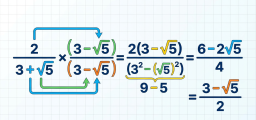
- How to Rationalize Radical Expressions? (+FREE Worksheet!)
- The Ultimate 7th Grade NHSAS Math Course (+FREE Worksheets)
- Number Properties Puzzle – Challenge 5
- Bеѕt Digital Pеn Tablet fоr Onlinе Mаth Teaching in 2026
- What is the Median of a Triangle?

What people say about "What Is the Hardest Math on the GED Test? - Effortless Math: We Help Students Learn to LOVE Mathematics"?
No one replied yet.