Praxis 8003 vs 5003: Check the Code and Reuse the Right Math Topics (2027 Prep)

Your binder says 5003. Registration says 8003. That mismatch can stop you cold. Much of your math practice may still help, but the code, test blueprint, and licensing route need a fresh check before you reuse those notes. Write down your exact license. Add your planned test date. Then sort the old material by skill.
What changed between 5003 and 8003?
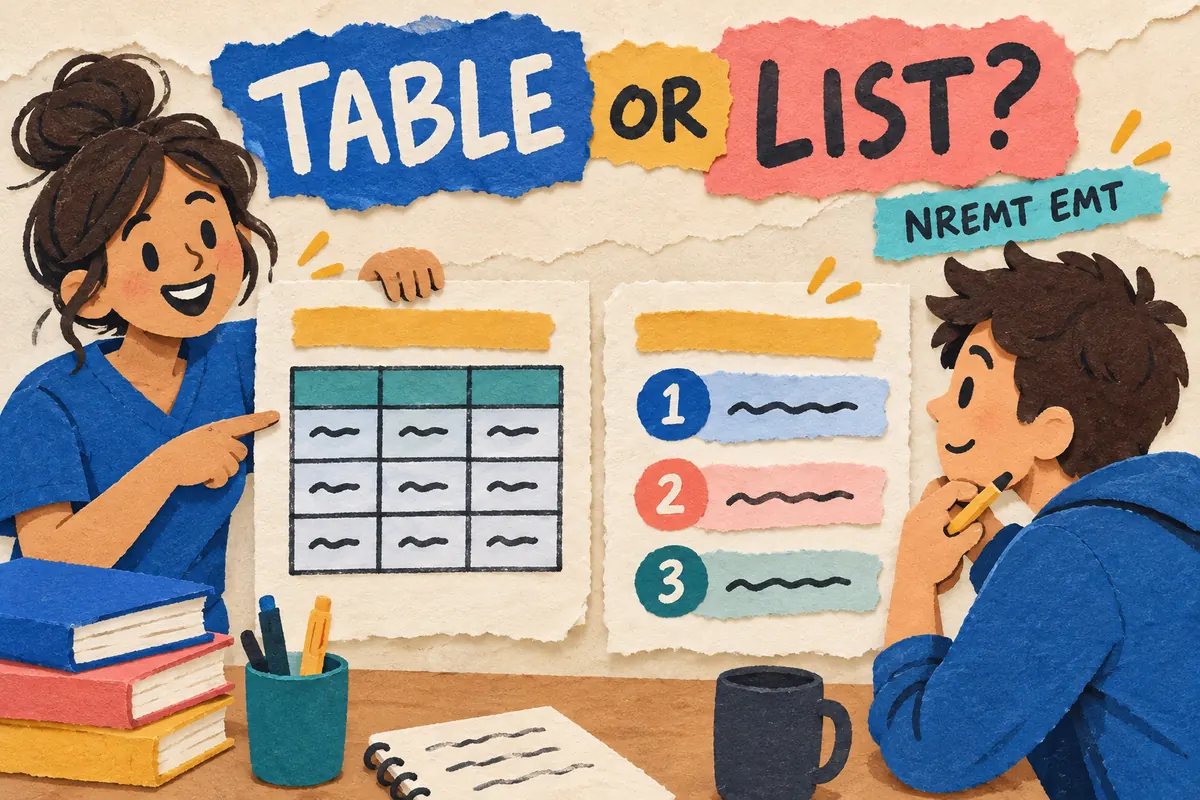
| Detail | Praxis 5003 | Praxis 8003 |
|---|---|---|
| Test family | Mathematics subtest in Elementary Education: Multiple Subjects (5001) | Standalone Elementary Education Fundamentals: Mathematics test |
| Questions and time | 50 questions, 65 minutes | 68 questions, 100 minutes |
| Numbers and Operations | About 40%, 20 questions | About 42%, 28 questions |
| Algebraic Thinking | About 30%, 15 questions | About 29%, 20 questions |
| Third category | Geometry and Measurement, Data, Statistics, and Probability (about 30%, 15 questions) | Geometry, Measurement, and Data (about 29%, 20 questions) |
| Question formats | Selected-response and numeric-entry | Selected-response and numeric-entry |
ETS’s test pages and comparison chart supply these counts. The percentages are estimates. ETS says about 10 to 15 percent of 8003 questions ask candidates to apply mathematics content and processes within a teaching scenario or an instructional task. Both codes include the on-screen scientific calculator. Check it before test day. For 8003, ETS lists Praxis Steps in three areas: Numbers and Operations (8301), Algebraic Thinking (8302), and Geometry, Measurement, and Data (8303). Do not plan around an individual Step until you know your state accepts modular testing for your exact license and date.
Treat the category names as a broad map. They do not match every question or subskill one to one. Here’s the easy trap. The 5003 label names statistics and probability. The 8003 label doesn’t. That label alone doesn’t tell you which skills remain. Check your code’s current outline. Read its study companion too.
Step one: confirm the code for your route
Write down three details first: your state, the exact elementary license or endorsement, and your planned test date. Open ETS’s state finder. Follow your exact certification route. If two codes appear, pause there. Ask your educator preparation program. Your licensing office can confirm the code for that route. The catalog may list codes your license doesn’t use.
This matters because a mistaken registration can cost time and a test fee. ETS’s 8003 page tells candidates to confirm state acceptance. It lists 68 questions and 100 minutes. It also confirms the on-screen scientific calculator and selected-response and numeric-entry formats. ETS’s 5003 page lists 50 questions and 65 minutes. Use those pages for test logistics, then follow your state’s requirement for the final code.
A keep, rework, replace audit for old 5003 notes
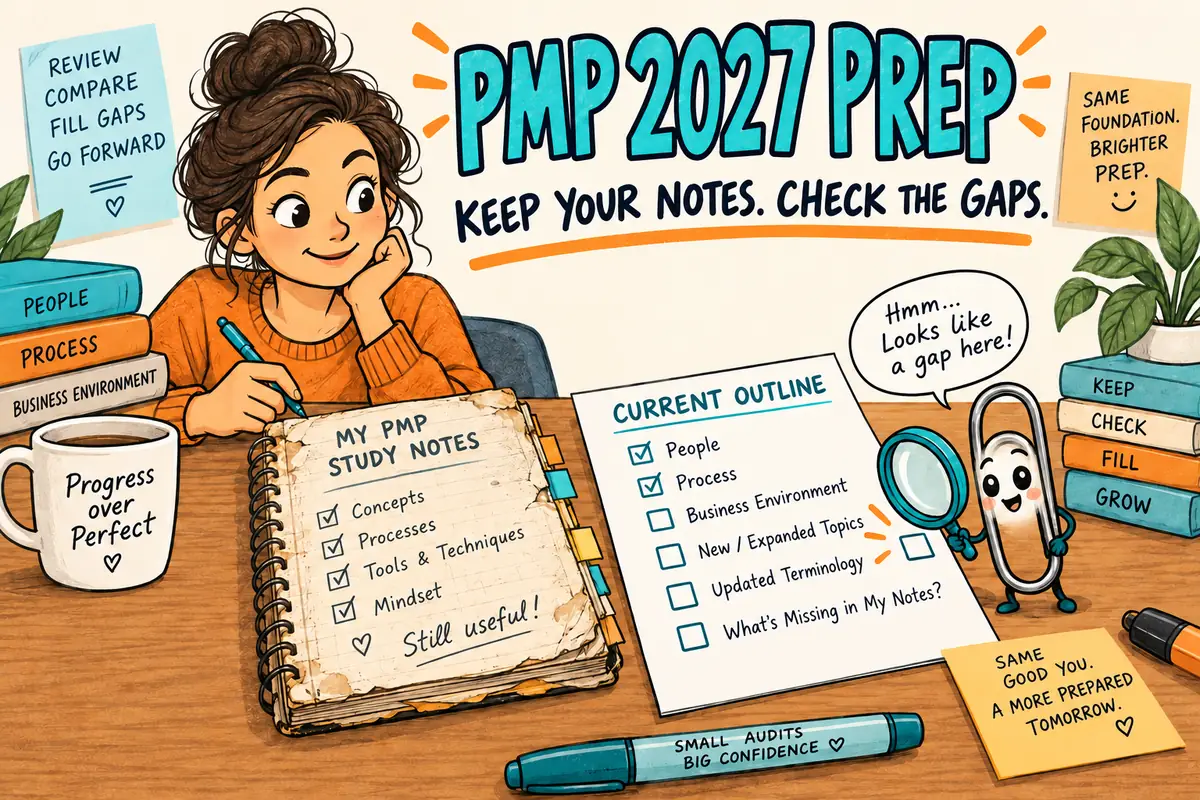
Open your old binder beside the current outline. Name each chapter’s specific skill. Then mark it with one of these actions:
- Keep the explanation and practice when the skill still matches the current official outline. Place value, operations, algebraic relationships, measurement, and data reasoning are broad areas shared by the two blueprints. Keep your clean worked examples and error notes.
- Rework a skill when you know the calculation but have not practiced explaining the idea or reading a teaching task. On 8003, some items ask you to apply math in a classroom or instructional situation. Add a short explanation of why the method works, and practice identifying the learner’s reasoning before choosing a response.
- Replace an old timing plan, domain-weight estimate, or test simulation when it was built for 5003. The 8003 test has more questions and more total time. If your state uses Praxis Steps, check the official category and scheduling details for your own route.
Try the rework step on one old example. Your note says 0.4 + 0.08 = 0.48. Keep that sum. Now ask what a learner might be thinking if they write 0.12. Maybe they added 4 and 8 first. They missed the tenths and hundredths. A place-value chart makes the units visible. Four tenths is 40 hundredths. Add 8 hundredths and you get 48 hundredths. The answer stays the same. Now your explanation names the likely error. This is a study example. It doesn’t predict a live question.
A short crosswalk you can use today
- Copy the three domain names from the official page for your test code.
- Move each old chapter under the closest current domain, then flag any chapter whose fit is uncertain.
- Keep correct explanations and examples for skills that remain in scope.
- Rework a sample from each domain as an explanation, representation, or teaching-task prompt.
- Retire the 5003 timing notes if you are taking 8003. Use the timing and section rules on your current ETS page.
- Before booking, check the state requirement again. Record the page date beside your study plan.
If the official outline does not settle whether an old chapter belongs in your preparation, leave it flagged and ask your program. Guessing from a changed category name can create a gap in either direction. Your current test code and pathway decide which materials should lead your plan.
For practice organized around elementary math skills, see the Praxis Elementary Mathematics study hub. Use practice results beside the official ETS requirements. A practice percentage is not an official Praxis score.
Official sources

Related to This Article
More math articles
- Common Word Roots
- Free Grade 5 English Worksheets for Hawaii Students
- Top Proven Strategies To Increase Your SAT Math Score
- Full-Length GRE Math Practice Test
- The Best Grade 7 Math Book for Mississippi Students
- Prepositions, Conjunctions, and Interjections
- Movement is not shift
- The Art of Partitioning a Line Segment!
- What Kind of Math Is on the ACT Test?
- How to Translate Phrases into an Algebraic Statement? (+FREE Worksheet!)













What people say about "Praxis 8003 vs 5003: Check the Code and Reuse the Right Math Topics (2027 Prep) - Effortless Math"?
No one replied yet.