How to Buy the Right Laptop: A Step-by-Step Guide
Buying a laptop is an exercise in confusion. Even if you know what everything means, and know exactly what you want, finding it can be difficult. Heck, just working through the manufacturers’ websites to try buying the model you want is frustrating.
We hope this guide will help you work through the morass of modern laptops. Below is a section on every major component you’ll want to know about when you browse for your next PC. We break down the jargon and try to explain things on a practical level.
First, Pick Your Operating System.
Before you begin to look at laptops, you must figure out which operating system (OS) works best for you.
Thinking through what software you need to run and on which operating systems that software runs will help you determine the hardware you need.
There are four major computer operating systems. Each has its strengths and weaknesses. Here’s an overview of each:
Windows: This stalwart OS doesn’t get much press anymore, but it gets the job done. It’s the best choice if you need Microsoft apps like MS Office, Access, or Outlook. There are also more Windows laptops to choose from than any other OS.
macOS: Apple’s macOS is a bit more beginner-friendly than Windows, but it’s tightly coupled with the company’s hardware. It probably isn’t your first choice if you don’t own an iPhone or iPad, and your options are limited to MacBooks.
Chrome OS: If you can do most of your laptop tasks in a web browser, Chrome OS is a good choice. Chrome laptops (called Chromebooks) are also among the cheapest (and least powerful) you’ll find, so the OS is also worth considering if you’re on a tight budget.
Linux: If you don’t need MS Office and don’t mind a learning curve, you can install Linux on just about any piece of laptop hardware ever created.
The catch is that popular apps like MS Office and Adobe’s Creative Suite won’t run. However, there are free, open-source alternatives like LibreOffice, Darktable (Adobe Lightroom replacement), and GIMP (Adobe Photoshop replacement).
There are essentially two companies that make laptop processors: Intel and AMD
Intel Processors:
Intel’s main processors are the Core i3, Core i5, Core i7, and Core i9. The Core i3 is the least powerful, the Core i9 is the most powerful. We usually drop the “Core” from the name because it gets repetitive.
AMD Processors:
AMD’s chip naming is just as difficult to decipher as Intel’s. In the name AMD Ryzen 5 3600X, the “3” is the generation (how old it is; higher is better), and the “6” is how powerful it is. A “6” would make this example a medium-powered chip, whereas a 3 or 4 would be weaker (slower).
The next two numbers don’t have much impact on anything. The “X” at the end indicates high performance. Other letter designations include U for ultra-low power.
Check for Ports
While the CPU, RAM, and hard drive will have the biggest impact on performance, the amount and types of ports on your laptop are important. Ports are the various ways of plugging things into your laptop, like USB devices or recharging them.
You will want at least one 1 USB-C, at least one 1 USB-A, and a microphone/headset jack. Look into USB-C charging, and an SD reader too.
5 Best Laptops on Amazon
| RANKING | #1 | #2 | #3 | #4 | #5 |
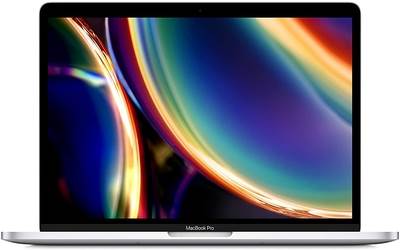 | 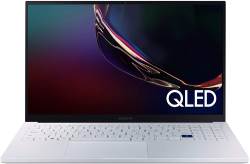 | 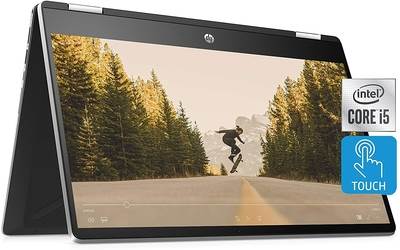 | 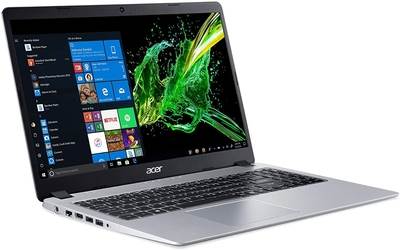 |  | |
| Apple MacBook Pro | Samsung Galaxy Book | HP Pavilion×360 | Acer Aspire 5 | Microsoft Surface Laptop 3 | |
| Price | CHECK PRICE | CHECK PRICE | CHECK PRICE | CHECK PRICE | CHECK PRICE |

Related to This Article
More math articles
- Full-Length ALEKS Math Practice Test-Answers and Explanations
- Tennessee TCAP Grade 6 Math Free Worksheets: Free Printable TCAP-Ready Practice with Answers
- Multiplying Decimals for 5th Grade: Rules and Examples
- 8th Grade SBAC Math Practice Test Questions
- The Best Grade 4 Math Book for Louisiana Students
- How to Define Sine, Cosine, and Tangent
- Intelligent Math Puzzle – Challenge 91
- The Ultimate PSAT 8/9 Math Formula Cheat Sheet
- Full-Length AFOQT Math Practice Test-Answers and Explanations
- 8th Grade MAP Math Practice Test Questions



What people say about "How to Buy the Right Laptop: A Step-by-Step Guide"?
No one replied yet.