Chance is not coincidence, but the mathematics of fate

What do scientists think about the laws of the universe and their influence on luck in everyday life?
Modern scientists and mathematicians have long studied gambling and the related problems of chance and probability. Many have focused on statistical, mathematical, and computer modeling methods to understand gambling behavior and develop optimal strategies.
Their conclusions may make you reconsider your understanding of concepts such as fate, providence, and coincidence. Life, it seems, is an endless series of chances — opportunities we often miss simply because we do not recognize their significance.
The mathematics of fate
It is noteworthy that none of these eminent scientists considered luck to be a completely “cosmic” phenomenon beyond human influence. On the contrary, their work suggests that anyone can take steps to increase their chances of success and fortune.
“Everyone has a chance” — Edward O. Thorp
American mathematics professor and author Edward Thorp is best known for his groundbreaking book Beat the Dealer (1962), which introduced a mathematically sound card-counting system to improve odds in blackjack. His research laid the foundation for many modern casino gaming strategies, and serious players often regard Thorp’s work as a kind of blackjack bible.
“One of the most attractive aspects of gambling is that, at least in the short term, everyone has a chance,” Thorp wrote in Beat the Dealer. According to him, much like the legendary, wealthy, and powerful King Cofetua — who, looking out from his castle, instantly fell in love with a poor girl — “Lady Luck sometimes finds it amusing to reward a poor man and punish a king.”
Thorp’s ideas remind us that probability and mathematics, not pure chance or fate, can shape outcomes, giving everyone a real opportunity to succeed if they understand and apply the principles behind the game. In practice, even small advantages, like using a Slotozen Casino free chip wisely, can let players explore strategies, test probabilities, and experience how careful planning can influence results.
‘Information is the solution to uncertainty’ — Claude Shannon
Claude Shannon, mathematician and electrical engineer, is widely regarded as the father of information theory, a field that underpins modern communication systems, cryptography, and cybernetics. His work revealed how information and patterns can reduce uncertainty — a principle with surprising applications in games of chance.
In the 1950s, Shannon built a machine that could seemingly “read minds” during a simple game of heads or tails. A player would think of “heads” or “tails,” and the machine could predict the choice with a probability higher than ½. Shannon demonstrated that even in random-seeming choices, humans unconsciously follow patterns that mathematics can exploit.
Shannon’s fascination with game theory extended to roulette. In 1961, together with Edward Thorp, he created an analogue computing device the size of a cigarette pack, controlled by four buttons to input information about the speed of the roulette wheel. This device allowed the player to calculate the most likely winning bets in real time. According to Thorp, during tests in a Las Vegas casino that same year, the device achieved a remarkable 44% win rate.
Through these experiments, Shannon directly demonstrated the mathematical foundations of luck and highlighted the potential for a player’s actions to influence outcomes. Probability, information, and strategy — not pure chance — can shape success in games and in life.
‘How to Win at Blackjack’ — Julian Brown
IBM programmer Julian Brown was one of the first to apply computer modeling to analyze blackjack strategies. He co-authored several books on blackjack and developed comprehensive basic strategy tables tailored to different rule variations, providing players with scientifically grounded tools for optimal decision-making.
Thanks to Brown’s work, casino profits from blackjack declined from 18% to 14.5% in the decade following the publication of his step-by-step strategy guides. This shift meant that more and more players were able to increase their bankrolls while playing, demonstrating how mathematical analysis and probability can turn seemingly random games into strategic opportunities.
‘Optimise your bets’ — John Kelly Jr.
American physicist and information theorist John Kelly Jr. made a significant impact on modern gambling and investment strategies. He is best known for developing the Kelly criterion, a mathematical formula designed to determine the optimal bet size in a series of wagers.
The Kelly criterion is widely used by professional gamblers and investors to manage bankrolls and maximise long-term profits. Its principle is simple: the proportion of your capital to risk on each bet should depend on both the probability of winning and the potential payout. This adaptive strategy allows bet sizes to fluctuate according to current balance and the assessed probabilities of success.
The Kelly formula is expressed as:
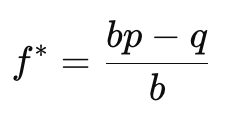
Where:
- f* is the proportion of your balance to wager,
- b is the potential winnings per unit bet,
- p is the probability of winning,
- q is the probability of losing (typically 1 − p).
Despite its apparent simplicity, the Kelly criterion is highly effective when applied correctly. Like any risk management method, it requires careful assessment of probabilities and discipline in execution. As Kelly famously said, “In the long run, the amount you bet is more important than the amount you win or lose.” He argued that optimising the size of your bets is the key to consistent success, whether in gambling or financial ventures.
‘Irrational thinking can bring good luck’ — Michael B. Walker
Australian psychologist Michael B. Walker is a leading authority in gambling psychology. He has published extensively on the behaviour of gamblers, the societal impact of gambling, and strategies to minimise harm. Many of his findings are considered foundational in modern approaches to treating gambling addiction.
Walker pays particular attention to the use of cognitive therapy for pathological gambling. He argues that there are strong theoretical reasons to believe cognitive therapy can help people reduce or stop excessive gambling. Importantly, Walker highlighted a common misconception in the field: many psychologists conflate cognitive therapy with cognitive-behavioural therapy, despite their different methods and implications for treatment.
Walker was the first to systematically describe methods for assessing treatments for pathological gambling, including phenomena such as spontaneous recovery without formal intervention. He also identified withdrawal syndromes specific to gambling, differentiating them from similar processes in alcohol or drug addiction. His research laid the foundation for understanding ludomania as a distinct condition, separate from other forms of addiction.
Reflecting on the psychology of gambling, Walker concluded: “People gamble because they believe that the potential benefits of gambling outweigh the potential costs.” His work underscores the complex interplay between perception, decision-making, and the mathematical probabilities that govern games of chance.
FAQs: The Mathematics of Chance and Gambling
Q1: Can math really improve your luck in gambling?
Yes. Mathematicians like Edward Thorp and Julian Brown showed that probability, card counting, and optimal strategies can improve your odds, especially in games like blackjack and roulette. Luck is influenced by math, not just random chance.
Q2: What is the Kelly criterion and how does it work?
The Kelly criterion, developed by John Kelly Jr., is a formula for determining the optimal bet size based on the probability of winning and potential payout. It helps manage your bankroll and maximise long-term profits while reducing the risk of ruin.
Q3: Who was Edward Thorp and why is he important in gambling?
Edward Thorp was an American mathematician who developed a mathematically proven card-counting system for blackjack. His work laid the foundation for modern casino strategies and showed that probability and skill could influence outcomes in gambling.
Q4: How did Claude Shannon apply math to games of chance?
Claude Shannon, the father of information theory, built machines that predicted outcomes in games like roulette and heads-or-tails by identifying patterns in human behavior and probabilities. His work proved that strategy and information can improve your odds.
Q5: Can psychology affect gambling success?
Absolutely. Michael B. Walker studied the psychology of gambling, including cognitive therapy and behavioral patterns. Understanding human perception, risk-taking, and decision-making can help players make smarter choices and avoid harmful gambling habits.
Q6: How did Julian Brown change blackjack strategies?
Julian Brown applied computer modeling to blackjack, creating basic strategy tables for different rule variations. His work helped players make statistically optimal decisions, lowering casino profits and increasing players’ chances of winning.
Q7: Is luck purely random or can it be influenced?
According to mathematicians and psychologists, luck is not purely random. Probability, strategic decisions, and cognitive behavior all play a role in influencing outcomes in games of chance and in life.
Q8: What role does probability play in everyday life?
Probability helps us understand uncertainty and make informed decisions, whether in gambling, investing, or everyday choices. By recognizing patterns and risks, we can turn chance into opportunity.

Related to This Article
More math articles
- The Ultimate ISEE Middle Level Math Formula Cheat Sheet
- Grade 3 Math: Perimeter
- How to Teach the GED Math Effectively: A Complete Guide!
- 10 Most Common 8th Grade MEAP Math Questions
- Ratio, Proportion and Percentages Puzzle – Challenge 24
- The Ultimate 7th Grade MCA Math Course (+FREE Worksheets)
- 7th Grade NDSA Math Worksheets: FREE & Printable
- Study Skills Guide For Studying Math
- Top 10 CBEST Math Practice Questions
- 5 Essential Strategies in Teaching Math



What people say about "Chance is not coincidence, but the mathematics of fate - Effortless Math: We Help Students Learn to LOVE Mathematics"?
No one replied yet.