Marriage Forms, Boundaries, and Partner Similarity
Chapter 15 of the Sociology for Beginners study guide on Effortless Math covers Marriage Forms, Boundaries, and Partner Similarity: the key terms, the core ideas, and worked examples showing how this topic is tested on this course.
Sociology for Beginners · Chapter 15
Marriage Forms, Boundaries, and Partner Similarity
Marriage is a socially recognized relationship that establishes rights and obligations between partners and often between wider kin groups. Societies regulate who may marry, how a union becomes valid, which claims follow, and how it may end, which means affection matters without being the only institutional concern.
Monogamy permits one spouse at a time, so serial marriage after divorce can occur within a monogamous system. Polygamy permits more than one spouse. Polygyny names one man with multiple wives, while polyandry names one woman with multiple husbands.
Permission does not reveal frequency. A society may permit polygyny while few households have the resources or desire to practice it, so researchers distinguish what law or custom allows from the arrangements people form in practice.
Endogamy directs marriage within a specified category such as a religion, caste, or ethnic group, while exogamy directs marriage outside a specified category, often a close kin group or clan. One marriage can follow both: within the religion and outside the clan.
Homogamy is the tendency for people to partner with others who resemble them in education, religion, age, race or ethnicity, or class background. It is an observed pattern that can result from preference, family influence, unequal opportunity, and the settings where people meet, rather than necessarily a formal command.
Schools, workplaces, neighborhoods, congregations, and online networks shape a marriage market before any individual chooses a partner. If people attend schools sorted by class and region, class homogamy can emerge without a rule forbidding cross-class marriage, a mechanism different from endogamy enforced through family or community sanctions.
Marriage can connect property, inheritance, citizenship, parenthood, residence, and caregiving while creating affinity, or kinship through marriage rather than descent. Such ties may carry obligations between families even when partners live neolocally.
Cross-cultural analysis avoids ranking marriage forms by familiarity. The sociological task is to identify rules, resources, power, consent, and consequences, since an unfamiliar form is not evidence of disorder. Cultural variation still permits analysis of coercion or unequal rights. Evidence replaces reflex.
Question wording supplies the classification. “One spouse at a time” signals monogamy. “One woman and several husbands” signals polyandry. “Within the religion” signals endogamy. “Outside the clan” signals exogamy. “Partners have similar education” signals homogamy. Number, boundary, and similarity are separate axes.
Marriage markets can change how a boundary rule operates. Imagine two communities that both expect religious endogamy and clan exogamy. In the first, young adults attend schools and workplaces almost entirely within the religion, so many eligible partners satisfy both rules. In the second, migration has scattered clan members across a city where the religion is a small minority, leaving many possible partners outside the clan but few within the faith. The rules are identical. The available pool is not.
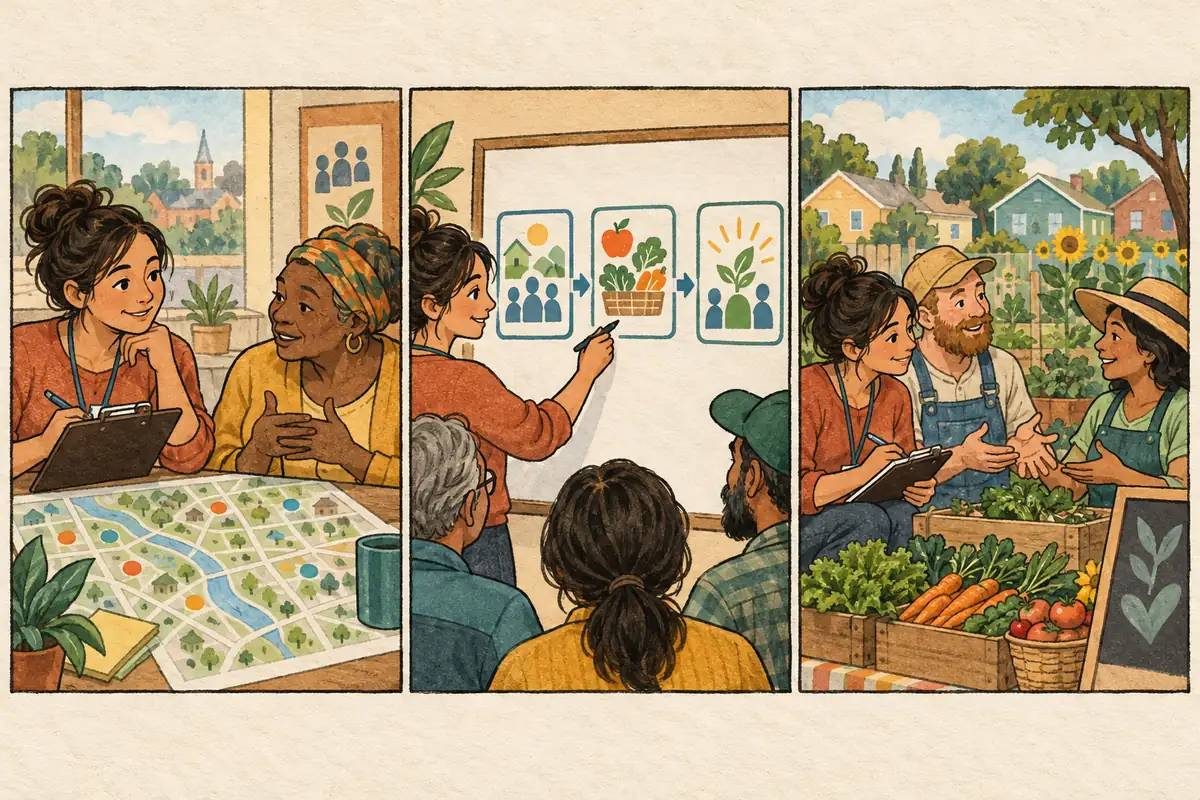
A useful study would map the eligible partner pool, the settings where people meet, family sanctions, and the matches that form. This evidence separates the boundary rule from opportunity without treating either as the person’s private preference.
Homogamy often develops through ordinary meeting places rather than an explicit command. People attending the same schools, working in the same occupations, living nearby, or joining the same religious organizations have more chances to meet, and shared resources or tastes may make a partnership easier to sustain. Test the mechanism by comparing the available pool with the matches that form. A college producing many same-education couples may reflect contact as well as preference. In a new case, “must marry within” signals endogamy, while “partners tend to have similar education” signals homogamy. One is a rule. The other is a pattern.
One marriage can satisfy several classifications at once. A monogamous couple may follow religious endogamy, clan exogamy, and educational homogamy. The labels stack because number, boundary, and similarity answer separate questions.
Quick review: Monogamy and polygamy classify the permitted number of spouses. Polygyny and polyandry classify the configuration of plural spouses. Endogamy directs marriage within a category, exogamy directs it outside a category, and homogamy is an observed tendency for similar people to partner.
Watch the lesson connection
Theories About Family and Marriage gives you a second explanation of the ideas surrounding this lesson. As you watch, pause when the lesson concept appears and explain how the example fits.
Try the idea yourself
Write one original example, one close nonexample, and one observation that would help you tell them apart. That small exercise turns a definition into a sociological tool you can use in daily life.

Related to This Article
More math articles
- Which Test Is Better for You; GED, TASC, or HiSET? Find Out Now
- Full-Length AFOQT Math Practice Test-Answers and Explanations
- Shays’ Rebellion
- How is the ASTB Test Scored?
- Race as a Social Construction
- Top 10 HiSET Math Prep Books (Our 2023 Favorite Picks)
- Number Properties Puzzle -Critical Thinking 5
- Wyoming WY-TOPP Grade 8 Math Free Worksheets: Printable Standards-Aligned Practice, Answers Included
- The Ultimate 6th Grade MEA Math Course (+FREE Worksheets)
- AP Cybersecurity Log Analysis: Follow the Evidence (2027 Prep)



















What people say about "Marriage Forms, Boundaries, and Homogamy"?
No one replied yet.