25 Ways You Use Math Every Day (Without Realizing It)
The “when will I ever use this?” math question gets asked in every classroom in America. The answer turns out to be: constantly. Math hides inside almost every adult decision, and the people who notice it tend to spend less, plan better, and avoid getting fooled.
Here are 25 places math shows up before bedtime, with the actual math behind each.
1. Making Coffee
A pour-over recipe asks for a 1:16 ratio of coffee to water.
– Coffee: 30 g.
– Water: 30 × 16 = 480 g (≈ 480 ml).
You just did a ratio problem.
2. Setting the Alarm
You need to be at work at 9:00 AM. Commute is 35 minutes. Getting ready takes 50 minutes. Set alarm for 7:35 AM.
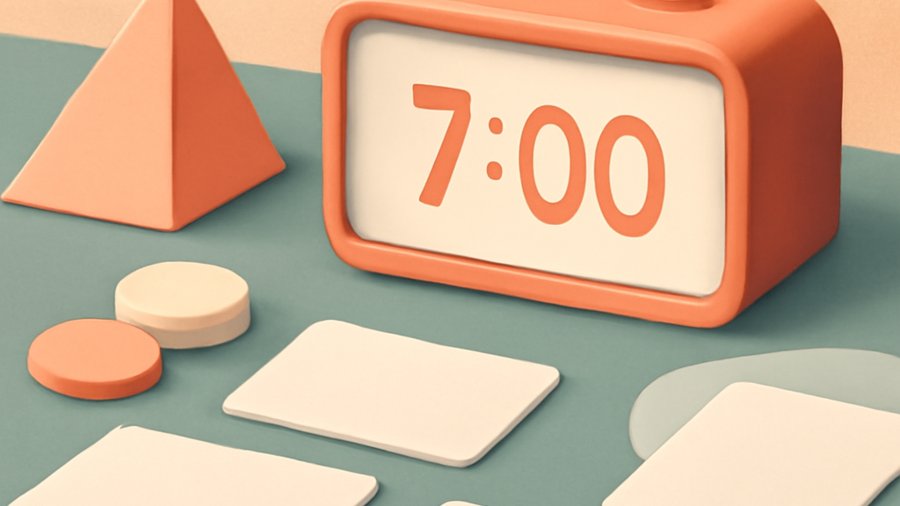
That’s subtraction with time.
3. Cooking and Baking
Doubling a recipe? You’re multiplying every ingredient by 2.
Halving it? Dividing by 2.
Adjusting for 4 people instead of 6? Multiplying by \(\frac{4}{6} = \frac{2}{3}\).
Fractions, every meal.
4. Estimating Travel Time
Highway distance 90 miles. Average speed 60 mph. Time = distance / speed = 1.5 hours.
Plus 10-15 minutes for traffic. You’re doing rate problems.
5. Calculating Gas Mileage
You drove 320 miles on a 12-gallon tank.
\(\frac{320}{12} \approx 26.7\) mpg.
This is division and ratios.
6. Tipping at a Restaurant
Bill is $48. 20% tip.
10% = $4.80. 20% = $9.60.
Mental percent math, every meal out.
7. Splitting a Check
Bill $76, four people, equal split.
$76 ÷ 4 = $19 each.
Plus tip: $19 + $4 = $23 each.
Division and addition. Often badly under pressure.
8. Reading a Recipe Label
Cereal box says “30 g per serving.” Box has 450 g.
Servings = 450 ÷ 30 = 15.
Calories per serving × 15 = total calories.
9. Comparing Unit Prices
24 oz peanut butter at $5.99 vs. 16 oz at $4.49.
– $5.99 ÷ 24 = $0.25/oz.
– $4.49 ÷ 16 = $0.28/oz.
The bigger jar is the better deal.
Most adults skip this math and overpay.
10. Sale Shopping
Shirt was $80, now 30% off.
– Save: $24.
– New price: $56.
Plus 8% sales tax: $60.48.
Percent + percent, in one transaction.
11. Setting the Thermostat
Outside is 92°F. You want 72°F inside.
Difference = 20 degrees of cooling needed.
Higher difference = more energy = higher bill.
Subtraction has real-world dollar consequences.
12. Splitting Tasks at Home
Mowing the lawn alone takes 90 minutes. With a helper, 60 minutes. Rate combined = \(\frac{1}{90} + \frac{1}{60} = \frac{1}{36}\) of the job per minute.
You’re doing combined rate problems even when you don’t realize it.
13. Buying a Car
$25,000 car, 6% loan, 60-month term.
Monthly payment: ~$483.
Total paid: $483 × 60 = $29,000.
Total interest: $4,000.
The car costs more than the sticker says.
14. Picking a Cell Plan
Plan A: $80/month, unlimited data.
Plan B: $40/month + $10 per GB over 5 GB.
If you use 8 GB regularly: Plan B = $40 + (3 × $10) = $70.
Plan B wins.
This is conditional arithmetic.
15. Hanging a Picture
Wall is 8 ft wide. Picture is 30 inches.
Center the picture: (96 – 30) / 2 = 33 inches from each side.
Geometry in your hallway.
16. Mixing Paint
You want 2 gallons of paint, 70% base color, 30% accent.
Base: 1.4 gallons.
Accent: 0.6 gallons.
Percents in your living room.
17. Budgeting for Groceries
$400/month for groceries, 4 weeks = $100/week.
That’s 7 days of meals, about $14/day.
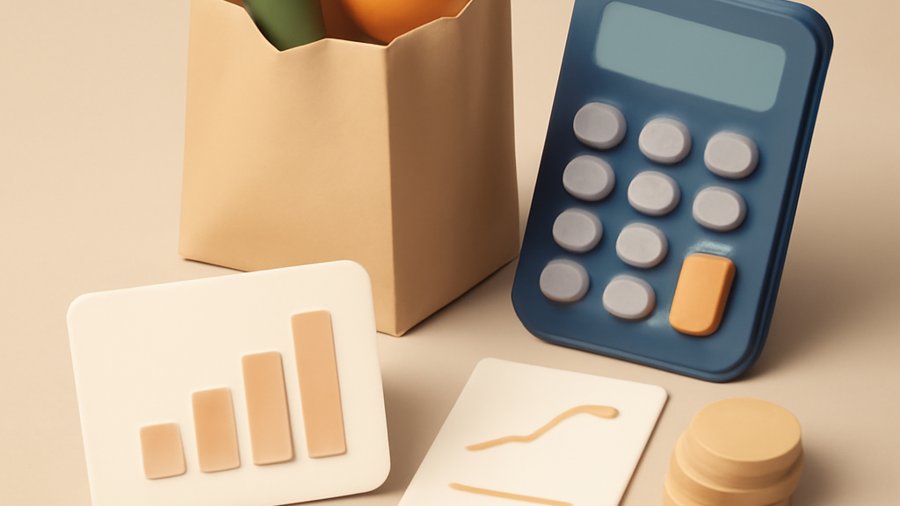
Division applied to weekly planning.
18. Cooking Meat
Chicken takes 20 minutes per pound at 375°F.
A 3.5 lb chicken: 20 × 3.5 = 70 minutes.
Multiplication by decimals.
19. Reading Sports Stats
Player makes 18 of 25 free throws.
Percentage: 18 ÷ 25 = 72%.
Or batting average: 134 hits / 412 at-bats = 0.325.
20. Estimating Your Step Count
Average step ≈ 2.5 feet. You want to walk 1 mile (5,280 ft).
Steps = 5,280 ÷ 2.5 = ~2,112 steps.
To hit 10,000 steps daily, that’s about 4.7 miles.
21. Tax Math
Item costs $50. Sales tax 8%.
Tax: $4. Total: $54.
You’ve now done four percent calculations on one trip.
22. Time Zone Conversion
You’re in New York (EST). Meeting at 9 AM Pacific.
Pacific is 3 hours behind. 9 AM PT = 12 PM ET.
Modular arithmetic without knowing it.
23. Splitting Costs With Roommates
Rent $2,100, 3 roommates.
$2,100 ÷ 3 = $700 each.
Utilities $180 ÷ 3 = $60 each.
Total per person: $760/month.
24. Estimating Project Time
Painting 4 walls. Each wall takes 90 minutes. Plus 30 minutes setup and cleanup.
Total: (4 × 90) + 30 = 390 minutes ≈ 6.5 hours.
You just used algebra (effectively).
25. Picking Up Prescription Refills
Doctor says 2 pills/day, 30-day supply.
Total pills: 60.
Refill before bottle runs out: order with 5-7 days remaining (10-14 pills).
Subtraction with safety margin.
Why This Matters
The math you “never use” is the same math you use every single day. The difference between adults who feel confident with money, time, and decisions, and those who feel overwhelmed, often comes down to whether they notice the math happening.
When you start noticing:
- You catch register errors.
- You estimate before you commit.
- You sense when a “deal” isn’t actually a deal.
- You plan your time more accurately.
- You make better long-term financial decisions.
How to Build Daily Math Awareness
Calculate your tip in your head before the bill arrives
Practice this for one month. It becomes automatic.
Estimate the total before checkout
Mentally tally your cart. Compare to the register total. You’ll spot errors and stop overspending.
Read the unit price label
At every grocery aisle, glance at the per-ounce price, not the package price.
Time things mentally
“This task will take 40 minutes.” Then check against the actual. Improves planning skills.
Round and estimate
Adults don’t need exact answers most of the time. “About 30” is usually enough.
Math Skills That Adults Actually Need
If you’re an adult brushing up on math, focus on the skills that show up in real life:
- Mental arithmetic (addition, subtraction, multiplication tables).
- Percent math (tip, tax, discount, interest).
- Ratios and proportions (recipes, mileage, unit pricing).
- Basic algebra (solving for unknown, “If I save X per month, when do I hit Y?”).
- Estimation and rounding (quick sanity checks).
- Basic probability (insurance, decision-making, risk).
You don’t need calculus to function in adult life. You do need fluent percent and proportion math.
The Hidden Math People Don’t Notice
Beyond the 25 above, math is also in:
- Music (rhythm, time signatures, frequencies).
- Sports (statistics, geometry of plays, angles).
- Driving (speed, distance, following distance).
- Photography (aperture, ISO, exposure triangle).
- Cooking temperatures (Celsius vs. Fahrenheit conversion).
- Travel (currency exchange, mileage, time changes).
- Voting and polls (statistics, sampling, margin of error).
- News reports (percentages, comparisons, base rates).
Once you start looking, you can’t stop seeing it.
Free Resources
Effortless Math has practical math resources for all ages:
- Math Blog, real-life math guides.
- Math Topics Library, concepts explained for adults.
- Percent Worksheets (resource currently unavailable), practice the math behind everyday decisions.
Frequently Asked Questions
What’s the most useful adult math skill?
Percent math. Tips, tax, discounts, interest, raises. It shows up in every financial decision.
Do I really need to know algebra as an adult?
The mental habits of algebra (solving for unknowns, manipulating equations) help with budgeting, planning, and decision-making, even if you never write an equation.
How can I get faster at mental math?
Practice 5 minutes a day. Drill multiplication tables. Estimate everything. Within a month you’ll be noticeably faster.
Why did school math feel useless?
Because school math is often abstract, “factor this polynomial.” Real-life math is contextual, “is this deal worth it?” The skills are the same; the framing is different.
Is mental math important if I have a phone?
Yes, for speed, error-catching, and confidence. The phone is for big calculations; your head handles the daily ones.
What’s the best way to teach kids real-life math?
Involve them. Calculate the tip together. Estimate the grocery total before checkout. Cook recipes that require doubling. Math sticks when it’s used.
You’re Already a Math User
You didn’t think of yourself as a math person, but you’ve been doing math all day, calculating times, splitting checks, comparing prices, estimating drives. Recognizing this is the first step. Get a little better at each one, and you’ll be noticeably sharper in every part of adult life, not just math class.

Related to This Article
More math articles
- Progressive Jackpot Math: When the Number Gets Big Enough to Matter
- Grade 7 Math Flashcards (Free Online: Formulas, Terms & Concepts)
- How to Use Place Value Blocks to Compare Decimals
- The Best Grade 8 Math Book for South Dakota Students
- Fighting words
- The Housing Bubble, Financial Crisis, and Great Recession
- The Best Grade 8 Math Book for South Carolina Students
- Judicial independence
- Translate areas into dollars
- 4th Grade MCA Math Worksheets: FREE & Printable



What people say about "25 Ways You Use Math Every Day"?
No one replied yet.