ISEE Lower Level Math Flashcards (Free Online: Formulas, Terms & Concepts)
ISEE Lower Level Math Flashcards: this Effortless Math guide explains the topic in plain language, shows how it works through solved examples, and gives you free practice to try immediately, so the idea sticks instead of staying abstract.
Review the math terms and concepts for the ISEE Lower Level, Quantitative Reasoning and Mathematics Achievement, for students applying to grades 5 to 6. No calculator allowed.
How to study with these flashcards
- Pick a topic and card type, or study the whole deck.
- Read the front, then flip the card to check the answer.
- Mark each card Know it or Review again, then restudy the ones you missed.
What’s on the cards
The deck covers numbers and operations, fractions and decimals, percents, ratios and proportions, algebra, geometry, and statistics and probability, formulas, key terms, concepts, and quick facts about the test, and you can filter by topic or by card type.
Frequently asked questions
What grades take the ISEE Lower Level?
The ISEE Lower Level is for students currently in grades 4 and 5 who are applying for admission to grades 5 and 6. Younger applicants, in grades 1 to 3, take the Primary Level instead. Because Lower Level students are compared with others in their own grade, a fourth grader is not expected to know everything a fifth grader knows.
What math is on the ISEE Lower Level?
The math covers whole numbers and place value, the four operations, fractions and decimals, simple percents and ratios, early algebra such as finding a missing number, geometry like perimeter and area, measurement, and reading graphs. Quantitative Reasoning has 38 questions in 35 minutes, and Mathematics Achievement has 30 questions in 30 minutes, with no calculator.
Is there an ISEE Lower Level practice test PDF?
Yes. The ISEE Lower Level Math hub links printable practice tests and worksheets. For young students, short sessions work best: one flashcard topic followed by ten printed questions. When an answer is wrong, talk through it together, for example why the perimeter of a 4 by 6 rectangle is 20, not 24, and then revisit that card a few days later.
How should my child prepare for the ISEE Lower Level?
Keep it steady and low stress. Practice basic facts and fractions a few times a week, use the flashcards to learn terms like perimeter, factor and mean, and solve problems by hand since no calculator is allowed. A few weeks before the test, try one timed practice test so your child knows how 35 minutes for Quantitative Reasoning feels.
What is on the ISEE Lower Level test?
The ISEE Lower Level has Verbal Reasoning, Quantitative Reasoning, Reading Comprehension, Mathematics Achievement, and an unscored essay that goes to the schools. Each scored section gets a scaled score, a percentile and a stanine from 1 to 9 that compares your child with other applicants in the same grade, so two of the four results depend on math.
Pair these flashcards with the ISEE Lower Level Math formula sheet and explore all our free math flashcards.
How to use ISEE Lower Level Math Flashcards as real practice
ISEE Lower Level Math Flashcards works best when it is used as a short, focused study session rather than a quick click-through activity. The goal is not simply to finish the cards. The goal is to notice which skills feel automatic, which skills still need review, and which mistakes happen when you rush.
Start with a clean piece of scratch paper. For each item, look at the front of the card, say the answer out loud, then flip the card and check your memory. If you get something wrong, do not immediately move on. Write the correct step, circle the part that caused the mistake, and try one similar item before continuing. That small correction habit is what turns an online flashcard deck into lasting math improvement.
A three-round study routine
| Round | What to do | Goal |
|---|---|---|
| Round 1 | Work slowly and focus on accuracy. Use notes if the topic is still new. | Understand the method. |
| Round 2 | Repeat missed items or similar problems without looking at the previous answer. | Fix the mistake. |
| Round 3 | Try a short timed set after the skill feels familiar. | Build speed and confidence. |
This routine is simple, but it solves a common problem: students often practice only until an answer looks familiar. Real readiness means you can solve a fresh problem without hints, explain the first step, and check whether the final answer is reasonable.
What to write down while you practice
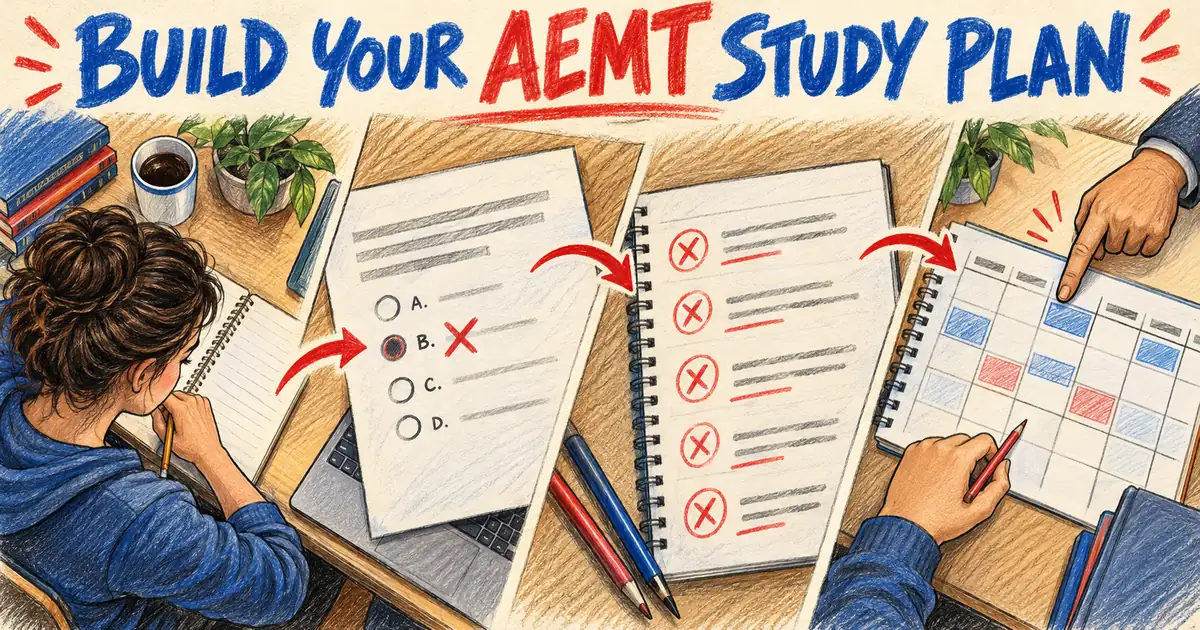
Keep a tiny mistake log next to the activity. You only need three columns: the topic, the mistake, and the correction. For example, a student might write “fractions,” “forgot common denominator,” and “rewrite both fractions before adding.” A log like that is more useful than a long list of scores because it tells you exactly what to review next.
- If the mistake is a fact or formula, review it before the next round.
- If the mistake is a setup error, copy one worked example and label each step.
- If the mistake is from rushing, slow down and require written work for the next five items.
- If the same mistake appears twice, stop and review that topic before continuing.
When you are ready to move on
You are ready for the next topic when you can get several items correct in a row and explain why the method works. A score by itself is helpful, but it is not the whole story. You should also be able to describe the rule, formula, or pattern that the activity is testing.
For test preparation, come back to ISEE Lower Level Math Flashcards after a day or two and try a fresh round. If the skill still feels easy after a short break, it is much more likely to stay with you during a quiz, unit test, or standardized test. If it feels shaky, that is useful information too: it tells you exactly where to spend your next study session.
Study tips for parents and teachers
When using this page with a student, ask for the reasoning before the answer. Questions such as “What is the first step?”, “Why did you choose that operation?”, and “How can you check it?” help students build mathematical language. That matters because many test questions measure more than calculation; they also measure whether the student can read the problem, choose a method, and explain a result.
Short sessions are usually best. Ten to fifteen minutes of careful practice can be more productive than a long session full of guessing. End by naming one skill that improved and one skill to review next time. That keeps practice positive, specific, and easy to continue.
Your next practice step
After finishing ISEE Lower Level Math Flashcards, choose one next step instead of trying to study everything at once. If the activity felt easy, increase the challenge by working faster, mixing in older topics, or explaining each answer without notes. If it felt difficult, lower the pressure: redo a smaller set, copy one correct example, and focus on accuracy before speed.
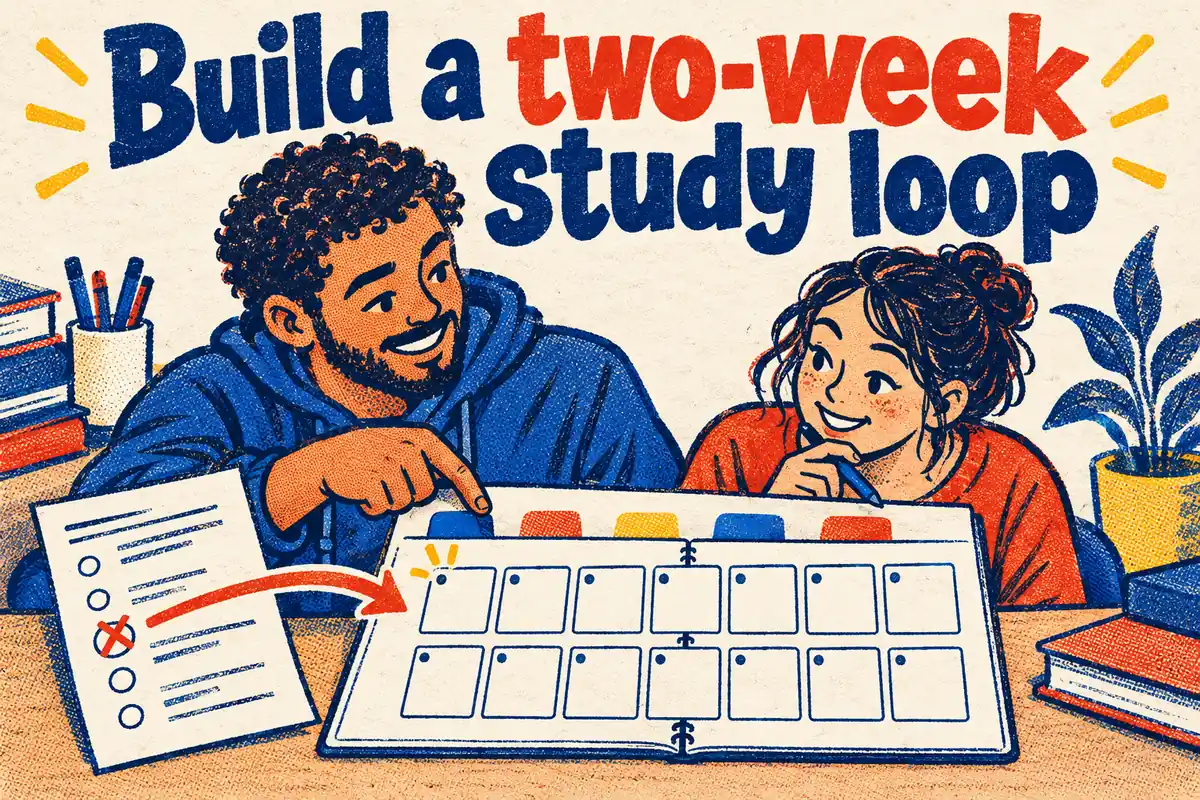
A useful rule is to review the same skill three times: once today, once tomorrow, and once later in the week. Spaced review is especially helpful for math because it tells you whether the method truly stuck or only felt familiar right after practice. Use this flashcard deck as one stop in that review cycle, then return to it when you want to check retention.

Related to This Article
More math articles
- How to Help Your 4th Grade Student Prepare for the West Virginia WVGSA Math Test
- Simplifying Radicals Practice — Simplest Radical Form (Free)
- Space Station Canteen: A Guide How to Estimate the Amount of a Tip
- How to Master the Road to Achievement: “Praxis Core Math for Beginners” Comprehensive Answer Guide”
- Driving Electric Is Cheaper: Let’s Do the Math
- A Comprehensive Look at Average vs Instantaneous Rate of Change
- Chapter 6: Federalism
- Texas STAAR Grade 8 Math Free Worksheets: 72 Printable TEKS-Aligned PDFs with Answer Keys
- How to Use Integers to Complete Equations
- Effective Strategies for Learning and Memorizing Math Formulas











What people say about "ISEE Lower Level Math Flashcards: Free Practice"?
No one replied yet.