YOUR ASVAB Math STUDY COMPANION
ASVAB Math Practice Test Questions
ASVAB Math Practice Test Questions: work through realistic questions in the same format and difficulty as the real test, then check every answer against a full step-by-step solution so you can see where you lost marks and what to review next.
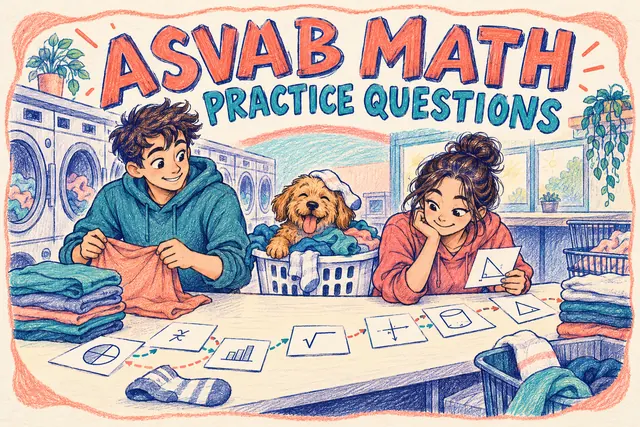
ASVAB Math Practice Test Questions: work through realistic questions in the same format and difficulty as the real test, then check every answer against a full step-by-step solution so you can see where you lost marks and what to review next.
Check out ASVAB Math Worksheets: FREE & Printable.
Here is a list of all Math formulas you MUST have learned before test day: ASVAB Math Formulas.
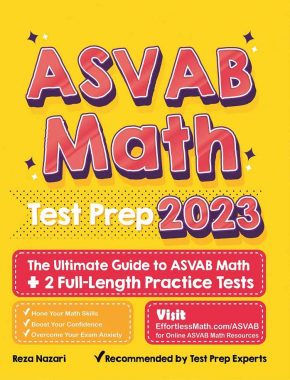
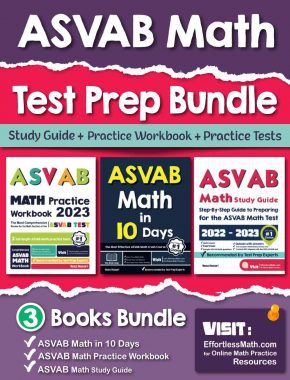
The Best Books to Ace the ASVAB Math Test
Have any questions about the ASVAB Test?
Write your questions about the ASVAB or any other topics below and we’ll reply!
Need more ASVAB Math practice?
Use the free ASVAB Math Worksheet Creator to make a fresh one-skill worksheet with answers and step-by-step explanations. It is a good next step after a lesson, a formula review, or a missed practice-test question.
Open the worksheet creatorOpen full page
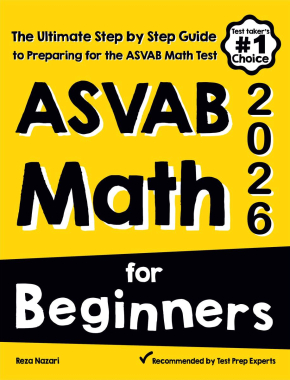
For a complete study path: pair this printable practice with ASVAB Math for Beginners and ASVAB Math Preparation Bundle.
How to use ASVAB Math Practice Test Questions as real practice
ASVAB Math Practice Test Questions works best when it is used as a short, focused study session rather than a quick click-through activity. The goal is not simply to finish the questions. The goal is to notice which skills feel automatic, which skills still need review, and which mistakes happen when you rush.
Start with a clean piece of scratch paper. For each item, answer the questions under realistic conditions, then review every missed problem before retaking a similar set. If you get something wrong, do not immediately move on. Write the correct step, circle the part that caused the mistake, and try one similar item before continuing. That small correction habit is what turns an online practice test into lasting math improvement.
A three-round study routine
| Round | What to do | Goal |
|---|---|---|
| Round 1 | Work slowly and focus on accuracy. Use notes if the topic is still new. | Understand the method. |
| Round 2 | Repeat missed items or similar problems without looking at the previous answer. | Fix the mistake. |
| Round 3 | Try a short timed set after the skill feels familiar. | Build speed and confidence. |
This routine is simple, but it solves a common problem: students often practice only until an answer looks familiar. Real readiness means you can solve a fresh problem without hints, explain the first step, and check whether the final answer is reasonable.
What to write down while you practice
Keep a tiny mistake log next to the activity. You only need three columns: the topic, the mistake, and the correction. For example, a student might write “fractions,” “forgot common denominator,” and “rewrite both fractions before adding.” A log like that is more useful than a long list of scores because it tells you exactly what to review next.
- If the mistake is a fact or formula, review it before the next round.
- If the mistake is a setup error, copy one worked example and label each step.
- If the mistake is from rushing, slow down and require written work for the next five items.
- If the same mistake appears twice, stop and review that topic before continuing.
When you are ready to move on
You are ready for the next topic when you can get several items correct in a row and explain why the method works. A score by itself is helpful, but it is not the whole story. You should also be able to describe the rule, formula, or pattern that the activity is testing.
For test preparation, come back to ASVAB Math Practice Test Questions after a day or two and try a fresh round. If the skill still feels easy after a short break, it is much more likely to stay with you during a quiz, unit test, or standardized test. If it feels shaky, that is useful information too: it tells you exactly where to spend your next study session.
Study tips for parents and teachers
When using this page with a student, ask for the reasoning before the answer. Questions such as “What is the first step?”, “Why did you choose that operation?”, and “How can you check it?” help students build mathematical language. That matters because many test questions measure more than calculation; they also measure whether the student can read the problem, choose a method, and explain a result.
Short sessions are usually best. Ten to fifteen minutes of careful practice can be more productive than a long session full of guessing. End by naming one skill that improved and one skill to review next time. That keeps practice positive, specific, and easy to continue.
Your next practice step
After finishing ASVAB Math Practice Test Questions, choose one next step instead of trying to study everything at once. If the activity felt easy, increase the challenge by working faster, mixing in older topics, or explaining each answer without notes. If it felt difficult, lower the pressure: redo a smaller set, copy one correct example, and focus on accuracy before speed.
A useful rule is to review the same skill three times: once today, once tomorrow, and once later in the week. Spaced review is especially helpful for math because it tells you whether the method truly stuck or only felt familiar right after practice. Use this practice test as one stop in that review cycle, then return to it when you want to check retention.

Related to This Article
More math articles
- 49 Free MCAS Grade 3 Math Worksheets for Massachusetts Students (One Skill Per Page)
- How to Graph Inverse of the Cosine Function?
- Identifying Angles for 4th Grade
- How to Identify Relations and Functions? (+FREE Worksheet!)
- Aggregate Demand and the Spending Multiplier
- Reading political maps
- 4th Grade CMAS Math Worksheets: FREE & Printable
- Constitutional right to privacy
- Free Grade 6 English Worksheets for Arizona Students
- One firm’s curve is not the market curve





What people say about "ASVAB Math Practice Test Questions"?
No one replied yet.