TSI Math Test: Complete Preparation Guide


Welcome, college-bound students! Are you gearing up for the TSI (Texas Success Initiative) Math Test? Mastering this test is crucial for setting the right foundation as you embark on your college journey. In this comprehensive guide, we will walk you through everything you need to know to ace the TSI Math Test with confidence and ease. Let’s dive in and equip you with the tools for success! For additional educational resources, visit the website.
Understanding the TSI Math Test
The TSI (Texas Success Initiative) Math Test is designed to assess your readiness for college-level math courses. It covers various math domains, including operations, algebraic thinking, geometry, measurement, data analysis, and more. This test is essential for determining the math courses you are eligible to enroll in as a college student. Understanding the test format, question types, and scoring system is key to performing well. For additional educational resources, visit the website.
| Category | Details |
|---|---|
| Focus | Comprehensive preparation and skill building |
| Approach | Regular practice and consistent review |
| Success Tips | Daily practice, positive encouragement, and celebrating progress |
Before diving into preparation strategies, let’s take a closer look at what the TSI Math Test entails: For additional educational resources, visit the U.S. Department of Education website.
- Number of Questions: Typically, the test consists of X questions
- Time Limits: You will have X minutes to complete the test
- Question Types: The test includes multiple-choice questions, word problems, and quantitative comparisons
- Scoring System: Each correct answer earns you points, with no penalty for incorrect responses
- Proficiency Levels: The scores are categorized into proficiency levels to indicate your math skills
- Test Administration: The TSI Math Test is usually administered at college testing centers or online
- Results Utilization: Your test results help colleges determine the appropriate math courses for your skill level
Key Math Skills You Need to Master
Developing a strong foundation in math is essential for success on the TSI Math Test. Let’s explore the key math domains and the skills you need to focus on:
Operations & Algebraic Thinking
Mastering operations such as addition, subtraction, multiplication, and division is fundamental. You should also be proficient in solving algebraic equations and understanding patterns and relationships.
Number & Operations in Base Ten
Understanding place value, performing operations with multi-digit numbers, and interpreting numerical expressions are crucial skills to excel in this domain.
Number & Operations – Fractions
Being able to work with fractions, including adding, subtracting, multiplying, and dividing fractions, is essential. Understanding fraction concepts like equivalence and comparing fractions is also important.
Measurement & Data
Develop proficiency in measuring quantities, interpreting data from graphs and charts, and understanding statistical concepts such as mean, median, mode, and range.
Geometry
Knowledge of geometric shapes, angles, area, perimeter, and volume is key. Understanding properties of shapes and spatial relationships is essential for success in geometry-related questions. For education statistics and research, visit the.
Building Strong Math Foundations at Home
Strengthening your math skills outside the classroom is just as important as studying at school. Here are some effective strategies to enhance your math abilities: For education statistics and research, visit the.
Daily Practice Strategies
Consistent practice is key to mastering math concepts. Dedicate time each day to solve math problems, work on exercises, and reinforce your understanding of mathematical principles.
Making Math Part of Everyday Activities
Integrate math into your daily routines. Whether you’re grocery shopping, cooking, or budgeting, find ways to apply math concepts in real-life scenarios.
Games and Activities
Engage in math games and activities that promote number sense and critical thinking. Board games, puzzles, and online math challenges can make learning fun and engaging.
Using Manipulatives and Visual Aids
Utilize math manipulatives and visual aids to enhance your understanding of abstract concepts. Tangrams, fraction bars, and geometric models can help you visualize mathematical ideas.
Reading Math Books Together
Explore math-themed books that make learning enjoyable. Reading stories with mathematical concepts or solving math-related puzzles can deepen your understanding of math in a fun way.
Technology Resources
Take advantage of math apps, online resources, and educational websites to supplement your learning. Interactive tools and digital platforms can provide additional practice and support for your math skills.
Effective Study and Practice Strategies
To excel on the TSI Math Test, you need to adopt effective study habits and practice strategies. Here’s how you can optimize your preparation:
Creating a Realistic Study Schedule
Design a study schedule that allocates dedicated time for math practice each day. Include breaks, review sessions, and challenging exercises to enhance your skills progressively.
Making Practice Sessions Enjoyable and Engaging
Keep your practice sessions interesting by incorporating a mix of problem types, interactive activities, and rewards for achieving milestones. Make learning enjoyable to stay motivated.
Using Practice Tests Effectively
Take practice tests to simulate exam conditions and familiarize yourself with the test format. Analyze your performance, identify weak areas, and focus on improving those areas through targeted practice.
Reviewing Mistakes Constructively
Learn from your mistakes by understanding the reasons behind incorrect answers. Take the time to revisit concepts, seek clarification, and practice similar problems to strengthen your understanding.
Building Stamina for Longer Practice Sessions
Gradually increase the duration of your study sessions to build endurance for longer tests. Practice solving math problems under time constraints to improve your speed and accuracy.
Tracking Progress Over Time
Maintain a study journal or tracker to monitor your progress. Keep track of the topics you’ve mastered, areas that need improvement, and the strategies that work best for you.
Test-Taking Strategies and Techniques
Approaching the TSI Math Test strategically can help you navigate through challenging questions with confidence. Here are some effective test-taking strategies to boost your performance:
Time Management Strategies
Allocate time efficiently to each question based on its complexity. Prioritize easy questions first, then tackle more challenging ones to maximize your score.
How to Read Word Problems Carefully
Break down word problems into smaller, manageable parts. Identify key information, translate the problem into mathematical terms, and devise a plan to solve it step by step.
Problem-Solving Strategies
Utilize multiple problem-solving approaches, such as drawing diagrams, working backward, or using logical reasoning. Experiment with different methods to find the most effective solution.
When and How to Skip Difficult Questions
If you encounter a particularly challenging question, don’t get stuck. Mark it for later review and move on to easier questions. Come back to difficult questions with a fresh perspective if time permits.
Checking Work Effectively
Before submitting your test, review your answers carefully. Check for calculation errors, ensure you’ve answered every question, and verify that your solutions make sense in the context of the problem.
Handling Different Question Types
Develop strategies tailored to various question types, such as multiple-choice, quantitative comparisons, and word problems. Practice each question format extensively to improve your proficiency.
Supporting Your Emotional Well-Being
Managing test anxiety and maintaining a positive mindset are essential components of your test preparation journey. Here are strategies to support your emotional well-being:
Recognizing and Managing Test Anxiety
Identify the signs of test anxiety and implement relaxation techniques, deep breathing exercises, and positive affirmations to calm your nerves. Visualize success and focus on your strengths to boost confidence.
Building Confidence Through Small Wins
Celebrate small victories and milestones during your preparation. Each step forward, no matter how small, contributes to your progress and boosts your confidence for the test.
Creating a Positive Learning Environment at Home
Establish a conducive study space free from distractions, clutter, and negativity. Surround yourself with supportive resources, inspirational quotes, and a positive atmosphere that promotes learning and growth.
Dealing with Setbacks Constructively
If you encounter challenges or setbacks in your preparation, view them as opportunities for growth and learning. Embrace mistakes as part of the learning process and use them to improve your skills.
Celebrating Progress, Not Just Perfection
Acknowledge and appreciate the progress you make throughout your preparation journey. Celebrate your efforts, improvements, and dedication to mastering math concepts rather than fixating on perfection.
Encouragement Strategies That Work
Engage in self-talk that motivates and empowers you. Surround yourself with supportive individuals who encourage your academic endeavors and believe in your ability to succeed on the TSI Math Test.
Practice Resources and Tools
To enhance your preparation, leverage a variety of practice resources and tools designed to optimize your learning experience:
Review helpful practice materials, explore online resources and apps, carefully select quality practice materials, create your own practice problems, and collaborate with teachers and school resources to maximize your preparation.
Creating a Test Day Success Plan
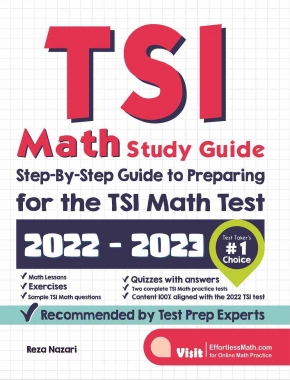
Recommended Math Resources
As the test day approaches, it’s essential to have a well-thought-out plan in place. Follow these guidelines to ensure a smooth and successful test experience:
- Week Before the Test: Review key concepts, get adequate rest, and stay hydrated to maintain focus.
- Day Before the Test: Organize your materials, set multiple alarms, and plan your transportation to the test center.
- Test Day Preparation: Arrive early, bring necessary supplies, follow pre-test rituals to calm your nerves, and approach the test with a positive mindset.
- Healthy Habits: Prioritize sleep, consume nutritious meals, stay hydrated, and incorporate light exercise to promote physical and mental well-being.
- Morning of the Test Routine: Eat a balanced breakfast, engage in light stretching or deep breathing exercises, and review key concepts to boost confidence.
- After the Test: Reflect on your performance, note areas for improvement, and celebrate your efforts regardless of the outcome.
Final Words
As you embark on your TSI Math Test preparation journey, remember that consistent effort, strategic practice, and a positive mindset are key to your success. Embrace challenges as opportunities for growth, celebrate your progress, and believe in your ability to excel. Your dedication and perseverance will pave the way for a bright academic future. Keep pushing forward, stay motivated, and trust in your capabilities. Best of luck on your TSI Math Test!
Recommended Math Resources

Related to This Article
More math articles
- Top Ten Cameras for Classroom Recording
- 6th Grade ISASP Math Worksheets: FREE & Printable
- Top 10 Tips to Overcome SSAT Math Anxiety
- 7th Grade IAR Math Practice Test Questions
- How to Solve Systems of Equations? (+FREE Worksheet!)
- How to Use Exponents to Write down Multiplication Expressions?
- 3rd Grade Georgia Milestones Assessment System Math Worksheets: FREE & Printable
- How to Help Your 4th Grade Student Prepare for the Florida FAST Math Test
- 5th Grade RISE Math Worksheets: FREE & Printable
- Full-Length PSAT Math Practice Test-Answers and Explanations





What people say about "TSI Math Test: Complete Preparation Guide - Effortless Math: We Help Students Learn to LOVE Mathematics"?
No one replied yet.