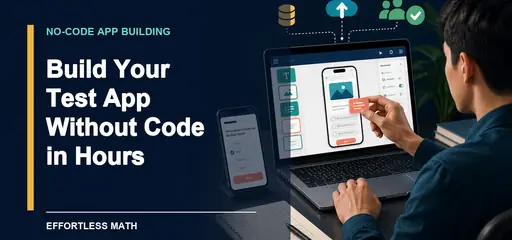
Get Started Now: Build Your Test App Without Code in Hours
Building an app once required months of coding, tight budgets, and long developer talks. That reality, which once seemed fixed and unchangeable, has now shifted meaningfully, opening the door to far quicker and more accessible possibilities for everyone. Anyone with a clear idea can build a prototype quickly. Whether you want to test a small learning tool, a booking system, or a simple productivity helper, the entry barrier has fallen sharply. This guide walks you through the practical steps of building your first test app, showing which tools make the process smooth and explaining how to sidestep the common pitfalls that often trip up beginners. By the end, you will hold a clear plan for launching something real and genuinely usable.
Why No-Code App Development Is a Game Changer
No-code platforms now serve those without technical teams. Rather than hiring specialists to handle the technical side of things, you can simply drag, drop, and configure your way toward a fully working product all on your own. This shift matters a great deal because it allows you to test and validate your ideas quickly and cheaply, well before you commit serious money, time, or resources to them. Speed is the obvious benefit, but there is more to it. When you build the app yourself, you understand exactly how it behaves, which makes future adjustments painless. Educators, for example, have started experimenting with custom tools alongside popular options like the ones featured in our roundup of the best math apps for middle school students, blending ready-made resources with their own creations.
Lower Costs and Faster Feedback
In the past, testing an idea would demand a complete budget cycle before you could begin. Now you can build a prototype, share it with a few users, and gather feedback within days. That rapid loop of building and learning is what separates projects that succeed from those that stall.
Building Your First Test App Step by Step
Beginning is much easier than most people tend to imagine it will be. The key to getting started successfully is to keep your first version deliberately narrow, resisting the temptation to add extra features before you have properly tested the core idea. Choose a single core function and build around it instead of launching a feature-packed platform on day one. A focused test app teaches you more than any sprawling, half-finished project. Below is a practical sequence you can follow when you are creating your very first prototype:
Define the single problem your app solves in one clear sentence.
Sketch the screens on paper or a whiteboard before using software.
Choose a platform matching your skill level and desired output.
Build the core flow, the user’s main start-to-finish action.
Add simple data storage to save entries and inputs.
Test with three to five real people and note their hesitations.
Many builders now use guided setups that generate a starting structure for you. For instance, an ai app builder can produce a working prototype from a plain description, handling layout and hosting so you can concentrate on the idea itself rather than technical plumbing.
Keep the Scope Tight
The most common temptation you will face, especially when things start going well, is the strong urge to add more and more features to your test app. You must actively resist this temptation, because giving in to the urge to keep adding more features will only work against the clear purpose your test app was built to serve. A test app answers just one question: does this idea work for real users? Each additional button or screen weakens that answer and makes your progress slower.
Choosing the Right AI-Powered App Builder
Not every platform suits every project, since the tools that work well for one type of build may prove poorly matched to the goals and requirements of another. Some suit internal tools, others build polished customer products. Before you commit to any single platform, it would be wise to set aside at least an hour to compare a handful of options against your project’s specific needs. Look at how easily you can export data, whether hosting is included, and how much control you retain over the final look. Reviews and comparison guides help enormously here. A detailed overview of the best no-code app builders for 2026 can save you hours of trial and error by highlighting the strengths and limits of each option. Weighing several tools side by side is far wiser than jumping into the first one you find.
Match the Tool to Your Goal
If your app centers on note-taking or content creation, device compatibility matters as much as the software itself. Someone building a study aid might also want to consider the hardware learners will use. Our guide to the best tablets for math note-taking shows how the right device can shape the whole user experience, a reminder that your app never exists in isolation.
Watch a No-Code App Come Together
This short Glide walkthrough shows how a simple data source can become a working app. As you watch, notice how the builder organizes screens, connects information, and tests the user experience before publishing.
Beginners tend to repeat the same errors, and knowing them in advance saves frustration. The first mistake is overbuilding, where developers add far more features than a simple test project truly needs. A test app should feel so basic that it seems almost embarrassingly simple to build. The second common mistake is skipping genuine user testing, which happens when developers convince themselves they already understand what people need instead of watching how real users actually behave. You might assume you know what people want, but watching them almost always reveals surprises. A third common mistake is ignoring data right from the start. Even a basic prototype gains real value when you track how many people open it, identify the point where they drop off, and note which features they actually touch during use. Without that information, you guess instead of learning. Many beginners refine visuals before proving the concept works. Design is important, but it should follow only after you have proof that the core idea connects with people.
Plan for the Next Iteration
You should treat your very first build, which is only the earliest step in a much longer process, as simply version one of many, since numerous revisions and improvements will inevitably follow as you continue refining your work. Note down what you would change even before you have finished testing everything you built. This habit keeps you moving and prevents perfectionist paralysis.
Taking Your Test App to the Next Level
Once your prototype has successfully proven its worth, demonstrating that the underlying concept genuinely works and holds real value, the far more demanding work begins in earnest, requiring your sustained attention, careful planning, and commitment. Scaling means that you add back the features you deliberately left out during early development, improve overall performance, and prepare your product so it can serve a much larger audience. This is also the precise moment when you must think seriously about hosting arrangements, security measures, and dependable infrastructure, because a steadily growing user base, expanding day by day, inevitably places fresh and increasingly heavy demands on your existing technical setup and its underlying capacity. Feedback should stay at the center of every decision you make. Keep a running list of user requests and prioritize them by impact rather than novelty. Making small, steady improvements builds trust with your users and keeps people coming back for more. When expanding, check whether your platform can grow too. The journey that carries you from an initial idea all the way to a fully launched app, which once seemed daunting and out of reach for most people, has never before been as open, approachable, and genuinely accessible as it is today. With a narrow scope, good tools, and openness to real users, you can build a prototype in hours. Begin with something small, test it honestly, and let every version show you what to build next. Your very first app does not have to be flawless or polished in any way, because it simply needs to exist as a starting point, so that you can then begin the far more rewarding, ongoing process of making it genuinely useful to real people.
Frequently Asked Questions
What happens after the test app proves the idea works, do I need to rebuild it from scratch?
Not necessarily, many no-code platforms let you scale the same prototype by adding integrations, custom logic, or a database backend as usage grows. Rebuilding from scratch only becomes necessary if you hit platform limits around performance, security, or highly specific technical requirements. Plan for that transition early by keeping your data structure clean from the start, so migrating later is less painful.
How do I know if my prototype is ready to show real users instead of just friends?
Your prototype is ready once someone unfamiliar with the idea can complete the main task without you explaining it. If you find yourself constantly clarifying how to use it, the flow still needs simplifying. A good test is handing it to a stranger and watching silently, since their confusion points directly to what needs fixing.
How many test users do I actually need before deciding if my app idea works?
Five to ten engaged testers usually give you enough signal to spot patterns in how people use your app. Focus on users who match your target audience rather than friends who will just say nice things. Watch what they do more than what they say, since actual behavior reveals problems that surveys miss.
What mistakes do beginners make most often when building their first no-code app?
The biggest mistake is trying to build every feature at once instead of testing one core function first. Many beginners also skip defining success metrics upfront, so they cannot tell later if the prototype actually solved the problem. Adding too many screens before validating the main flow is another common trap that wastes time and confuses early testers.
What is the fastest way to turn a plain-language app idea into a working draft?
Once your core flow is sketched out, guided tools can convert a plain-language description into an actual structure, skipping the layout and hosting decisions that usually slow beginners down. Seeing how an ai app builder handles that first draft is often the quickest way to move from sketch to prototype. IONOS offers this kind of tool for anyone who wants a head start Before manual customization.





















What people say about "Get Started Now: Build Your Test App Without Code in Hours - Effortless Math"?
No one replied yet.