Analyzing the Mikki Mase Gambling Strategy Using Math
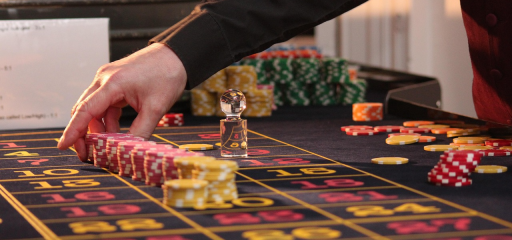
If you like baccarat, you’ve probably heard of the Mikki Mase gambling strategy. It’s gained a lot of attention, mainly through online discussions and media appearances. Mikki Mase is known for high-stakes baccarat. He’s made claims of consistent success, but hasn’t disclosed a verifiable system. The lack of a clear methodology led to speculation and oversimplification of what we know about his betting style.
From a mathematical standpoint, these situations give us an opportunity to clarify. We won’t assume there’s any formula for the Mikki baccarat strategy. We’ll just use probability theory, expected value, and statistical reasoning. We’ll explain how baccarat works mathematically, and why certain betting ideas seem convincing.
Who Is Mikki Mase, and Does He Have an Advanced Baccarat Strategy?
Mikki Mase is a high-stakes baccarat player. He built his reputation on wins, selective anecdotes, and appearances in gambling-related media. Discussions on online forums often portray him as someone with exceptional insights into the game. But they mostly rely on secondhand descriptions instead of documented evidence. The important thing to keep in mind is that there isn’t a published Mikki Mase strategy, so we cannot discuss a rule-based system or betting algorithm that would consistently outperform standard play.
Most explanations of how the Mikki Mase approach works are reconstructed by observers. The commonly described characteristics of his approach are an emphasis on banker bets and avoidance of tie wagers. The idea is that outcomes can be anticipated by recognizing patterns as the game progresses. From a mathematical perspective, these characteristics don’t give us a proper method. They align with widely known principles about baccarat probabilities.
Let’s check some common claims for a baccarat winning strategy:
| Method | Claim | Mathematical assessment |
| Pattern recognition | You can anticipate outcomes | Baccarat hands are independent events |
| Banker-focused betting | Increases winning chances | Lower house edge, but doesn’t create positive expected value |
| Adapted bet sizes | Improves long-term results | Changes variance, but not expected value |
| Consistent profitability | Success driven by a strategy | No statistical proof is available |
From a statistical point of view, something like the “best baccarat player Mikki” cannot be confirmed through data alone. The outcomes in baccarat follow fixed probability distributions. There’s no publicly available evidence to prove that any individual can consistently alter those distributions over time. Large wins, even repeated ones, can naturally occur within high-variance environments. This is especially the case with large bets.
Mathematical Foundations of Baccarat
Understanding baccarat from a math perspective is important when evaluating any strategy. Regardless of its reputation or anecdotal success, baccarat is guided by fixed probabilities, predefined drawing rules, and a house edge. These factors determine long-term outcomes.
Casino game selection and statistical transparency
To choose a casino game based on its mathematical characteristics, you have to compare return-to-player rates, variance levels, and payout structures. For probability-focused analysis, players examine data tables that show how different wagers perform over thousands or millions of simulated rounds. Resources that organize these statistics in a clear way make it easier to evaluate casino games objectively, and the reviews available at online casino Magyar often rely on probability data, RTP figures, and rule variations. This type of information helps us understand why some bets lose more slowly than others, but we can never imply that losses can be entirely avoided. Mathematical transparency is essential when evaluating any strategy.
Even when probability data is clear, we must interpret it correctly. A lower house edge doesn’t mean a bet is profitable. It only means that the expected loss per wager is smaller. Thus, short-term results can significantly deviate from expected value. They create the impression of skill or control. The effects are more pronounced as the bet sizes increase. That explains why high-stakes play can produce extreme outcomes. But it doesn’t alter the underlying mathematics.
Probability and independent hands
Each hand in this game is an independent event. The cards used in one round don’t influence the probabilities of the next round, even though players often perceive trends in the results. This independence means that sequences such as repeated banker wins or alternating outcomes happen naturally and randomly. The patterns may seem meaningful in a game, but probability theory shows they don’t provide predictive information about future hands.
Expected value and house edge
Expected value is the key mathematical concept we use to evaluate casino bets. It represents the average outcome per wager over a large number of trials. In baccarat, all standard bets have a negative expected value, because of the house edge. The banker bet is often preferred because its expected loss is smaller, but not because it generates profits. Over time, this difference becomes measurable. However, it never reverses the overall expectation.
What Is Mikki Mase Strategy as Commonly Described?
The term “Mikki Mase baccarat strategy” doesn’t refer to a formally defined system with rules you could follow. Instead, it’s a label applied to ideas gathered from public statements, interviews, and secondhand descriptions. These interpretations attempt to explain Mikki Mase’s reported baccarat results by a few familiar betting concepts.
Most descriptions revolve around these points:
- Strong preference for banker bets
Banker bets have the lowest house edge in baccarat. In standard rules, the banker bet has an edge of approximately 1.06%, compared to about 1.24% for the player bet, and more than 14% for the tie bet.
The difference exists because the banker hand follows fixed drawing rules, which favor it slightly over the player hand. Choosing the banker bet minimizes expected losses over time, but it’s not something that brings a positive expected value. The outcome stays negative on average, so losses are still expected in the long run.
- Avoiding tie wagers
When asked “how does Mikki Mase win,” many observers said he’s been avoiding tie bets altogether. This recommendation aligns with basic probability analysis. Tie bets have a much higher house edge, due to their low probability of occurrence. They are statistically unfavorable, regardless of the betting pattern or timing.
- Adjusting the bet sizes based on previous outcomes
In the adaptive bet sizing method, the wager amounts increase or decrease, depending on recent wins or losses. From a mathematical perspective, changing the bet size affects variance, but not the expected value. Larger bets increase the magnitude of short-term fluctuation. They can lead to dramatic wins or losses. However, the average outcome per unit wagered is unchanged.
- Belief in pattern recognition during play
Some descriptions of the Mikki Mase baccarat strategy suggest that the player can anticipate outcomes by observing the sequences of previous results. However, baccarat hands are independent events. Each new round is unaffected by what happened before. Apparent patterns show up naturally in random sequences. They don’t give you predictive power.
| Metric | Observed behavior | Mathematical basis |
| Bet selection | Preference for banker bets | Lowest house edge (1.06%), still negative expected value |
| Win rate | Perceived as high | Short-term variance can inflate the actual results |
| Bet sizing | Adjusted after wins/losses | Changes variance, but not expected value |
| Session outcomes | Large wins reported | High stakes amplify volatility |
| Long-term expectation | Assumed profitability | Negative expected value over time |
Conclusion: Does the Mikki Mase Baccarat Strategy Work?
There’s a big difference between narrative success and mathematical reality. Public discussions frame Mikki Mase’s baccarat strategy as evidence of an advanced system. But we’ve seen no verifiable results or statistical framework to prove a consistent advantage over the house.
The approach (banker-focused betting, avoiding tie wagers, adaptive bets, and pattern recognition) is well-explained by probability theory.

Related to This Article
More math articles
- 10 Most Common TExES Core Math Questions
- 10 Most Common SAT Math Questions
- 5 Best Math Books for College Students: A Comprehensive Review
- How to Simplify Radical Expressions? (+FREE Worksheet!)
- Is There a Trick to Simplifying Radicals?
- How to Solve Word Problems with Four-digit Dividends and Two-digit Divisors
- Intelligent Math Puzzle – Challenge 89
- 6th Grade Georgia Milestones Assessment Math Worksheets: FREE & Printable
- 10 Most Common 7th Grade SBAC Math Questions
- The Butterfly Effect in Mathematics: Small Changes, Big Impact












What people say about "Analyzing the Mikki Mase Gambling Strategy Using Math - Effortless Math: We Help Students Learn to LOVE Mathematics"?
No one replied yet.