How to Factor Quadratics Using Algebra Tiles
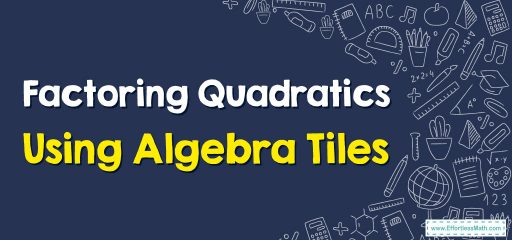
Factoring Quadratics Using Algebra Tiles-Example 1:
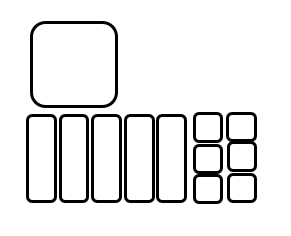
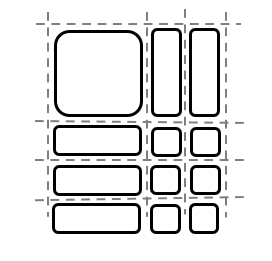
Determine both binomials relate to the divisions, such that (x+2) for the horizontal division and (x+3) for the vertical. As follow:
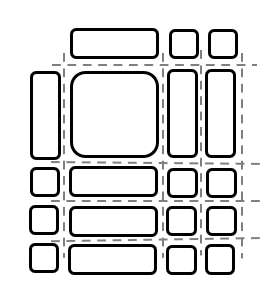
In the end, multiply two expressions and check the answer,
((x+2)(x+3)=x^2+5x+6)

Understanding Algebra Tiles: A Visual Approach
Algebra tiles are powerful manipulatives that transform abstract algebraic concepts into concrete, visual representations. They allow students to build, manipulate, and understand equations in ways that traditional symbolic notation cannot always accomplish. By moving from the concrete (physical tiles) to the pictorial (drawn representations) to the abstract (algebraic symbols), students develop deeper conceptual understanding and retention.
The three primary tile types represent different units of value. A unit square (1×1) represents the number 1. A rectangular bar (1×x) represents the variable (x). A large square (x×x) represents (x^2). When working with factoring and multiplication, these tiles help visualize why certain expressions multiply to create others, making the distributive property visible and tangible.
Working with Unit Tiles
Unit tiles are the foundation of algebra tile work. Each small square represents exactly 1. When you group unit tiles together, you’re building numbers and understanding composition. For example, 6 unit tiles arranged in a row represent the number 6. If you rearrange these same 6 tiles into a 2×3 rectangle, you’re simultaneously showing that 2 × 3 = 6. This visual representation of multiplication as rectangular area is fundamental for understanding why the distributive property works the way it does.
Linear Tiles and Variables
Rectangular tiles (bars) have length (x) and width 1, so their area is (x). These tiles are essential for representing polynomial terms with variables. A collection of these bars can represent expressions like (2x) or (5x). The key insight is that (x) represents an unknown quantity, and these tiles show multiple copies of that unknown. When you multiply a bar (x) by a unit tile (1), you get an area of (x × 1 = x).
Quadratic Tiles and (x^2) Terms
Large square tiles with sides of length (x) represent (x^2). The most important concept here is that the area of this square is (x × x = x^2). This visual representation helps students understand why (x^2) grows more rapidly than (x) as (x) increases. When factoring quadratics, students can arrange one (x^2) tile, multiple (x) tiles, and unit tiles to form a rectangle, discovering the factors in the process.
Common Mistakes and How to Avoid Them
Mistake 1: Confusing the dimension with the value. Students sometimes think an (x) tile has a value of (x) in both dimensions. Remember: one dimension is (x), the other is always 1. An (x^2) tile is always a perfect square with both sides equal to (x).
Mistake 2: Not balancing positive and negative tiles. Every operation must maintain balance. If you add tiles to one side, you must add the same to the other. Red (or shaded) tiles typically represent negative values. Always ensure your equation stays balanced.
Mistake 3: Forgetting to verify the area. After you’ve arranged tiles to form a rectangle, multiply the dimensions to verify that the product equals your original expression. For example, if you factor (x^2 + 5x + 6) into a rectangle with length ((x + 3)) and width ((x + 2)), verify: ((x + 3)(x + 2) = x^2 + 2x + 3x + 6 = x^2 + 5x + 6). ✓
Mistake 4: Missing some combinations during multiplication. When multiplying binomials like ((x + 2)(x + 3)), use the FOIL method systematically: First (x · x), Outer (x · 3), Inner (2 · x), Last (2 · 3). With tiles, you’re creating a rectangle with sides labeled ((x + 2)) and ((x + 3)), and the interior is divided into four regions representing each multiplication.
Mistake 5: Incorrectly handling negative factors. When factoring expressions with negative terms, use opposite-colored tiles (or note which tiles are “removed”). Remember that ((-1) × (-1) = (+1)), so two negative factors multiply to give a positive result.
Worked Examples with Algebra Tiles
Example: Factoring (x^2 + 7x + 12)
Start with one (x^2) tile, seven (x) tiles, and twelve unit tiles. Arrange these into a rectangle. The (x^2) tile goes in the corner. Arrange the (x) tiles along two edges: you need to place them so they extend from the (x^2) tile. After trying different arrangements, you discover that placing four (x) tiles along one edge and three along the other creates a rectangle. This arrangement naturally forms a rectangle with dimensions ((x + 4)) by ((x + 3)). The twelve unit tiles fill the remaining space. Therefore, (x^2 + 7x + 12 = (x + 4)(x + 3)).
Example: Adding Polynomials (2x + 3) and (x + 5)
Draw two (x) tiles and three unit tiles for the first polynomial. Draw one (x) tile and five unit tiles for the second. Combine all tiles: you now have three (x) tiles and eight unit tiles total. The expression is (3x + 8).
Example: Multiplying ((x + 2) × (x + 3))
Create a rectangle where one side is labeled ((x + 2)) and the adjacent side is labeled ((x + 3)). Divide the rectangle into four regions: top-left has one (x^2) tile (x · x), top-right has three (x) tiles (x · 3), bottom-left has two (x) tiles (2 · x), bottom-right has six unit tiles (2 · 3). Combining, you get one (x^2) tile, five (x) tiles, and six units. The product is (x^2 + 5x + 6).
FAQ: Algebra Tiles Questions
Q: Why are algebra tiles better than just learning the algebraic rules?
A: Algebra tiles engage multiple senses and learning modalities. Students who struggle with purely symbolic representations often have breakthrough moments with tiles because they can touch, move, and arrange physical or drawn representations. This concrete understanding builds a foundation for abstract thinking. Research shows that students who use manipulatives before symbolic notation learn more deeply and retain more.
Q: Can I use algebra tiles for expressions with larger coefficients?
A: Yes, but it becomes impractical. For example, factoring (x^2 + 47x + 500) would require 500 unit tiles, clearly unwieldy. At this point, transition to algebraic methods. Tiles are most useful for building understanding with smaller coefficients (typically single digits). The goal is to internalize the process so you can do it symbolically.
Q: How do I represent negative terms with algebra tiles?
A: Use a different color (often red) or a marking system to indicate negative values. For example, to show (x^2 – 3x + 2), use one positive (x^2) tile, three negative (x) tiles (shown in red or with an X mark), and two positive unit tiles. When combining, a positive and negative of the same type cancel out (they form a “zero pair”).
Q: What if my rectangle doesn’t come out even?
A: That’s a signal that the polynomial doesn’t factor nicely with integer factors. For instance, (x^2 + 5x + 5) is prime (doesn’t factor over the integers). The tiles won’t arrange into a perfect rectangle, which is valuable information. This visual feedback helps students understand which polynomials are factorable and which are not.
Q: Are there digital versions of algebra tiles?
A: Yes! Many interactive programs and apps simulate algebra tiles, allowing students to work digitally. These can be helpful for homework and practice, though many educators recommend physical tiles first to develop tactile understanding.
Q: How do algebra tiles connect to the distributive property?
A: The distributive property states that (a(b + c) = ab + ac). With algebra tiles, if you have a rectangle with length (a) and width ((b + c)), the width can be split into a section of length (b) and a section of length (c). The total area is the sum of the two sub-rectangles: one with area (ab) and one with area (ac). This visual proof is why the distributive property works.
Study Tips for Mastering Algebra Tiles
Build first, calculate second. When learning a new operation, physically build it with tiles (or draw it carefully) before trying to compute symbolically. This builds intuition.
Verify every multiplication and factoring. Always expand factors back to the original polynomial, or reduce an expression back to its original to confirm correctness. With tiles, this means checking that your arranged rectangle contains exactly the tiles you started with.
Use different colors strategically. If you have red and black tiles (or can color code), use different colors for positive and negative terms. This makes zero pairs (one positive and one negative of the same type that cancel) instantly recognizable.
Explain your thinking aloud. Whether working with physical tiles or drawings, narrate what you’re doing. “I’m moving three (x) tiles to arrange them along the edge of my (x^2) tile..” This verbal processing reinforces learning.
Connect tiles to symbols every step. After each tile manipulation, write the corresponding algebraic expression. “Three (x) tiles and five unit tiles equals (3x + 5).” This bridges concrete and abstract thinking.
Related Topics and Further Learning
Once you’ve mastered algebra tiles, deepen your understanding with these related topics: solving quadratic equations using algebra tiles, completing the square, the quadratic formula, and polynomial long division. Each of these builds on the foundational skills you develop with manipulatives.
Understanding Algebra Tiles: A Visual Approach
Algebra tiles are powerful manipulatives that transform abstract algebraic concepts into concrete, visual representations. They allow students to build, manipulate, and understand equations in ways that traditional symbolic notation cannot always accomplish. By moving from the concrete (physical tiles) to the pictorial (drawn representations) to the abstract (algebraic symbols), students develop deeper conceptual understanding and retention.
The three primary tile types represent different units of value. A unit square (1×1) represents the number 1. A rectangular bar (1×x) represents the variable (x). A large square (x×x) represents (x^2). When working with factoring and multiplication, these tiles help visualize why certain expressions multiply to create others, making the distributive property visible and tangible.
Working with Unit Tiles
Unit tiles are the foundation of algebra tile work. Each small square represents exactly 1. When you group unit tiles together, you’re building numbers and understanding composition. For example, 6 unit tiles arranged in a row represent the number 6. If you rearrange these same 6 tiles into a 2×3 rectangle, you’re simultaneously showing that 2 × 3 = 6. This visual representation of multiplication as rectangular area is necessary for understanding why the distributive property works the way it does.
Linear Tiles and Variables
Rectangular tiles (bars) have length (x) and width 1, so their area is (x). These tiles are essential for representing polynomial terms with variables. A collection of these bars can represent expressions like (2x) or (5x). The key insight is that (x) represents an unknown quantity, and these tiles show multiple copies of that unknown. When you multiply a bar (x) by a unit tile (1), you get an area of (x × 1 = x).
Quadratic Tiles and (x^2) Terms
Large square tiles with sides of length (x) represent (x^2). The most important concept here is that the area of this square is (x × x = x^2). This visual representation helps students understand why (x^2) grows more rapidly than (x) as (x) increases. When factoring quadratics, students can arrange one (x^2) tile, multiple (x) tiles, and unit tiles to form a rectangle, discovering the factors in the process.
Common Mistakes and How to Avoid Them
Mistake 1: Confusing the dimension with the value. Students sometimes think an (x) tile has a value of (x) in both dimensions. Remember: one dimension is (x), the other is always 1. An (x^2) tile is always a perfect square with both sides equal to (x).
Mistake 2: Not balancing positive and negative tiles. Every operation must maintain balance. If you add tiles to one side, you must add the same to the other. Red (or shaded) tiles typically represent negative values. Always ensure your equation stays balanced.
Mistake 3: Forgetting to verify the area. After you’ve arranged tiles to form a rectangle, multiply the dimensions to verify that the product equals your original expression. For example, if you factor (x^2 + 5x + 6) into a rectangle with length ((x + 3)) and width ((x + 2)), verify: ((x + 3)(x + 2) = x^2 + 2x + 3x + 6 = x^2 + 5x + 6). ✓
Mistake 4: Missing some combinations during multiplication. When multiplying binomials like ((x + 2)(x + 3)), use the FOIL method systematically: First (x · x), Outer (x · 3), Inner (2 · x), Last (2 · 3). With tiles, you’re creating a rectangle with sides labeled ((x + 2)) and ((x + 3)), and the interior is divided into four regions representing each multiplication.
Mistake 5: Incorrectly handling negative factors. When factoring expressions with negative terms, use opposite-colored tiles (or note which tiles are “removed”). Remember that ((-1) × (-1) = (+1)), so two negative factors multiply to give a positive result.
Worked Examples with Algebra Tiles
Example: Factoring (x^2 + 7x + 12)
Start with one (x^2) tile, seven (x) tiles, and twelve unit tiles. Arrange these into a rectangle. The (x^2) tile goes in the corner. Arrange the (x) tiles along two edges: you need to place them so they extend from the (x^2) tile. After trying different arrangements, you discover that placing four (x) tiles along one edge and three along the other creates a rectangle. This arrangement naturally forms a rectangle with dimensions ((x + 4)) by ((x + 3)). The twelve unit tiles fill the remaining space. Therefore, (x^2 + 7x + 12 = (x + 4)(x + 3)).
Example: Adding Polynomials (2x + 3) and (x + 5)
Draw two (x) tiles and three unit tiles for the first polynomial. Draw one (x) tile and five unit tiles for the second. Combine all tiles: you now have three (x) tiles and eight unit tiles total. The expression is (3x + 8).
Example: Multiplying ((x + 2) × (x + 3))
Create a rectangle where one side is labeled ((x + 2)) and the adjacent side is labeled ((x + 3)). Divide the rectangle into four regions: top-left has one (x^2) tile (x · x), top-right has three (x) tiles (x · 3), bottom-left has two (x) tiles (2 · x), bottom-right has six unit tiles (2 · 3). Combining, you get one (x^2) tile, five (x) tiles, and six units. The product is (x^2 + 5x + 6).
FAQ: Algebra Tiles Questions
Q: Why are algebra tiles better than just learning the algebraic rules?
A: Algebra tiles engage multiple senses and learning modalities. Students who struggle with purely symbolic representations often have breakthrough moments with tiles because they can touch, move, and arrange physical or drawn representations. This concrete understanding builds a foundation for abstract thinking. Research shows that students who use manipulatives before symbolic notation learn more deeply and retain more.
Q: Can I use algebra tiles for expressions with larger coefficients?
A: Yes, but it becomes impractical. For example, factoring (x^2 + 47x + 500) would require 500 unit tiles, clearly unwieldy. At this point, transition to algebraic methods. Tiles are most useful for building understanding with smaller coefficients (typically single digits). The goal is to internalize the process so you can do it symbolically.
Q: How do I represent negative terms with algebra tiles?
A: Use a different color (often red) or a marking system to indicate negative values. For example, to show (x^2 – 3x + 2), use one positive (x^2) tile, three negative (x) tiles (shown in red or with an X mark), and two positive unit tiles. When combining, a positive and negative of the same type cancel out (they form a “zero pair”).
Q: What if my rectangle doesn’t come out even?
A: That’s a signal that the polynomial doesn’t factor nicely with integer factors. For instance, (x^2 + 5x + 5) is prime (doesn’t factor over the integers). The tiles won’t arrange into a perfect rectangle, which is valuable information. This visual feedback helps students understand which polynomials are factorable and which are not.
Q: Are there digital versions of algebra tiles?
A: Yes! Many interactive programs and apps simulate algebra tiles, allowing students to work digitally. These can be helpful for homework and practice, though many educators recommend physical tiles first to develop tactile understanding.
Q: How do algebra tiles connect to the distributive property?
A: The distributive property states that (a(b + c) = ab + ac). With algebra tiles, if you have a rectangle with length (a) and width ((b + c)), the width can be split into a section of length (b) and a section of length (c). The total area is the sum of the two sub-rectangles: one with area (ab) and one with area (ac). This visual proof is why the distributive property works.
Study Tips for Mastering Algebra Tiles
Build first, calculate second. When learning a new operation, physically build it with tiles (or draw it carefully) before trying to compute symbolically. This builds intuition.
Verify every multiplication and factoring. Always expand factors back to the original polynomial, or reduce an expression back to its original to confirm correctness. With tiles, this means checking that your arranged rectangle contains exactly the tiles you started with.
Use different colors strategically. If you have red and black tiles (or can color code), use different colors for positive and negative terms. This makes zero pairs (one positive and one negative of the same type that cancel) instantly recognizable.
Explain your thinking aloud. Whether working with physical tiles or drawings, narrate what you’re doing. “I’m moving three (x) tiles to arrange them along the edge of my (x^2) tile..” This verbal processing reinforces learning.
Connect tiles to symbols every step. After each tile manipulation, write the corresponding algebraic expression. “Three (x) tiles and five unit tiles equals (3x + 5).” This bridges concrete and abstract thinking.
Related Topics and Further Learning
Once you’ve mastered algebra tiles, deepen your understanding with these related topics: solving quadratic equations using algebra tiles, completing the square, the quadratic formula, and polynomial long division. Each of these builds on the foundational skills you develop with manipulatives.
Understanding Algebra Tiles: A Visual Approach
Algebra tiles are powerful manipulatives that transform abstract algebraic concepts into concrete, visual representations. They allow students to build, manipulate, and understand equations in ways that traditional symbolic notation cannot always accomplish. By moving from the concrete (physical tiles) to the pictorial (drawn representations) to the abstract (algebraic symbols), students develop deeper conceptual understanding and retention.
The three primary tile types represent different units of value. A unit square (1×1) represents the number 1. A rectangular bar (1×x) represents the variable (x). A large square (x×x) represents (x^2). When working with factoring and multiplication, these tiles help visualize why certain expressions multiply to create others, making the distributive property visible and tangible.
Working with Unit Tiles
Unit tiles are the foundation of algebra tile work. Each small square represents exactly 1. When you group unit tiles together, you’re building numbers and understanding composition. For example, 6 unit tiles arranged in a row represent the number 6. If you rearrange these same 6 tiles into a 2×3 rectangle, you’re simultaneously showing that 2 × 3 = 6. This visual representation of multiplication as rectangular area is essential for understanding why the distributive property works the way it does.
Linear Tiles and Variables
Rectangular tiles (bars) have length (x) and width 1, so their area is (x). These tiles are essential for representing polynomial terms with variables. A collection of these bars can represent expressions like (2x) or (5x). The key insight is that (x) represents an unknown quantity, and these tiles show multiple copies of that unknown. When you multiply a bar (x) by a unit tile (1), you get an area of (x × 1 = x).
Quadratic Tiles and (x^2) Terms
Large square tiles with sides of length (x) represent (x^2). The most important concept here is that the area of this square is (x × x = x^2). This visual representation helps students understand why (x^2) grows more rapidly than (x) as (x) increases. When factoring quadratics, students can arrange one (x^2) tile, multiple (x) tiles, and unit tiles to form a rectangle, discovering the factors in the process.
Common Mistakes and How to Avoid Them
Mistake 1: Confusing the dimension with the value. Students sometimes think an (x) tile has a value of (x) in both dimensions. Remember: one dimension is (x), the other is always 1. An (x^2) tile is always a perfect square with both sides equal to (x).
Mistake 2: Not balancing positive and negative tiles. Every operation must maintain balance. If you add tiles to one side, you must add the same to the other. Red (or shaded) tiles typically represent negative values. Always ensure your equation stays balanced.
Mistake 3: Forgetting to verify the area. After you’ve arranged tiles to form a rectangle, multiply the dimensions to verify that the product equals your original expression. For example, if you factor (x^2 + 5x + 6) into a rectangle with length ((x + 3)) and width ((x + 2)), verify: ((x + 3)(x + 2) = x^2 + 2x + 3x + 6 = x^2 + 5x + 6). ✓
Mistake 4: Missing some combinations during multiplication. When multiplying binomials like ((x + 2)(x + 3)), use the FOIL method systematically: First (x · x), Outer (x · 3), Inner (2 · x), Last (2 · 3). With tiles, you’re creating a rectangle with sides labeled ((x + 2)) and ((x + 3)), and the interior is divided into four regions representing each multiplication.
Mistake 5: Incorrectly handling negative factors. When factoring expressions with negative terms, use opposite-colored tiles (or note which tiles are “removed”). Remember that ((-1) × (-1) = (+1)), so two negative factors multiply to give a positive result.
Worked Examples with Algebra Tiles
Example: Factoring (x^2 + 7x + 12)
Start with one (x^2) tile, seven (x) tiles, and twelve unit tiles. Arrange these into a rectangle. The (x^2) tile goes in the corner. Arrange the (x) tiles along two edges: you need to place them so they extend from the (x^2) tile. After trying different arrangements, you discover that placing four (x) tiles along one edge and three along the other creates a rectangle. This arrangement naturally forms a rectangle with dimensions ((x + 4)) by ((x + 3)). The twelve unit tiles fill the remaining space. Therefore, (x^2 + 7x + 12 = (x + 4)(x + 3)).
Example: Adding Polynomials (2x + 3) and (x + 5)
Draw two (x) tiles and three unit tiles for the first polynomial. Draw one (x) tile and five unit tiles for the second. Combine all tiles: you now have three (x) tiles and eight unit tiles total. The expression is (3x + 8).
Example: Multiplying ((x + 2) × (x + 3))
Create a rectangle where one side is labeled ((x + 2)) and the adjacent side is labeled ((x + 3)). Divide the rectangle into four regions: top-left has one (x^2) tile (x · x), top-right has three (x) tiles (x · 3), bottom-left has two (x) tiles (2 · x), bottom-right has six unit tiles (2 · 3). Combining, you get one (x^2) tile, five (x) tiles, and six units. The product is (x^2 + 5x + 6).
FAQ: Algebra Tiles Questions
Q: Why are algebra tiles better than just learning the algebraic rules?
A: Algebra tiles engage multiple senses and learning modalities. Students who struggle with purely symbolic representations often have breakthrough moments with tiles because they can touch, move, and arrange physical or drawn representations. This concrete understanding builds a foundation for abstract thinking. Research shows that students who use manipulatives before symbolic notation learn more deeply and retain more.
Q: Can I use algebra tiles for expressions with larger coefficients?
A: Yes, but it becomes impractical. For example, factoring (x^2 + 47x + 500) would require 500 unit tiles, clearly unwieldy. At this point, transition to algebraic methods. Tiles are most useful for building understanding with smaller coefficients (typically single digits). The goal is to internalize the process so you can do it symbolically.
Q: How do I represent negative terms with algebra tiles?
A: Use a different color (often red) or a marking system to indicate negative values. For example, to show (x^2 – 3x + 2), use one positive (x^2) tile, three negative (x) tiles (shown in red or with an X mark), and two positive unit tiles. When combining, a positive and negative of the same type cancel out (they form a “zero pair”).
Q: What if my rectangle doesn’t come out even?
A: That’s a signal that the polynomial doesn’t factor nicely with integer factors. For instance, (x^2 + 5x + 5) is prime (doesn’t factor over the integers). The tiles won’t arrange into a perfect rectangle, which is valuable information. This visual feedback helps students understand which polynomials are factorable and which are not.
Q: Are there digital versions of algebra tiles?
A: Yes! Many interactive programs and apps simulate algebra tiles, allowing students to work digitally. These can be helpful for homework and practice, though many educators recommend physical tiles first to develop tactile understanding.
Q: How do algebra tiles connect to the distributive property?
A: The distributive property states that (a(b + c) = ab + ac). With algebra tiles, if you have a rectangle with length (a) and width ((b + c)), the width can be split into a section of length (b) and a section of length (c). The total area is the sum of the two sub-rectangles: one with area (ab) and one with area (ac). This visual proof is why the distributive property works.
Study Tips for Mastering Algebra Tiles
Build first, calculate second. When learning a new operation, physically build it with tiles (or draw it carefully) before trying to compute symbolically. This builds intuition.
Verify every multiplication and factoring. Always expand factors back to the original polynomial, or reduce an expression back to its original to confirm correctness. With tiles, this means checking that your arranged rectangle contains exactly the tiles you started with.
Use different colors strategically. If you have red and black tiles (or can color code), use different colors for positive and negative terms. This makes zero pairs (one positive and one negative of the same type that cancel) instantly recognizable.
Explain your thinking aloud. Whether working with physical tiles or drawings, narrate what you’re doing. “I’m moving three (x) tiles to arrange them along the edge of my (x^2) tile..” This verbal processing reinforces learning.
Connect tiles to symbols every step. After each tile manipulation, write the corresponding algebraic expression. “Three (x) tiles and five unit tiles equals (3x + 5).” This bridges concrete and abstract thinking.
Related Topics and Further Learning
Once you’ve mastered algebra tiles, deepen your understanding with these related topics: solving quadratic equations using algebra tiles, completing the square, the quadratic formula, and polynomial long division. Each of these builds on the foundational skills you develop with manipulatives.
Understanding Algebra Tiles: A Visual Approach
Algebra tiles are powerful manipulatives that transform abstract algebraic concepts into concrete, visual representations. They allow students to build, manipulate, and understand equations in ways that traditional symbolic notation cannot always accomplish. By moving from the concrete (physical tiles) to the pictorial (drawn representations) to the abstract (algebraic symbols), students develop deeper conceptual understanding and retention.
The three primary tile types represent different units of value. A unit square (1×1) represents the number 1. A rectangular bar (1×x) represents the variable (x). A large square (x×x) represents (x^2). When working with factoring and multiplication, these tiles help visualize why certain expressions multiply to create others, making the distributive property visible and tangible.
Working with Unit Tiles
Unit tiles are the foundation of algebra tile work. Each small square represents exactly 1. When you group unit tiles together, you’re building numbers and understanding composition. For example, 6 unit tiles arranged in a row represent the number 6. If you rearrange these same 6 tiles into a 2×3 rectangle, you’re simultaneously showing that 2 × 3 = 6. This visual representation of multiplication as rectangular area is important for understanding why the distributive property works the way it does.
Linear Tiles and Variables
Rectangular tiles (bars) have length (x) and width 1, so their area is (x). These tiles are essential for representing polynomial terms with variables. A collection of these bars can represent expressions like (2x) or (5x). The key insight is that (x) represents an unknown quantity, and these tiles show multiple copies of that unknown. When you multiply a bar (x) by a unit tile (1), you get an area of (x × 1 = x).
Quadratic Tiles and (x^2) Terms
Large square tiles with sides of length (x) represent (x^2). The most important concept here is that the area of this square is (x × x = x^2). This visual representation helps students understand why (x^2) grows more rapidly than (x) as (x) increases. When factoring quadratics, students can arrange one (x^2) tile, multiple (x) tiles, and unit tiles to form a rectangle, discovering the factors in the process.
Common Mistakes and How to Avoid Them
Mistake 1: Confusing the dimension with the value. Students sometimes think an (x) tile has a value of (x) in both dimensions. Remember: one dimension is (x), the other is always 1. An (x^2) tile is always a perfect square with both sides equal to (x).
Mistake 2: Not balancing positive and negative tiles. Every operation must maintain balance. If you add tiles to one side, you must add the same to the other. Red (or shaded) tiles typically represent negative values. Always ensure your equation stays balanced.
Mistake 3: Forgetting to verify the area. After you’ve arranged tiles to form a rectangle, multiply the dimensions to verify that the product equals your original expression. For example, if you factor (x^2 + 5x + 6) into a rectangle with length ((x + 3)) and width ((x + 2)), verify: ((x + 3)(x + 2) = x^2 + 2x + 3x + 6 = x^2 + 5x + 6). ✓
Mistake 4: Missing some combinations during multiplication. When multiplying binomials like ((x + 2)(x + 3)), use the FOIL method systematically: First (x · x), Outer (x · 3), Inner (2 · x), Last (2 · 3). With tiles, you’re creating a rectangle with sides labeled ((x + 2)) and ((x + 3)), and the interior is divided into four regions representing each multiplication.
Mistake 5: Incorrectly handling negative factors. When factoring expressions with negative terms, use opposite-colored tiles (or note which tiles are “removed”). Remember that ((-1) × (-1) = (+1)), so two negative factors multiply to give a positive result.
Worked Examples with Algebra Tiles
Example: Factoring (x^2 + 7x + 12)
Start with one (x^2) tile, seven (x) tiles, and twelve unit tiles. Arrange these into a rectangle. The (x^2) tile goes in the corner. Arrange the (x) tiles along two edges: you need to place them so they extend from the (x^2) tile. After trying different arrangements, you discover that placing four (x) tiles along one edge and three along the other creates a rectangle. This arrangement naturally forms a rectangle with dimensions ((x + 4)) by ((x + 3)). The twelve unit tiles fill the remaining space. Therefore, (x^2 + 7x + 12 = (x + 4)(x + 3)).
Example: Adding Polynomials (2x + 3) and (x + 5)
Draw two (x) tiles and three unit tiles for the first polynomial. Draw one (x) tile and five unit tiles for the second. Combine all tiles: you now have three (x) tiles and eight unit tiles total. The expression is (3x + 8).
Example: Multiplying ((x + 2) × (x + 3))
Create a rectangle where one side is labeled ((x + 2)) and the adjacent side is labeled ((x + 3)). Divide the rectangle into four regions: top-left has one (x^2) tile (x · x), top-right has three (x) tiles (x · 3), bottom-left has two (x) tiles (2 · x), bottom-right has six unit tiles (2 · 3). Combining, you get one (x^2) tile, five (x) tiles, and six units. The product is (x^2 + 5x + 6).
FAQ: Algebra Tiles Questions
Q: Why are algebra tiles better than just learning the algebraic rules?
A: Algebra tiles engage multiple senses and learning modalities. Students who struggle with purely symbolic representations often have breakthrough moments with tiles because they can touch, move, and arrange physical or drawn representations. This concrete understanding builds a foundation for abstract thinking. Research shows that students who use manipulatives before symbolic notation learn more deeply and retain more.
Q: Can I use algebra tiles for expressions with larger coefficients?
A: Yes, but it becomes impractical. For example, factoring (x^2 + 47x + 500) would require 500 unit tiles, clearly unwieldy. At this point, transition to algebraic methods. Tiles are most useful for building understanding with smaller coefficients (typically single digits). The goal is to internalize the process so you can do it symbolically.
Q: How do I represent negative terms with algebra tiles?
A: Use a different color (often red) or a marking system to indicate negative values. For example, to show (x^2 – 3x + 2), use one positive (x^2) tile, three negative (x) tiles (shown in red or with an X mark), and two positive unit tiles. When combining, a positive and negative of the same type cancel out (they form a “zero pair”).
Q: What if my rectangle doesn’t come out even?
A: That’s a signal that the polynomial doesn’t factor nicely with integer factors. For instance, (x^2 + 5x + 5) is prime (doesn’t factor over the integers). The tiles won’t arrange into a perfect rectangle, which is valuable information. This visual feedback helps students understand which polynomials are factorable and which are not.
Q: Are there digital versions of algebra tiles?
A: Yes! Many interactive programs and apps simulate algebra tiles, allowing students to work digitally. These can be helpful for homework and practice, though many educators recommend physical tiles first to develop tactile understanding.
Q: How do algebra tiles connect to the distributive property?
A: The distributive property states that (a(b + c) = ab + ac). With algebra tiles, if you have a rectangle with length (a) and width ((b + c)), the width can be split into a section of length (b) and a section of length (c). The total area is the sum of the two sub-rectangles: one with area (ab) and one with area (ac). This visual proof is why the distributive property works.
Study Tips for Mastering Algebra Tiles
Build first, calculate second. When learning a new operation, physically build it with tiles (or draw it carefully) before trying to compute symbolically. This builds intuition.
Verify every multiplication and factoring. Always expand factors back to the original polynomial, or reduce an expression back to its original to confirm correctness. With tiles, this means checking that your arranged rectangle contains exactly the tiles you started with.
Use different colors strategically. If you have red and black tiles (or can color code), use different colors for positive and negative terms. This makes zero pairs (one positive and one negative of the same type that cancel) instantly recognizable.
Explain your thinking aloud. Whether working with physical tiles or drawings, narrate what you’re doing. “I’m moving three (x) tiles to arrange them along the edge of my (x^2) tile..” This verbal processing reinforces learning.
Connect tiles to symbols every step. After each tile manipulation, write the corresponding algebraic expression. “Three (x) tiles and five unit tiles equals (3x + 5).” This bridges concrete and abstract thinking.
Related Topics and Further Learning
Once you’ve mastered algebra tiles, deepen your understanding with these related topics: solving quadratic equations using algebra tiles, completing the square, the quadratic formula, and polynomial long division. Each of these builds on the foundational skills you develop with manipulatives.

Related to This Article
More math articles
- Hirschi’s Social Bond Theory
- Can you Teach in California without a Credential?
- Top 10 GRE Math Books: To Help You Succeed on the GRE Math Test
- Free Grade 8 English Worksheets for California Students
- Chapter 28: Interest Groups
- How Is the SHSAT Test Scored?
- Line Plot
- West Virginia WVGSA Grade 4 Math Free Worksheets: Printable Grade 4 Math Practice with Answer Keys
- The Tie Bet: A Probability Autopsy of Baccarat’s Worst Wager
- 3rd Grade SBAC Math Practice Test Questions






What people say about "Factoring Quadratics with Algebra Tiles"?
No one replied yet.