5 Skills Educators Can Develop Through an M.Ed. in Administration
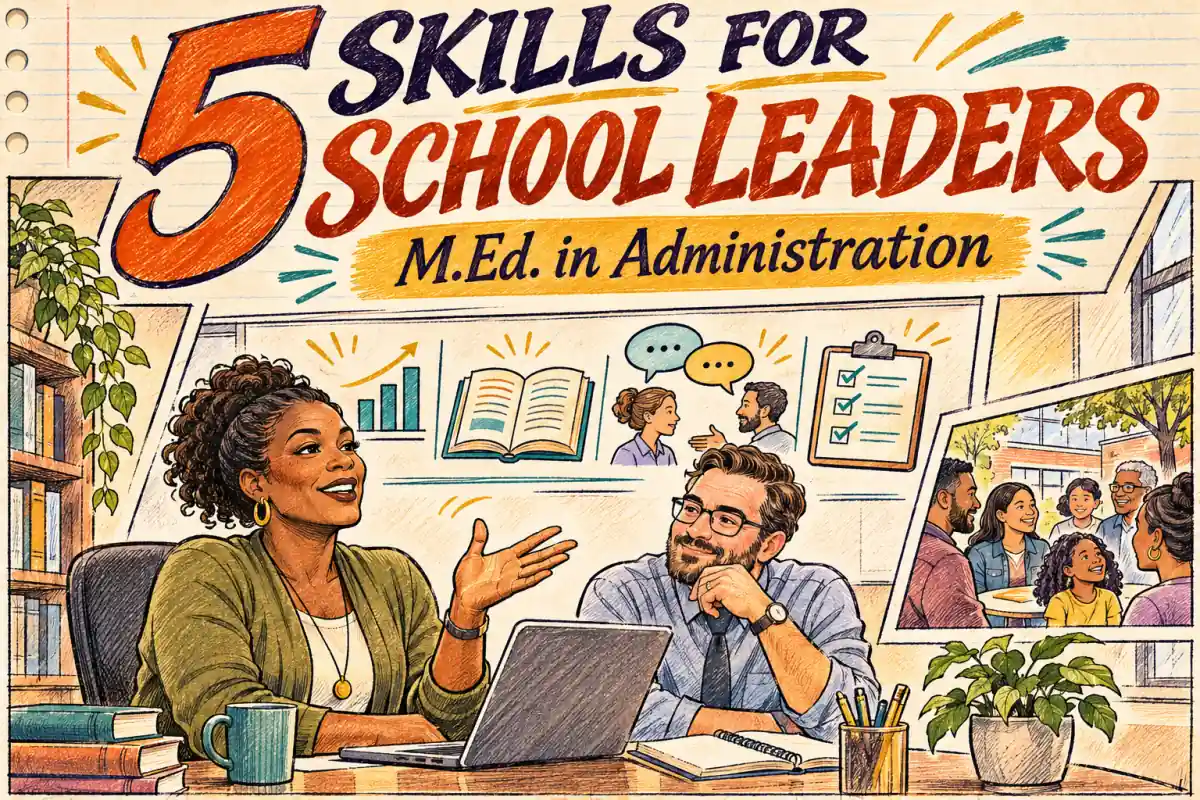
Experienced teachers often recognize challenges that extend beyond their own classrooms. Improving student achievement, supporting colleagues, and coordinating school-wide initiatives require skills that aren’t always developed through everyday teaching responsibilities. Educators interested in leadership roles need to understand how instructional decisions affect students, staff, and the wider school community.
A Master of Education (M.Ed.) in Administration helps educators develop the knowledge needed to approach these responsibilities. Through studies in educational research, instructional leadership, personnel management, and school operations, professionals can strengthen their ability to guide improvement efforts. These five skills are particularly valuable for educators preparing to take on greater responsibilities in schools.
1. Using Student Performance Data to Guide School Improvement
School leaders need to understand what assessment results reveal about student learning. Test scores provide useful information, but individual results rarely explain why students struggle or which instructional changes might help them improve.
Educational administration studies develop research and analytical skills that support school improvement planning. Educators learn to examine assessment patterns, compare performance across grade levels, and consider classroom evidence before identifying priorities. This helps prevent decisions based on isolated results or assumptions.
The Lamar University M.Ed. administration program supports this development through coursework in educational research, accountability, and instructional leadership. These areas help educators understand how evidence can inform school planning and how improvement initiatives connect with broader educational goals.
Consider a school where mathematics assessments show recurring difficulties with fractions. A leader might review student work, compare results across classrooms, and discuss instructional approaches with teachers. These findings could guide targeted support and additional practice. Reviewing subsequent assessments would help determine whether the changes are improving students’ understanding.
2. Strengthening Curriculum Planning and Instructional Leadership
Curriculum planning requires more than selecting textbooks or organizing lesson schedules. School leaders must understand how learning objectives connect across grade levels and whether instructional materials provide students with the knowledge needed for future coursework.
An M.Ed. in Administration develops these skills through studies in curriculum management and instructional leadership. Educators examine approaches to curriculum development, evaluate instructional practices, and learn how to coordinate improvements while considering academic standards and student needs.
For example, a school might discover that students entering middle school struggle with multi-step arithmetic problems. A curriculum review could reveal gaps between elementary instruction and the expectations of later grades. School leaders could work with teachers to strengthen the progression from foundational arithmetic to more complex problem-solving.
Successful curriculum improvement also requires evaluating implementation. Leaders can review classroom materials, discuss instructional challenges with teachers, and examine whether students are meeting learning objectives. These activities help educators make informed curriculum decisions while supporting consistency across classrooms without overlooking differences in student learning needs.
3. Coaching Teachers and Supporting Professional Development
Effective school leadership involves helping teachers improve their practice. Educators entering administrative roles need to provide constructive feedback, recognize professional strengths, and support colleagues who face instructional challenges.
Educational administration programs introduce principles of adult learning, personnel development, and teacher evaluation. These subjects help future leaders understand why professional development should reflect teachers’ experience, classroom responsibilities, and individual learning needs.
Imagine a school where mathematics teachers want to increase student participation during lessons. An instructional leader could observe classroom discussions, identify effective questioning techniques, and arrange collaborative planning sessions. Teachers might then experiment with different approaches to encouraging students to explain their reasoning.
Coaching becomes more useful when feedback leads to continued support. Follow-up observations and conversations allow teachers to discuss what worked and where difficulties remain. By developing mentoring and communication skills, educators can create professional learning opportunities that respond to classroom needs and encourage collaboration among teaching staff.
4. Managing School Resources and Administrative Responsibilities
Schools operate with limited budgets, staffing capacity, and instructional resources. Administrators must balance these constraints while maintaining safe learning environments and supporting the educational needs of students.
An M.Ed. in Administration introduces school operations, personnel management, and financial responsibilities. Coursework helps educators understand how staffing decisions, facilities planning, and resource allocation influence daily school activities. These responsibilities require careful judgment because different departments may have competing needs.
Suppose a school has funding available for math and English improvement but cannot support every proposed initiative. Teachers might request additional intervention materials, classroom technology, and specialist support. An administrator would need to compare costs, examine student needs, and determine which investments offer the greatest educational benefit.
Resource management also involves monitoring decisions after implementation. School leaders can review spending, assess whether materials are being used effectively, and identify remaining gaps. Developing these administrative skills helps educators connect operational decisions with instructional priorities while making responsible use of available school resources.
5. Building Stronger Relationships With Families and School Communities
School improvement often depends on cooperation among educators, families, and community partners. Administrators need to communicate school priorities clearly, understand different perspectives, and encourage meaningful participation in initiatives affecting students.
Educational administration studies develop leadership and communication skills that support these relationships. Educators learn to consider stakeholder concerns, coordinate collaborative activities, and approach disagreements constructively. These abilities become important when schools introduce changes that require support beyond the classroom.
For instance, a school launching an after-school support program might encounter difficulties with student attendance. Conversations with families could reveal transportation problems or scheduling conflicts. Administrators could use this feedback to explore alternative session times or provide additional learning resources.
Strong community relationships require ongoing communication. School leaders can explain program objectives, share relevant progress updates, and invite feedback about students’ experiences. When families understand how an initiative supports learning, they are better positioned to participate. These partnerships can also help schools identify practical barriers that might otherwise go unnoticed.
Preparing for Broader Responsibilities in Education
Educational administration brings together skills in research, curriculum planning, teacher development, resource management, and community engagement. Developing these capabilities helps educators understand how decisions made beyond individual classrooms influence teaching quality and student learning.
For teachers considering leadership positions, an M.Ed. in Administration provides opportunities to build on existing classroom knowledge. Applying these skills through school improvement projects and collaborative responsibilities can strengthen professional judgment and prepare educators for the challenges of school leadership.
Try a school leadership scenario

Related to This Article
More math articles
- Free Grade 4 English Worksheets for Ohio Students
- Algebra Puzzle – Challenge 31
- ParaPro Math Practice Test Questions
- How to Simplify Polynomial Expressions? (+FREE Worksheet!)
- Free Grade 7 English Worksheets for Oklahoma Students
- Rhode Island RICAS Grade 4 Math Free Worksheets: Printable Grade 4 Math Practice, Fully Worked Keys
- Feminist Theory and Intersectionality
- How to Divide by Zero?
- 4th Grade NDSA Math Worksheets: FREE & Printable
- Seniority







What people say about "5 Skills Educators Can Develop Through an M.Ed. in Administration"?
No one replied yet.