Prediction, Foreshadowing, and Climax
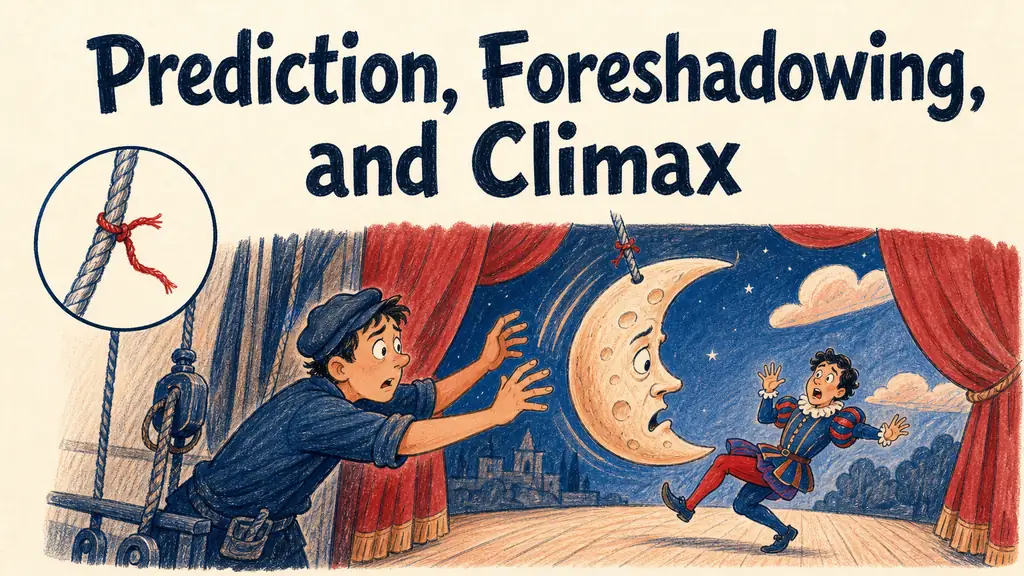
In a mystery, the writer mentions a warped back door long before the power fails. When a museum guard needs a way out, that detail may matter. A reader can predict that the door will stick. Which action turns the conflict depends on what the guard does next.
Tell the three ideas apart
A prediction is a conclusion about what will probably happen. Look for a stated plan, a pattern, or a condition. A warped door gives a reason to expect trouble opening it.
Foreshadowing is an early detail that prepares the reader for a later event. The warped door becomes a clue when the guard turns the handle and the door will not open.
The climax is the decisive turning point in the main conflict. When the guard releases a floor latch and lifts the door slightly so it can swing free, that action changes the outcome. Walking out afterward shows the result.
On a first reading, a clue can support several predictions. After the later event, reread the early detail and ask whether it actually prepares the reader for that event.
Watch how a clue prepares the reader
Watch how a conflict reaches its turning point
Try two reading questions
Preparing for the HSPT? Visit the HSPT Reading study hub for connected reading lessons and flashcards.

Related to This Article
More math articles
- The Best Grade 8 ELA Practice Tests for Alaska Students
- Digital Clock for 4th Grade
- PERT Math – Test Day Tips
- Top 10 HSPT Math Practice Questions
- How to Multiply and Divide Rational Numbers
- Free Grade 7 English Worksheets for Kentucky Students
- The Best Grade 4 Math Book for New York Students
- Distance Measurement for 4th Grade
- The European Theater and Allied Grand Strategy
- The Vermont SBAC Grade 3 Math Worksheet Set — 49 Free Printable PDFs




What people say about "Prediction, Foreshadowing, and Climax - Effortless Math"?
No one replied yet.