How to Help Your 3rd Grade Student Prepare for the District of Columbia DC CAPE Math Test


As a parent in District of Columbia, you play a crucial role in supporting your 3rd-grade student to excel in the DC CAPE (DC Comprehensive Assessment and Progress of Education) math test. This comprehensive guide is designed to provide you with actionable strategies, valuable insights, and practical tips to help your child prepare effectively for the test. For official information, visit the District of Columbia Office of the State Superintendent of Education website.
Understanding the District of Columbia DC CAPE 3rd Grade Math Test
The DC CAPE test evaluates your child’s math proficiency based on various math domains. It covers operations, geometry, measurement, data analysis, and more. The test format includes a set number of questions with specific time limits for each section. Understanding the scoring system and proficiency levels is essential to interpret your child’s performance. The results from the test are utilized to assess your child’s educational progress and identify areas for improvement. For additional educational resources, visit the U.S. Department of Education website.
| Category | Details |
|---|---|
| Focus | Comprehensive preparation and skill building |
| Approach | Regular practice and consistent review |
| Success Tips | Daily practice, positive encouragement, and celebrating progress |
Key Math Skills Your 3rd Grader Needs to Master
For your child to succeed in the DC CAPE math test, they need to master critical math skills:
- Operations & Algebraic Thinking: Understanding multiplication, division, and solving word problems.
- Number & Operations in Base Ten: Mastering place value, addition, subtraction, and multiplication.
- Number & Operations – Fractions: Grasping the concept of fractions and their operations.
- Measurement & Data: Being proficient in measuring, interpreting data, and understanding graphs.
- Geometry: Identifying shapes, calculating area, perimeter, and understanding basic geometry concepts.
Building Strong Math Foundations at Home
Daily Practice Strategies
Encourage your child to engage in daily math practice. Dedicate a specific time each day for math-related activities to reinforce learning.
Making Math Part of Everyday Activities
Integrate math into daily routines like grocery shopping, cooking, and budgeting. This hands-on approach helps your child see the practical applications of math.
Games and Activities
Engage your child in math games that enhance number sense and problem-solving skills. Games like Math Bingo, Math War, and Math Puzzles can make learning fun and interactive. free math worksheets.
Using Manipulatives and Visual Aids
Utilize manipulatives and visual aids like counting blocks, fraction bars, and geometric shapes to help your child understand abstract math concepts concretely.
Reading Math Books Together
Explore math-themed storybooks and workbooks with your child. Reading together enha comprehension, builds vocabulary, and fosters a love for math.
Technology Resources
Explore educational math apps and websites that offer interactive activities and practice problems. Platforms like ABCmouse, Prodigy, and Khan Academy Kids provide engaging math content.
Effective Study and Practice Strategies
Creating a Realistic Study Schedule
Help your child create a study schedule that bala learning and breaks. Include time for practice problems, review sessions, and relaxation.
Making Practice Sessions Enjoyable and Engaging
Make math practice enjoyable by incorporating rewards, challenges, and positive reinforcement. Celebrate small achievements to motivate your child. comprehensive math books.
Using Practice Tests Effectively
Introduce practice tests to familiarize your child with the test format and types of questions. Analyze mistakes and focus on improving weak areas.
Reviewing Mistakes Constructively
Encourage your child to understand and learn from their mistakes. Discuss strategies for avoiding similar errors in the future.
Building Stamina for Longer Practice Sessions
Gradually increase the duration of practice sessions to build your child’s endurance for sustained focus during the test.
Tracking Progress Over Time
Maintain a progress journal to track your child’s improvement. Set goals, monitor achievements, and adjust study strategies accordingly.
Test-Taking Strategies and Techniques
Time Management Strategies
Teach your child effective time management techniques to ensure they allocate time appropriately for each question.
How to Read Word Problems Carefully
Guide your child to read word problems attentively, identify key information, and develop a systematic approach to solving them.
Problem-Solving Strategies
Encourage your child to use various problem-solving strategies such as drawing diagrams, making tables, or working backward to tackle complex problems.
When and How to Skip Difficult Questions
Teach your child when it’s beneficial to skip challenging questions and return to them later. Emphasize the importance of managing time effectively.
Checking Work Effectively
Instill the habit of reviewing answers and checking calculations to minimize errors. Emphasize the importance of double-checking work before submitting.
Handling Different Question Types
Practice a variety of question types with your child to ensure they are familiar with the different formats and can approach each type confidently. Grade 3 math worksheets.
Supporting Your Child Emotionally
Recognizing and Managing Test Anxiety
Equip your child with relaxation techniques, positive affirmations, and coping strategies to manage test anxiety effectively.
Building Confidence Through Small Wins
Celebrate your child’s progress and accomplishments, no matter how small. Encouragement boosts confidence and motivates further learning.
Creating a Positive Learning Environment at Home
Foster a supportive and encouraging atmosphere at home that promotes a love for learning and exploration. Encourage curiosity and intellectual growth.
Dealing with Setbacks Constructively
Teach your child resilience and the importance of learning from setbacks. Emphasize the value of perseverance and determination in overcoming challenges.
Celebrating Progress, Not Just Perfection
Focus on progress and growth rather than perfection. Acknowledge the effort and improvement your child demonstrates throughout their learning journey.
Encouragement Strategies That Work
Use positive reinforcement, praise, and supportive language to motivate your child. Encouragement builds confidence and instills a positive attitude towards learning.
Practice Resources and Tools
Explore a variety of practice materials and tools to enhance your child’s math skills:
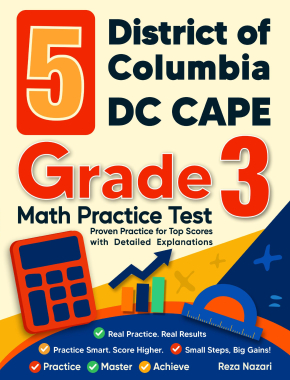
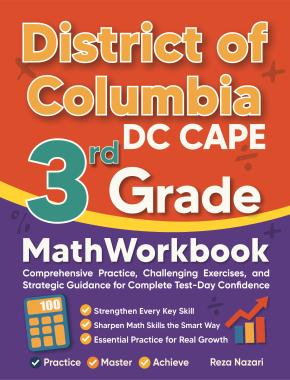
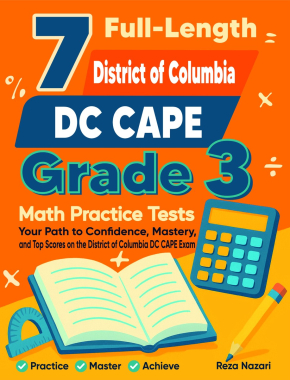
- Review the comprehensive practice book “5 District of Columbia DC CAPE Grade 3 Math Practice Tests” designed specifically for the DC CAPE test.
- Utilize online resources and apps like ABCya, Cool Math Games, and SplashLearn for interactive math practice.
- Choose quality practice materials that align with the DC CAPE test format and content to ensure effective preparation.
- Create personalized practice problems based on your child’s strengths and weaknesses to tailor their learning experience.
- Collaborate with teachers and leverage school resources to access additional practice materials and support for your child’s preparation.
Creating a Test Day Success Plan
Recommended Math Resources
Prepare your child for test day with a structured plan:
- Review math concepts and strategies the week before the test to reinforce learning.
- Optimize the day before the test by ensuring your child gets adequate rest, eats a nutritious meal, and stays relaxed.
- On test day, ensure your child brings necessary materials, follows a familiar routine, and maintains a positive mindset.
- Promote healthy habits like sufficient sleep, balanced nutrition, and physical activity to support your child’s overall well-being.
- Establish a morning routine that includes a nutritious breakfast, positive affirmations, and a calm environment to start the day confidently.
- After the test, discuss your child’s experience, celebrate their effort, and address any concerns they may have.
Final Thoughts
In conclusion, guiding your 3rd-grade child through the preparation process for the District of Columbia DC CAPE math test is a rewarding journey that cultivates a lifelong love for math and learning. By implementing the strategies outlined in this guide, you empower your child to approach the test with confidence, resilience, and enthusiasm for mastering mathematical concepts. Remember, consistent support, encouragement, and a positive mindset are key to your child’s success in the DC CAPE math test and beyond.
For additional resources and practice materials, explore EffortlessMath.com’s collection of and math resources to further enhance your child’s math skills.
Our Top Picks for This Month

Related to This Article
More math articles
- How to Use a Graph to Factor Polynomials
- How Is the HiSET Test Scored?
- How to Use Multiplication to Compare Customary Units
- Reading and Interpreting Line Plots for 4th Grade
- Deciphering Chance: A Comprehensive Guide to Mutually Exclusive Events in Probability
- FREE 8th Grade SBAC Math Practice Test
- ACT Math Practice Test Questions
- Place Value (Through Hundred Thousands) for 4th Grade
- Top 10 SAT Math Practice Questions
- How to Understand Dilations: A Step-by-Step Guide










What people say about "How to Help Your 3rd Grade Student Prepare for the District of Columbia DC CAPE Math Test - Effortless Math: We Help Students Learn to LOVE Mathematics"?
No one replied yet.