Patterns of Intergroup Relations
Chapter 10 of the CLEP Sociology study guide on Effortless Math covers Patterns of Intergroup Relations: the key terms, the core ideas, and worked examples showing how this topic is tested on the exam.

CLEP Sociology – Chapter 10
Patterns of Intergroup Relations
CLEP Introductory Sociology · Chapter 10
Assimilation is the process by which a group adopts the cultural patterns of a dominant group and group distinctions diminish. Assimilation can occur unevenly across language, identity, residence, friendship, and institutions. It may be voluntary, pressured, or coerced.
Cultural pluralism, often shortened to pluralism in intergroup-relations questions, exists when groups maintain distinctive cultural practices while participating with roughly equal standing in a shared society. It is different from religious pluralism among faith organizations and political pluralism among competing interest groups. Amalgamation is biological and cultural blending through intermarriage and the formation of new group identities.
Segregation is the physical and social separation of categories of people. De jure segregation is mandated by law. De facto segregation occurs in practice through social, economic, and institutional processes without an explicit legal command.
Expulsion is the forced removal of a population from a territory. Genocide is the deliberate attempt to destroy, in whole or in part, a national, ethnic, racial, or religious group. These are distinct processes even though forced removal and mass killing can occur together.
These patterns can occur at the same time or in sequence. A society may encourage language assimilation while residential segregation remains strong. Intermarriage may increase without equal access to schools or employment. Pluralism requires both cultural continuity and participation with relative equality, so cultural variety alone is not enough.
Assimilation can be tracked across generations with separate measures for language use, residential distribution, intermarriage, identity, and institutional access. Those indicators may move at different rates. Language shift without equal employment access shows cultural adaptation alongside continuing inequality, so one measure cannot establish complete assimilation.
Legal status provides the clearest distinction between de jure and de facto segregation. A statute requiring separation is de jure. Separation produced through housing markets, social networks, unequal resources, or informal practices is de facto even when no law commands it.
Assimilation and pluralism should not be treated as exact opposites in every dimension. A family may adopt the dominant language for work while maintaining religious practice and community institutions. Pluralism requires more than visible festivals or food. Groups must be able to retain meaningful differences while participating with relative equality in shared institutions. If one group is tolerated only while excluded from power, the arrangement falls short of pluralism.
Evidence about process prevents a misleading label. Rising intermarriage supports amalgamation only when it produces blended family and group identities. A decline in residential separation may occur while schools or workplaces remain segregated. Expulsion requires forced territorial removal, while genocide concerns an intent to destroy a protected group in whole or in part. Historical records, laws, migration counts, and institutional access identify what changed and how.
Power matters across the sequence. A group may choose cultural adaptation, but laws or institutions can also compel it. Naming assimilation does not imply that the process was voluntary, peaceful, or complete.
The same society may therefore display several patterns at once, each operating in a different institution or period.
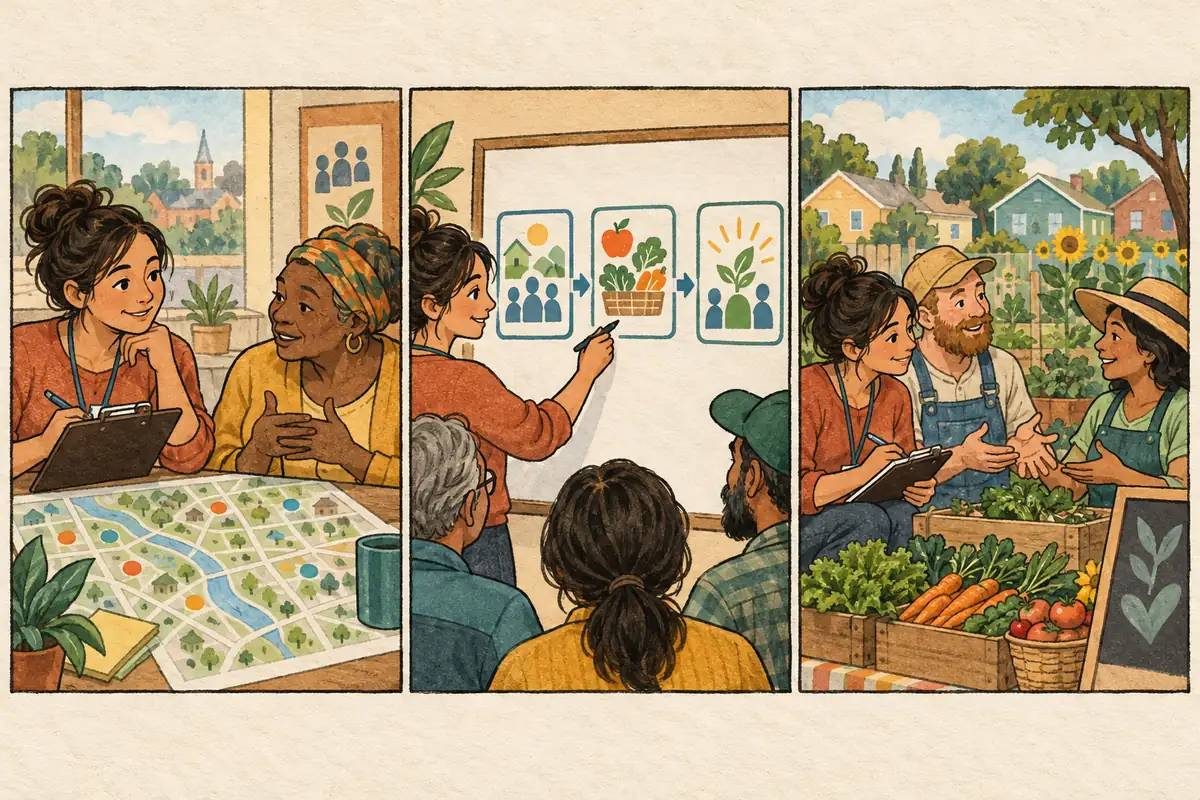
Follow one community across three generations. The first generation learns the dominant language for work, but housing covenants keep families in a separate district and schools remain unequal. Language change occurs before residential or institutional integration. The second generation wins repeal of the covenants and equal school funding while maintaining community newspapers, religious organizations, and bilingual programs. The third generation shows rising intermarriage and some blended identities, yet neighborhood institutions continue for members who choose them. No single label describes every dimension or date.
Researchers would build a sequence from laws, residence patterns, language use, school access, organizational membership, intermarriage, and self-identification. Repeal of a coercive rule marks a change in formal structure, but actual residence may change slowly because wealth and social networks preserve the earlier pattern. Rising intermarriage may support blending without proving equal treatment in employment. Continued cultural organizations may reflect voluntary maintenance rather than exclusion if members hold equal access elsewhere. The case is classified stage by stage, with attention to who controls the terms. That method prevents a cultural indicator from being mistaken for a complete institutional outcome.
Quick review: Classify the process by its result. Assimilation reduces distinction, pluralism combines cultural continuity with relative equality, amalgamation forms blended identities, segregation separates, expulsion forcibly removes, and genocide seeks to destroy a protected group in whole or in part.
Watch the chapter connection
Race and Ethnicity gives you a second explanation of the chapter ideas surrounding this lesson. As you watch, pause when the lesson concept appears and explain how the example fits.
Use this lesson for CLEP practice
Write one original example, one close nonexample, and one observation that would help you choose between them. This turns vocabulary recognition into the kind of applied reasoning the exam expects.

Related to This Article
More math articles
- The Calvin Cycle Explained: Phases, ATP and G3P
- 3rd Grade MCA Math Worksheets: FREE & Printable
- HiSET Testing Accommodations for Students with Disabilities
- 5th Grade Common Core Math Worksheets: FREE & Printable
- The Best Grade 8 ELA Practice Tests for Oklahoma Students
- Identities of Complex Numbers
- The Law of Sines
- The Best Grade 8 Math Book for Maryland Students
- Strict and broad construction
- Top 10 Tips to Overcome CBEST Math Anxiety




















What people say about "Patterns of Intergroup Relations | CLEP Sociology"?
No one replied yet.