Grade 3 Math: Adding 3-Digit Numbers
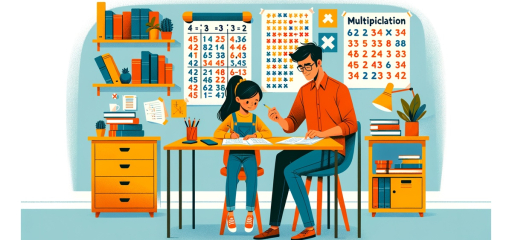
Once upon a time in the magical realm of Numblonia, there lived three young wizards: Addington, the master of addition magic, Digi, the expert in all things digital, and Regroupa, the sorceress of regrouping spells. These three friends embarked on a journey to explore the mystical land of 3-digit numbers to uncover the secrets of adding them with and without the need for regrouping. Their adventure would test their wit and skills in the realm of numeracy.
Understanding the Concept
As Addington, Digi, and Regroupa ventured into the vast Numerical Forest, they encountered a peculiar signpost that read, “Adding 3-Digit Numbers: Explore the Magic of the Hundreds, Tens, and Ones.” Intrigued, they followed the path and stumbled upon a clearing where a wise owl named Numbo awaited them. Numbo, the guardian of numerical knowledge, explained the essence of adding 3-digit numbers.
In Numblonia, 3-digit numbers are like enchanted treasures with three parts: the hundreds, the tens, and the ones. To add them together, one must first align these mystical components. If the sum of the ones exceeds 9, then regrouping is essential to carry the extra over to the tens place. Digi, being a digital expert, visualized this process in a Place Value Chart.

The Absolute Best Book to Ace Grade 3 Math
This chart displayed the mystical breakdown of a 3-digit number, like the magical 327, into its hundreds, tens, and ones. Addington, with his addition magic, demonstrated how to add 3-digit numbers without regrouping using an example:
Consider the addition of 245 + 163:
\[ \begin{array}{r} \phantom{+}245 \\ +\underline{\phantom{00}163} \\ \end{array} \]Here, the ones, tens, and hundreds were magically brought together:
\[ \begin{array}{r} \phantom{+}245 \\ +\underline{\phantom{00}163} \\ \phantom{+}408 \\ \end{array} \]Digi then showcased the magic of regrouping in adding 3-digit numbers. The trio delved into an example of adding 3-digit numbers with regrouping:
Let’s add 237 + 189:
\[ \begin{array}{r} \phantom{+}237 \\ +\underline{\phantom{00}189} \\ \end{array} \]The regrouping spell was cast as the ones combined and crossed into the tens place, creating a seamless addition of the mystical numbers:
The Most Comprehensive Grade 3 Math Workbook
After mastering the basics, the trio moved deeper into the Numerical Forest to uncover more enchanted secrets of adding 3-digit numbers.
Key Concepts Explained
As Addington, Digi, and Regroupa trudged through the forest, they stumbled upon an ancient stone tablet inscribed with the Steps to Adding 3-Digit Numbers. The tablet outlined a step-by-step guide to adding these mystical numbers effortlessly. Here’s a breakdown of the key concepts:
- Align the Numbers: Just like preparing for a magical incantation, align the hundreds, tens, and ones vertically when adding.
- Add the Ones: Start by adding the ones place. If the sum exceeds 9, regroup the extra to the tens place.
- Move to the Tens: Proceed to add the tens place, remembering to account for any regrouped values from the ones place.
- Sum the Hundreds: Finally, combine the hundreds place, including any regrouped tens from the previous steps.
To solidify their understanding, the trio encountered a mystical Chart of 3-Digit Number Addition Steps that visualized these key concepts:
Addington, with his prowess in addition magic, demonstrated multiple examples of adding 3-digit numbers to reinforce the learning. Using the step-by-step guide, they solved numerous enchanted problems and cemented their skills in adding these mystical numbers effortlessly.
As they continued their journey, the trio encountered a fork in the path where a mischievous squirrel named Misty played a trick by swapping the digits of a 3-digit addition problem. Falling for the prank could lead to common mistakes in adding 3-digit numbers, and the trio needed to be vigilant.
Common Mistakes to Avoid
Misty, the squirrel, presented a deceptive addition problem where the numbers were cunningly swapped. For example, in 348 + 215, the ones, tens, and hundreds had mysteriously shifted places. Addington, Digi, and Regroupa quickly realized that mistaking the digit positions could lead to erroneous results.
One common mistake to avoid in adding 3-digit numbers is misaligning the digits, which can alter the final sum significantly. Regrouping inaccurately or overlooking regrouped values from the previous steps can also lead to errors. By staying focused and following the step-by-step guide diligently, the trio thwarted Misty’s trickery and emerged wiser from the encounter.
Summary and Key Takeaways
In the realm of Numblonia, the art of adding 3-digit numbers proved to be a magical journey for Addington, Digi, and Regroupa. By mastering the alignment of hundreds, tens, and ones, understanding when to regroup, and following the steps diligently, they honed their skills in adding these mystical numbers effortlessly.
Remember, whether you’re adding with or without regrouping, the key lies in aligning the numbers correctly and following the prescribed steps. By practicing consistently and being mindful of common mistakes, you too can become a wizard of 3-digit number addition in the wondrous world of mathematics.
The Ultimate Guide to Mastering Grade 3 Math Word Problems
Additional Practice Resources

Related to This Article
More math articles
- How to Understand Angles in Quadrilaterals
- FREE SAT Math Practice Test
- How to Understand Dot Product and Cross-Product
- 8th Grade IAR Math Worksheets: FREE & Printable
- Order of Decimals, Mixed Numbers and Fractions
- Top 10 Tips to ACE the Praxis Core Math Test
- Digital Platforms: Revolutionizing Math Education
- Number Properties Puzzle – Challenge 7
- How to Prepare for the HSPT Math Test?
- How to Decod Decimal Numbers: Dive into Place Values











What people say about "Grade 3 Math: Adding 3-Digit Numbers - Effortless Math: We Help Students Learn to LOVE Mathematics"?
No one replied yet.