Full-Length 6th Grade ACT Aspire Math Practice Test-Answers and Explanations
TL;DR: Your 6th grader took the full-length ACT Aspire Math practice test, and now the real work starts: figuring out why the misses happened. These step-by-step answer explanations walk through the reasoning at grade level, so your child sees exactly where their thinking matched or missed. Sit together for the review and every wrong answer turns into a targeted study session instead of a vague feeling of getting stuck.
Key takeaways:
- Every question solved with full step-by-step reasoning.
- Common wrong-answer patterns are flagged so kids learn the trap.
- Solutions tie each problem back to a Common Core grade-6 standard.
- Use after timing yourself on the practice test, score first, then read.
- Designed to be readable by 6th graders working through it independently.
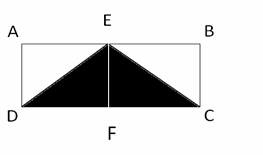
45- The answer is 30.
Find the difference of each pair of numbers:
2, 3, 5, 8, 12, 17, 23, _, 38
The difference of 2 and 3 is 1, 3 and 5 is 2, 5 and 8 is 3, 8 and 12 is 4, 12 and 17 is 5, 17 and 23 is 6, 23 and the next number should be 7. The number is 23 + 7 = 30
46- The answer is \(-122\).
Use PEMDAS (order of operation):
\([6 × (–24) + 8] – (–4) + [4 × 5] ÷ 2 = [–144 + 8] – (–4) + [20] ÷ 2 = [–144 + 8] – (–4) + 10 =
[–136] – (–4) + 10 = [–136] + 4 + 10 = –122\)
The Best Books to Ace the 6th Grade ACT Aspire Math Test
Common Core Math Exercise Book for Grade 6 Student Workbook and Two Realistic Common Core Math Tests
Five Sample ACT Aspire Grade 6 Math Problems: Full Solutions
Let’s walk through realistic problems similar to what you’ll see on the actual ACT Aspire Grade 6 test. Each includes a full solution and the thinking process behind it.
Problem 1: Multi-Step Problem with Whole Numbers
Sample Question: A school library has 240 books. The librarian orders 3 sets of new books, with 45 books in each set. How many books will the library have in total after the new books arrive?
Solution: First, find how many new books arrive: \(3 \times 45 = 135\) books. Then add to the existing collection: \(240 + 135 = 375\) books total. The answer is 375.
Key Strategy: Break multi-step problems into smaller pieces. Identify what you need to find first, then what comes next. Write intermediate answers so you don’t lose track.
Problem 2: Fractions in Context
Sample Question: Marcus has \(\frac{3}{4}\) of a pizza left. He eats \(\frac{1}{3}\) of what remains. How much pizza does Marcus eat?
Solution: He eats \(\frac{1}{3}\) of \(\frac{3}{4}\), which means multiply: \(\frac{1}{3} \times \frac{3}{4} = \frac{3}{12} = \frac{1}{4}\). Marcus eats \(\frac{1}{4}\) of the original pizza.
Key Strategy: “Of” in a word problem means multiply. Simplify your answer. If you can cancel before multiplying, do it, \(\frac{1}{3} \times \frac{3}{4}\) lets you cancel the 3s right away.
Problem 3: Decimal Operations
Sample Question: Sarah bought a notebook for \$3.45, a pen for \$1.20, and a calculator for \$8.75. She paid with a \$20 bill. How much change did she receive?
Solution: Total spent: \(3.45 + 1.20 + 8.75 = 13.40\). Change: \(20.00 – 13.40 = 6.60\). Sarah received \$6.60.
Key Strategy: Align decimals when adding or subtracting. Add cents carefully, think of money if decimals feel abstract. Check your answer by adding change back to what was spent.
Problem 4: Ratio and Proportion
Sample Question: In a school, the ratio of boys to girls is 3:4. If there are 60 boys, how many girls are there?
Solution: If the ratio is 3:4, then for every 3 boys there are 4 girls. Set up a proportion: \(\frac{3}{4} = \frac{60}{x}\). Cross-multiply: \(3x = 240\), so \(x = 80\). There are 80 girls.
Key Strategy: Keep ratios in order. Write the proportion clearly with the same units in the same positions. Cross-multiply to solve.
Problem 5: Basic Geometry and Measurement
Sample Question: A rectangular garden is 12 meters long and 8 meters wide. What is the perimeter of the garden?
Solution: Perimeter of a rectangle = \(2(\text{length} + \text{width}) = 2(12 + 8) = 2(20) = 40\) meters.
Key Strategy: Learn the basic formulas: perimeter sums the sides, area multiplies dimensions. Draw a picture if it helps you visualize.
ACT Aspire Grade 6 Test Format Overview
The ACT Aspire Grade 6 math section tests your fluency with operations, fractions, decimals, basic ratios, simple geometry, and problem-solving. You’ll have multiple-choice questions and sometimes gridded-response items where you write the number in a box. Time management matters, don’t spend 5 minutes on one problem.
Study Tips for Success
Practice with real ACT Aspire Grade 6 practice tests to get comfortable with the format. Understand why each answer is correct, not just what it is. If you miss a problem, redo it a few days later to check if you’ve internalized the skill.
Review order of operations regularly. It’s the foundation for everything. Build speed with one-step equations and fraction operations. Use the complete ACT prep course for comprehensive coverage once you’re ready to advance.
Common Mistakes to Avoid
Don’t forget to simplify fractions. Don’t align decimals incorrectly. Don’t confuse the numerator and denominator in ratios. Don’t forget to read questions twice, many students solve the wrong thing correctly. Check answers by substituting back when possible.
Your Grade 6 score is a starting point. Each practice test shows you where to focus next. Stay consistent, and you’ll see steady improvement.
Five Sample ACT Aspire Grade 6 Math Problems: Full Solutions
Let’s walk through realistic problems similar to what you’ll see on the actual ACT Aspire Grade 6 test. Each includes a full solution and the thinking process behind it.
Problem 1: Multi-Step Problem with Whole Numbers
Sample Question: A school library has 240 books. The librarian orders 3 sets of new books, with 45 books in each set. How many books will the library have in total after the new books arrive?
Solution: First, find how many new books arrive: \(3 \times 45 = 135\) books. Then add to the existing collection: \(240 + 135 = 375\) books total. The answer is 375.
Key Strategy: Break multi-step problems into smaller pieces. Identify what you need to find first, then what comes next. Write intermediate answers so you don’t lose track.
Problem 2: Fractions in Context
Sample Question: Marcus has \(\frac{3}{4}\) of a pizza left. He eats \(\frac{1}{3}\) of what remains. How much pizza does Marcus eat?
Solution: He eats \(\frac{1}{3}\) of \(\frac{3}{4}\), which means multiply: \(\frac{1}{3} \times \frac{3}{4} = \frac{3}{12} = \frac{1}{4}\). Marcus eats \(\frac{1}{4}\) of the original pizza.
Key Strategy: “Of” in a word problem means multiply. Simplify your answer. If you can cancel before multiplying, do it, \(\frac{1}{3} \times \frac{3}{4}\) lets you cancel the 3s right away.
Problem 3: Decimal Operations
Sample Question: Sarah bought a notebook for \$3.45, a pen for \$1.20, and a calculator for \$8.75. She paid with a \$20 bill. How much change did she receive?
Solution: Total spent: \(3.45 + 1.20 + 8.75 = 13.40\). Change: \(20.00 – 13.40 = 6.60\). Sarah received \$6.60.
Key Strategy: Align decimals when adding or subtracting. Add cents carefully, think of money if decimals feel abstract. Check your answer by adding change back to what was spent.
Problem 4: Ratio and Proportion
Sample Question: In a school, the ratio of boys to girls is 3:4. If there are 60 boys, how many girls are there?
Solution: If the ratio is 3:4, then for every 3 boys there are 4 girls. Set up a proportion: \(\frac{3}{4} = \frac{60}{x}\). Cross-multiply: \(3x = 240\), so \(x = 80\). There are 80 girls.
Key Strategy: Keep ratios in order. Write the proportion clearly with the same units in the same positions. Cross-multiply to solve.
Problem 5: Basic Geometry and Measurement
Sample Question: A rectangular garden is 12 meters long and 8 meters wide. What is the perimeter of the garden?
Solution: Perimeter of a rectangle = \(2(\text{length} + \text{width}) = 2(12 + 8) = 2(20) = 40\) meters.
Key Strategy: Learn the basic formulas: perimeter sums the sides, area multiplies dimensions. Draw a picture if it helps you visualize.
ACT Aspire Grade 6 Test Format Overview
The ACT Aspire Grade 6 math section tests your fluency with operations, fractions, decimals, basic ratios, simple geometry, and problem-solving. You’ll have multiple-choice questions and sometimes gridded-response items where you write the number in a box. Time management matters, don’t spend 5 minutes on one problem.
Study Tips for Success
Practice with real ACT Aspire Grade 6 practice tests to get comfortable with the format. Understand why each answer is correct, not just what it is. If you miss a problem, redo it a few days later to check if you’ve internalized the skill.
Review order of operations regularly. It’s the foundation for everything. Build speed with one-step equations and fraction operations. Use the complete ACT prep course for comprehensive coverage once you’re ready to advance.
Common Mistakes to Avoid
Don’t forget to simplify fractions. Don’t align decimals incorrectly. Don’t confuse the numerator and denominator in ratios. Don’t forget to read questions twice, many students solve the wrong thing correctly. Check answers by substituting back when possible.
Your Grade 6 score is a starting point. Each practice test shows you where to focus next. Stay consistent, and you’ll see steady improvement.
Recommended EffortlessMath Books
For a workbook your child can use alongside these explanations, the 6th Grade ACT Aspire Math for Beginners walks through every topic at grade level. For complete prep with multiple full-length practice tests and answer keys, see the 6th Grade ACT Aspire Math Test Prep Bundle.
Frequently Asked Questions
How should my child use these explanations?
Have your child take the practice test first under timed conditions. Score it using the answer key. Then sit with them (or let them work independently) through each explanation, including the ones they got right, the reasoning often shows a faster method or a checking technique that builds intuition.
What if my child keeps missing the same kind of question?
That’s a topic gap. Write down the standard or topic (say, ratios or coordinate plane) and spend a focused 20-minute session reviewing that one skill. Use the linked EffortlessMath lesson articles, then have your child redo 5-10 problems on just that topic before moving on.
Is a calculator allowed on the 6th grade ACT Aspire?
The test has both calculator-permitted and no-calculator portions. The acceptable calculator list follows ACT policy. Students should practice mental arithmetic and pencil-and-paper computation regularly because the no-calculator portion has real weight in the final score.
How is the test scored?
Each subject reports a scale score (typically 400-465 for grade 6 math). Scores map to ACT Readiness Benchmarks that predict whether the student is on track for the future ACT. Reports also break down performance by content area so parents and teachers can identify specific weak spots.
How long should each question take?
About 1 minute 20 seconds per question on average. Early multiple-choice items should take 30-45 seconds; constructed-response items can take 2-3 minutes each. If your child gets stuck for more than 2 minutes, they should mark and move on, pacing is part of the skill.
What are the common trap answers?
Off-by-one errors in counting problems, choices that match a partial calculation (the student stopped one step short), units mismatches (the question asks for inches, the student computed feet), and sign errors on negative-number problems. ACT Aspire routinely places these wrong-step results in the answer choices.
What if my child doesn’t understand an explanation?
Look at the topic listed, read the linked EffortlessMath lesson article, then try the problem again cold without looking at the explanation. If they still can’t get it, work 5 similar problems before retesting that exact question. Don’t move on until the concept clicks.
Should my child skip hard questions?
Yes, on a first pass. Answer everything they can confidently do first to lock in points, then circle back. Since ACT Aspire doesn’t penalize guessing, every question should have an answer filled in before time runs out, even questions they didn’t try.
How accurate is this practice test compared to the real ACT Aspire?
Very close in question format, difficulty mix, and standards coverage. The real test changes specific items each year, but the underlying skills and item types stay stable. If your child scores 80%+ here under timed conditions, expect similar performance on the real test.
Where can I find more 6th grade ACT Aspire practice?
EffortlessMath has the 6th Grade ACT Aspire Math for Beginners workbook covering every standard tested, plus the 6th Grade ACT Aspire Math Test Prep Bundle with multiple full-length practice tests and step-by-step solutions.
Related EffortlessMath Lessons
If a topic on this page feels rusty, these short lessons go deeper:

Related to This Article
More math articles
- The Ultimate 6th Grade NDSA Math Course (+FREE Worksheets)
- Tangent Line Calculator (Free, with Graph)
- The Best Grade 7 Math Book for Utah Students
- A 96% RTP Slot Over a Million Spins: The Distribution, Not the Average
- Rounding & Significant Figures Calculator
- Region
- Why Sociology Emerged
- Free Grade 4 English Worksheets for Georgia Students
- CLEP U.S. History I 067: Whigs, Democrats, and the Second Party System
- CLEP U.S. History I 045: Jeffersonian Ideals and Governing Realities

What people say about "6th Grade ACT Aspire Math Test Explained"?
No one replied yet.