Adding Hundreds for 4th Grade

TL;DR: Here is a quiet trick: adding hundreds is exactly like adding ones, just with a ‘hundred’ label tacked on. 300 plus 500 is really 3 hundreds plus 5 hundreds, which is 8 hundreds, which is 800. The numbers look bigger but the work is the same single-digit addition you have done since first grade. Once you see big numbers as groups of hundreds (or thousands), the size stops being intimidating and the math feels familiar again.
Key takeaways:
- Think of \(300\) as \(3\) hundreds and \(500\) as \(5\) hundreds, then add the counts.
- If the count of hundreds passes \(10\), regroup into a thousand: \(700 + 500 = 12\) hundreds \(= 1{,}200\).
- Line numbers up by place value when you write them in a column.
- Estimate first by rounding so you can spot a wrong answer right away.
- Practice five problems a day for a week and the skill sticks.
Adding hundreds is an efficient way to practice place-value reasoning before students move into larger multi-digit addition problems.
This lesson covers adding multi-digit numbers for fourth-grade math. Use the examples and practice below to build confidence and skill.
Key Ideas to Remember
- Start by identifying the main pattern or rule behind adding hundreds.
- Work one step at a time and explain why each move makes sense.
- Check the final answer against the original question before moving on.
Detailed Explanation
Add multi-digit numbers by aligning digits by place value (ones under ones, tens under tens) and adding from right to left. Regroup when a sum in any column is 10 or more.
Worked Example
Problem: Add 300 + 500.
- Think in hundreds instead of ones.
- 3 hundreds + 5 hundreds = 8 hundreds.
- Write 8 hundreds as 800.
Answer: 300 + 500 = 800.
Worked Example
Problem: Add 4,572 + 3,869.
- Step 1: Apply the concept from the lesson above.
- Step 2: Carry out the operation or reasoning.
Answer: 4,572 + 3,869 = 8,441 (regroup 1 ten from 14 ones, 1 hundred from 14 tens).
Common Mistakes
Students usually improve faster in adding hundreds when they slow down and watch for a few repeated mistakes. These are the ones worth checking first:
- Rushing past the rule or pattern before deciding what the problem is asking.
- Skipping a quick check to see whether the answer is reasonable.
- Confusing the final answer with an intermediate step.
Practice Strategy
A short but consistent review routine helps students build confidence with adding hundreds without getting overwhelmed.
- Practice a few short problems on adding hundreds every day for a week.
- Explain the rule in words after solving each problem.
- Use estimation, a model, or an inverse operation to check your work.
Watch Another Example
Use a second example video to hear the steps explained in a different way and reinforce the same skill from another angle.
Frequently Asked Questions
How do you add hundreds with regrouping?
Add the hundreds like single digits, and when the count reaches 10 or more, trade 10 hundreds for 1 thousand. For example, 700 + 500 is 7 hundreds plus 5 hundreds, or 12 hundreds. Ten of those hundreds make 1 thousand, leaving 2 hundreds, so the answer is 1,200. Writing the numbers in place-value columns helps fourth graders see exactly where the new thousand goes.
How do you add hundreds on a number line?
Start at the first number and make jumps of 100 for each hundred you are adding. To find 400 + 300, begin at 400 and make three jumps of 100: 500, 600, 700. You land on 700. A number line marked in hundreds shows fourth graders that adding hundreds is just counting groups, and it makes it easy to see when the total crosses 1,000.
How do you add hundreds to a 3-digit number?
Only the hundreds digit changes, unless the hundreds pass 9. For 346 + 200, add 3 hundreds and 2 hundreds to get 5 hundreds, and keep the 4 tens and 6 ones: 546. For 846 + 300, the hundreds make 11, so regroup: 1 thousand and 1 hundred, giving 1,146. The tens and ones stay the same both times.
How do you add hundreds and thousands?
Line up the numbers by place value and add each column, starting from the right. For 2,600 + 1,700, the hundreds give 6 + 7 = 13 hundreds, so write 3 in the hundreds place and carry 1 thousand. The thousands give 2 + 1 + 1 = 4, so the answer is 4,300. A quick estimate, about 3,000 + 2,000 = 5,000, shows the answer is in the right range.
How do you add hundreds and tens?
Add the hundreds together and the tens together, then combine them. For 350 + 240, add 3 hundreds and 2 hundreds to get 5 hundreds, then 5 tens and 4 tens to get 9 tens. Put them together for 590. If the tens add up to 10 or more, as in 360 + 250, trade 10 tens for 1 hundred: 5 hundreds + 11 tens becomes 610.
Where can I find an adding hundreds worksheet?
The practice problems after the lesson work well as a free adding hundreds worksheet for 4th grade. You can also make your own by writing pairs like 200 + 600, 500 + 800 and 1,400 + 900. Mix problems with and without regrouping, and ask your child to estimate each sum first. Five problems a day for a week is enough to build real confidence.
Keep Practicing
After finishing this lesson on adding hundreds, spend a few minutes on mixed review so the skill stays connected to the rest of Grade 4 math.
Need more Grade 4 review? Explore the Grade 4 Mathematics Worksheets hub for extra guided practice, review sets, and printable support.
Recommended EffortlessMath Books
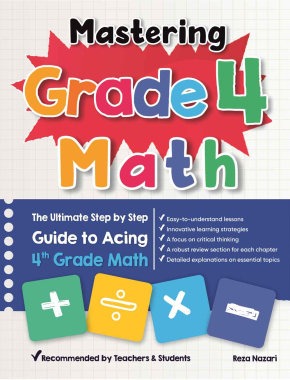
For a full grade 4 program with worked examples and practice on every base-ten skill, Mastering Grade 4 Math walks through adding hundreds, multi-digit addition, and regrouping. For more focused practice with word problems, Mastering Grade 4 Math Word Problems gives plenty of mixed sets with answer keys.
Related EffortlessMath Lessons
If a topic on this page feels rusty, these short lessons go deeper:
- Place value with whole numbers
- Adding multi-digit numbers (up to 1,000,000)
- How to round whole numbers
- Adding and subtracting whole numbers (resource currently unavailable)
- How to solve word problems

Related to This Article
More math articles
- The Best Grade 6 ELA Practice Tests for Alaska Students
- Journey to the Edge: A Meticulous Exploration of One-Sided Limits
- The Best Grade 6 ELA Practice Tests for South Dakota Students
- 8th Grade FSA Math Worksheets: FREE & Printable
- The Best Grade 6 ELA Practice Tests for New York Students
- Multistep Chemistry Problems: Moles to Gas Volume
- Overview of the ISEE Upper-Level Mathematics Test
- Redox and Electron Carriers: NADH, FADH2 and NADPH
- Top 10 Free Websites for ACT Math Preparation
- Reading Clocks



What people say about "Adding Hundreds for 4th Grade"?
No one replied yet.