6th Grade IAR Math Practice Test Questions

6th Grade IAR Math Practice Test Questions is a multiple-choice math challenge from Effortless Math. Read the problem, choose from the answer options below, then open the solution to see the full step-by-step working and check your reasoning against it.
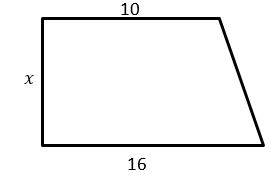
B. ( x = frac{A}{13})
C. ( x=A+13)
D. ( x=A-13)
3- By what factor did the number below change from the first to the fourth number?
(8, 104, 1352, 17576)
A. (13)
B. (96)
C. (1456)
D. (17568)
4- (170) is equal to …
A. ( -20-(3×10)+(6×40))
B. (((frac{15}{8})×72 )+ (frac{125}{5}) )
C. (((frac{30}{4} + frac{15}{2})×8), frac{11}{2} + frac{222}{4})
D. (frac{481}{6} + frac{121}{3}+50)
5- The distance between the two cities is (3,768) feet. What is the distance between the two cities in yards?
A. (1,256 yd)
B. (11,304 yd)
C. (45,216 yd)
D. (3,768 yd)
6- Mr. Jones saves ($3,400) out of his monthly family income of ($74,800). What fractional part of his income does Mr. Jones save?
A. (frac{1}{22})
B. (frac{1}{11})
C. (frac{3}{25})
D. (frac{2}{15})
7- What is the lowest common multiple of (12) and (20)?
A. (60)
B. (40)
C. (20)
D. (12)
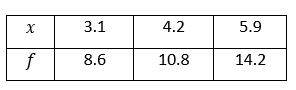
8- Based on the table below, which expression represents any value of (f) in terms of its corresponding value of (x)?
A. (f=2x-frac{3}{10})
B. (f=x+frac{3}{10})
C. (f=2x+2 frac{2}{5})
D. (2x+frac{3}{10})
9- (96 kg) (=)…?
A. (96 mg)
B. (9,600 mg)
C. (960,000 mg)
D. (96,000,000 mg)
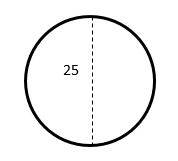
10- Calculate the approximate area of the following circle. (the diameter is (25))

A. (78)
B. (491)
C. (157)
D. (1963)
Best 6th Grade IAR Math Prep Resource
Answers:
1- A
(420=2^2×3^1×5^1×7^1)
2- B
The area of the trapezoid is: area= (frac{(base 1+base 2)}{2})×height= ((frac{10 + 16}{2})x = A)
( →13x = A→x = frac{A}{13})
3- A
(frac{104}{8}=13, frac{1352}{104}=13, frac{17576}{1352}=13)
Therefore, the factor is (13).
4- C
Simplify each option provided.
( A. -20-(3×10)+(6×40)=-20-30+240=190)
( B. (frac{15}{8})×72 + (frac{125}{5}) =135+25=160)
(C. ((frac{30}{4} + frac{15}{2})×8), frac{11}{2} + frac{222}{4} = ((frac{30 + 30}{4})×8)- frac{11}{2}+ frac{111}{2}=(frac{60}{4})×8) + frac{100}{2}= 120 + 50 = 170)
this is the answer
(D. Frac{481}{6} + frac{121}{3}+50= frac{481+242}{6}+50=120.5+50=170.5)
5- A
(1) (yard) (= )(3 feet)
Therefore, (3,768 ft × frac{1 space yd }{3 space ft}=1,256 space yd)
6- A
(3,400) out of (74,800) equals to (frac{3,400}{74,800}=frac{17}{374}=frac{1}{22})
7- A
Prime factorizing of (20=2×2×5)
Prime factorizing of (12=2×2×3)
(LCM)(=2×2×3×5=60)
8- C
Plug in the value of (x) into the function (f). First, plug in (3.1) for (x).
(A. F=2x-frac{3}{10}=2(3.1)-frac{3}{10}=5.9≠8.6)
(B. F=x+frac{3}{10}=3.1+frac{3}{10}=3.4≠10.8)
(C. F=2x+2 frac{2}{5}=2(3.1)+2 frac{2}{5}=6.2+2.4=8.6 )
This is correct!
Plug in other values of (x. X=4.2)
(f=2x+2frac{2}{5} =2(4.2)+2.4=10.8 )
This one is also correct.
(x=5.9)
(f=2x+2 frac{2}{5}=2(5.9)+2.4=14.2 )
This one works too!
(D. 2x+frac{3}{10}=2(3.1)+frac{3}{10}=6.5≠8.6)
9- D
(1 kg)(=) (1000 g) and (1 g) (=) (1000 mg)
(96 kg)(=) (96) (×) (1000 g) (=)(96) (×) (1000 )(×) (1000) (=)(96,000,000 mg)
10- B
The diameter of a circle is twice the radius. Radius of the circle is (frac{25}{2}).
Area of a circle = (πr^2=π(frac{25}{2})^2=156.25π=156.25×3.14=490.625≅491)
Looking for the best resource to help you succeed on the 6th Grade IAR Math test?
The Most Comprehensive Review for 6th-Grade Students
How to use 6th Grade IAR Math Practice Test Questions as real practice
6th Grade IAR Math Practice Test Questions works best when it is used as a short, focused study session rather than a quick click-through activity. The goal is not simply to finish the questions. The goal is to notice which skills feel automatic, which skills still need review, and which mistakes happen when you rush.
Start with a clean piece of scratch paper. For each item, answer the questions under realistic conditions, then review every missed problem before retaking a similar set. If you get something wrong, do not immediately move on. Write the correct step, circle the part that caused the mistake, and try one similar item before continuing. That small correction habit is what turns an online practice test into lasting math improvement.
A three-round study routine
| Round | What to do | Goal |
|---|---|---|
| Round 1 | Work slowly and focus on accuracy. Use notes if the topic is still new. | Understand the method. |
| Round 2 | Repeat missed items or similar problems without looking at the previous answer. | Fix the mistake. |
| Round 3 | Try a short timed set after the skill feels familiar. | Build speed and confidence. |
This routine is simple, but it solves a common problem: students often practice only until an answer looks familiar. Real readiness means you can solve a fresh problem without hints, explain the first step, and check whether the final answer is reasonable.
What to write down while you practice
Keep a tiny mistake log next to the activity. You only need three columns: the topic, the mistake, and the correction. For example, a student might write “fractions,” “forgot common denominator,” and “rewrite both fractions before adding.” A log like that is more useful than a long list of scores because it tells you exactly what to review next.
- If the mistake is a fact or formula, review it before the next round.
- If the mistake is a setup error, copy one worked example and label each step.
- If the mistake is from rushing, slow down and require written work for the next five items.
- If the same mistake appears twice, stop and review that topic before continuing.
When you are ready to move on
You are ready for the next topic when you can get several items correct in a row and explain why the method works. A score by itself is helpful, but it is not the whole story. You should also be able to describe the rule, formula, or pattern that the activity is testing.
For test preparation, come back to 6th Grade IAR Math Practice Test Questions after a day or two and try a fresh round. If the skill still feels easy after a short break, it is much more likely to stay with you during a quiz, unit test, or standardized test. If it feels shaky, that is useful information too: it tells you exactly where to spend your next study session.
Study tips for parents and teachers
When using this page with a student, ask for the reasoning before the answer. Questions such as “What is the first step?”, “Why did you choose that operation?”, and “How can you check it?” help students build mathematical language. That matters because many test questions measure more than calculation; they also measure whether the student can read the problem, choose a method, and explain a result.
Short sessions are usually best. Ten to fifteen minutes of careful practice can be more productive than a long session full of guessing. End by naming one skill that improved and one skill to review next time. That keeps practice positive, specific, and easy to continue.

Related to This Article
More math articles
- How to Compare Numbers Up to a Billion: A Step-by-Step Guide
- Random sampling
- The Best Grade 3 ELA Practice Tests for New York Students
- Top 10 6th Grade PSSA Math Practice Questions
- Dividing Mixed Numbers for 5th Grade: Step-by-Step Guide
- Midterm elections
- Graph to Grid: How to Completing a Table Using Information from a Graph
- Top 10 Tips to Create the SSAT Math Study Plan
- How to Interpret Proportional Relationship Graphs
- How to Employ Solids of Revolution








What people say about "6th Grade IAR Math Practice Test Questions"?
No one replied yet.