Mastering Algebra II in Virginia: A Complete Guide for Students and Parents

Welcome, parents of high school students in Virginia! Are you looking to support your child’s success in Algebra II (Algebra II) and ensure they excel in their math journey? Mastering Algebra II is a crucial step in their academic growth and future opportunities. This comprehensive guide is designed to equip you with the knowledge and strategies to guide your child through their Algebra II journey with confidence and proficiency. For official information Virginia Department of Education website.
Understanding the Virginia Algebra II Math Test
Algebra II is an essential high school math course that builds on the foundational concepts learned in Algebra I. It covers a wide range of topics, including linear equations, inequalities, functions, graphing, polynomials, quadratic equations, and systems of equations. Mastering Algebra II is vital for students as it paves the way for advanced math courses and real-world applications. For additional educational resources website.
For high school stundets in Virginia, understanding Algebra II concepts lays a strong foundation for future math success. Students will encounter various challenges in Algebra II, such as complex problem-solving, abstract thinking, and applying mathematical concepts to real-world scenarios. As parents, your support and guidance are key in helping your child navigate through these challenges effectively. For additional educational resources,.
Key Math Skills Your Student Needs to Master
To excel in Algebra II, your child should master key math skills such as solving linear equations of different complexities, understanding inequalities, working with functions and function notation, graphing linear equations, tackling systems of linear equations, handling polynomials, and grasping the basics of quadratic equations. Providing your child with ample practice and support in these areas will boost their confidence and proficiency in Algebra II.
Let’s delve into specific strategies and resources that can help your child build a strong mathematical foundation at home:
Solving Linear Equations
Linear equations are fundamental in Algebra II. Your child should be proficient in solving one-step, two-step, and multi-step linear equations. Encourage them to practice with a variety of examples to strengthen their problem-solving skills.

Understanding Inequalities and Function Notation
Inequalities play a significant role in Algebra II. It’s essential for your child to understand how to solve inequalities and interpret their solutions. Additionally, grasp the concept of functions and function notation to work with mathematical expressions effectively.
Graphing Linear Equations and Working with Polynomials
Graphing linear equations helps visualize mathematical relationships. Teach your child about slope, intercepts, and the slope-intercept form. Furthermore, introduce them to polynomials and guide them in adding, subtracting, and multiplying polynomials accurately.
Introduction to Quadratic Equations and Systems of Equations
Quadratic equations and systems of equations are advanced topics in Algebra II. Help your child understand the basics of quadratic equations and guide them in solving systems of equations using substitution and elimination methods.
Building Strong Math Foundations at Home
Supporting your child’s math learning at home is crucial for their success in Algebra II. Here are some effective strategies to reinforce math skills outside the classroom:
- Daily practice strategies: Encourage your child to practice math problems daily to enhance their problem-solving abilities.
- Making math part of everyday activities: Involve math in daily routines like grocery shopping and cooking to show real-world applications.
- Games and activities: Engage your child in math games that promote number sense and critical thinking.
- Using manipulatives and visual aids: Utilize math manipulatives and visual aids to make abstract concepts more tangible and understandable.
- Reading math books together: Explore math-related books with your child to foster a love for learning and enhance their mathematical literacy.
- Technology resources: Leverage educational apps and websites that offer interactive math practice to supplement classroom learning.
Effective Study and Practice Strategies
To help your child excel in Algebra II, it’s essential to establish effective study and practice routines. Here are some strategies to enhance your child’s learning experience:
- Creating a realistic study schedule: Develop a study timetable that balances academics and other activities.
- Making practice sessions enjoyable: Incorporate fun activities into study sessions to keep your child motivated and engaged.
- Using practice tests effectively: Introduce practice tests to simulate exam conditions and identify areas for improvement.
- Reviewing mistakes constructively: Help your child learn from their mistakes by analyzing errors and finding solutions.
- Building stamina: Gradually increase study durations to build your child’s endurance for longer practice sessions.
- Tracking progress: Monitor your child’s progress regularly to celebrate achievements and address areas needing improvement.
Test-Taking Strategies and Techniques
Equipping your child with effective test-taking strategies can enhance their performance on the Algebra II test. Consider the following techniques to help your child navigate through the exam confidently:
- Time management strategies: Teach your child how to allocate time wisely during the test to complete all questions.
- Reading word problems carefully: Guide your child in dissecting word problems step by step to extract key information and formulate a plan.
- Problem-solving strategies: Encourage your child to approach problems from different angles and explore multiple solution paths.
- Skipping difficult questions: Advise your child on when to skip challenging questions and return to them later if time permits.
- Checking work: Emphasize the importance of reviewing answers and checking calculations for accuracy before submitting the test.
- Handling different question types: Familiarize your child with various question formats to boost their confidence in tackling diverse challenges.
Supporting Your Child Emotionally
Emotional support is essential in helping your child navigate the challenges of Algebra II. Here are some strategies to provide emotional support:
- Recognizing and managing test anxiety: Help your child identify and cope with test anxiety through relaxation techniques and positive affirmations.
- Building confidence: Celebrate your child’s achievements, no matter how small, to boost their self-esteem and motivation.
- Creating a positive learning environment: Foster a nurturing atmosphere at home that encourages curiosity, exploration, and growth mindset.
- Dealing with setbacks: Teach your child resilience by framing setbacks as learning opportunities and encouraging perseverance.
- Celebrating progress: Acknowledge your child’s progress and efforts, emphasizing improvement over perfection.
- Encouragement strategies: Use positive reinforcement, constructive feedback, and supportive language to motivate your child throughout their academic journey.
Practice Resources and Tools
Utilizing practice resources and tools can significantly enhance your child’s preparation for the Algebra II test. Here are some valuable resources to support your child’s learning:
- Review of helpful practice materials: Explore a variety of practice books, worksheets, and online resources tailored to Algebra II concepts.
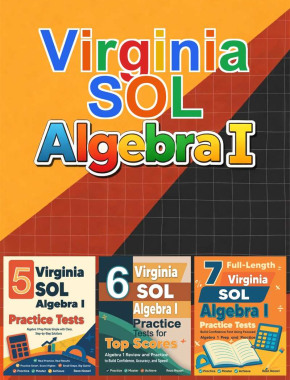
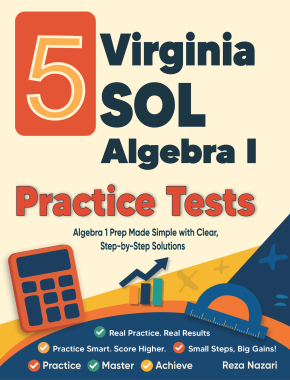
- Comprehensive practice book recommendation: Consider using the “5 Virginia Algebra II Practice Tests” book to align with the test requirements and reinforce key skills.
- Online resources and apps: Discover educational websites and apps that offer interactive math practice for diverse learning styles.
- Choosing quality practice materials: Select practice resources that align with the Virginia Algebra II curriculum and provide challenging yet accessible problems.
- Creating your own practice problems: Develop customized math problems to target specific areas of improvement and enhance your child’s problem-solving abilities.
- Working with teachers and school resources: Collaborate with your child’s teachers and utilize school resources to supplement learning and address any academic concerns.
Creating a Test Day Success Plan
Recommended Math Resources
Preparing your child for test day requires consistency, practice, and effective study habits. Here’s how you can help your child succeed on the Algebra II test:
- Establishing a consistent study routine: Develop a daily study plan that includes focused practice sessions and review of challenging topics.
- Building problem-solving skills: Encourage your child to tackle math problems progressively, starting from basic concepts to more complex challenges.
- Preparing for assessments and quizzes: Equip your child with the necessary skills and knowledge to excel in classroom assessments and quizzes related to Algebra II.
- Healthy study habits: Prioritize your child’s well-being by ensuring they get sufficient sleep, maintain a balanced diet, and take regular breaks during study sessions.
- Daily practice routine: Incorporate daily math practice sessions to reinforce Algebra II concepts and build fluency in mathematical problem-solving.
- Tracking progress: Monitor your child’s academic progress, celebrate milestones, and set new goals to maintain motivation and continuous improvement.
Frequently Asked Questions
How do you add and subtract mixed fractions?
Adding and subtracting mixed fractions involves combining whole numbers and fractions. To add mixed fractions, first convert them to improper fractions, then add the numerators and keep the denominator the same. To subtract mixed fractions, follow the same process but subtract the numerators instead. Here’s a detailed guide on how to add and subtract mixed fractions to help your child master this skill in Algebra II.
How do you multiply and divide decimals?
To multiply decimals, you can first ignore the decimal points and multiply the numbers as if they were whole numbers. Then, count the total number of decimal places in the numbers you are multiplying and place the decimal point in your answer that many places from the right. For division, you can move the decimal point in the divisor to make it a whole number and move the decimal point the same number of places in the dividend. For more practice and examples, you can visit EffortlessMath’s page on multiplying and dividing decimals.
What is a quantitative formula?
A quantitative formula is a mathematical equation that represents a relationship between different quantities or variables. In Algebra II, students often encounter quantitative formulas that involve multiple variables and operations. Understanding and using these formulas is essential for solving complex math problems and real-world applications. For more guidance on mastering Algebra II concepts and formulas, you can check out the resources on EffortlessMath.com’s Algebra II page.
Final Thoughts
In conclusion, mastering Algebra II is a significant achievement for students in Virginia. By providing your child with the right support, resources, and encouragement, you can help them excel in this challenging math course. Remember, learning math is a journey that requires patience, dedication, and a growth mindset. Stay involved in your child’s math education, celebrate their successes, and continue to foster a love for learning. Together, you and your child can conquer Algebra II and build a strong mathematical foundation for future academic pursuits.
Our Featured Products

Related to This Article
More math articles
- Area of a Triangle
- Graph to Grid: How to Completing a Table Using Information from a Graph
- How to Calculate the Area of Trapezoids? (+FREE Worksheet!)
- 8th Grade ACT Aspire Math Worksheets: FREE & Printable
- How to Dividing Fractions by Whole Numbers in Recipes!
- The Best ASVAB Math Worksheets: FREE & Printable
- How to Solve Powers of Products and Quotients? (+FREE Worksheet!)
- How to Piece Together Areas: Compound Figures with Triangles, Semicircles, and Quarter Circles
- Geometry Puzzle – Challenge 60
- Full-Length CLEP College Algebra Practice Test-Answers and Explanations










What people say about "Mastering Algebra II in Virginia: A Complete Guide for Students and Parents - Effortless Math: We Help Students Learn to LOVE Mathematics"?
No one replied yet.