How to Help Your 7th Grade Student Prepare for the Kansas KAP Math Test


Welcome, Kansas parents of 7th-grade students! As your child prepares for the Kansas KAP (Kansas Assessment Program) Math Test, you play a crucial role in supporting their success. This comprehensive guide is designed to equip you with the knowledge and strategies needed to help your child excel on this important assessment. By understanding the test format, key math skills, and effective preparation techniques, you can empower your child to perform their best. Let’s dive in and ensure your 7th grader is well-prepared for the KAP Math Test. For official information, visit the Kansas State Department of Education website.
Understanding the Kansas KAP 7th Grade Math Test
The Kansas KAP Math Test assesses 7th-grade students’ mathematical knowledge and skills. This test is a part of the Kansas Assessment Program (KAP) and is designed to measure students’ proficiency in various math concepts. By understanding the test structure and content, you can better support your child in their preparation. For additional educational resources, visit the U.S. Department of Education website.
Test Overview:
| Day | Study Time | Focus Areas |
|---|---|---|
| Monday | 1-2 hours | Number Operations |
| Tuesday | 1-2 hours | Problem Solving |
| Wednesday | 1-1.5 hours | Review & Practice |
| Thursday | 1-2 hours | Geometry & Measurement |
| Friday | 1-2 hours | Data & Statistics |
| Weekend | 1 hour | Review & Games |
The KAP Math Test covers a range of math domains, including operations, geometry, measurement, data analysis, and more. It consists of multiple-choice questions, open-ended questions, and problem-solving tasks. Students are required to demonstrate their understanding of mathematical concepts through various question types.
Scoring and Proficiency Levels:
The test is scored based on the number of correct answers, and students receive proficiency levels indicating their performance. Understanding how the scoring system works can provide insights into your child’s strengths and areas for improvement.
Test Administration and Results:
The KAP Math Test is typically administered during a specific testing window each year. Results are used to evaluate students’ math proficiency and inform educational decisions. By being aware of the test timeline and result interpretation, you can effectively support your child’s academic growth.
Key Math Skills Your 7th Grader Needs to Master
As your child prepares for the KAP Math Test, it’s essential to focus on key math skills relevant to 7th-grade standards. Here are the core math domains and examples of concepts your child should master:
Operations & Algebraic Thinking:
Seventh graders should be proficient in solving multi-step algebraic equations and understanding patterns and relationships in mathematical expressions.
Number & Operations in Base Ten:
Students need to understand the concept of place value, perform operations with multi-digit numbers, and demonstrate fluency in arithmetic computations.
Number & Operations – Fractions:
Proficiency in working with fractions, including adding, subtracting, multiplying, and dividing fractions, is essential for success on the KAP Math Test.
Measurement & Data:
Seventh graders should be able to solve problems involving measurement conversions, interpret data from graphs and tables, and calculate probabilities.
Geometry:
Understanding geometric shapes, calculating area and perimeter, and applying geometric principles in problem-solving are key skills for 7th-grade students.
Building Strong Math Foundations at Home
Daily Practice Strategies
Encourage your child to engage in daily math practice to reinforce concepts and improve problem-solving skills. Consider setting aside dedicated time each day for math activities or exercises.
Making Math Part of Everyday Activities
Integrate math into daily routines such as grocery shopping, cooking, or budgeting. Discuss math concepts in real-life contexts to help your child see the practical application of what they are learning.
Games and Activities
Explore math-themed games and activities that promote number sense, critical thinking, and mathematical reasoning. Board games, card games, and online math challenges can make learning fun and engaging.
Using Manipulatives and Visual Aids
Utilize math manipulatives such as blocks, counters, or geometric shapes to help your child visualize mathematical concepts. Visual aids can enhance understanding and make abstract ideas more concrete.
Reading Math Books Together
Explore math-related books that spark your child’s interest in mathematical concepts. Reading together can deepen their understanding of math and inspire a love for learning.
Technology Resources
Explore educational apps and websites that offer interactive math lessons, practice problems, and engaging math games. Technology can be a valuable tool to supplement your child’s math education.
Effective Study and Practice Strategies
Creating a Realistic Study Schedule
Help your child create a study schedule that allocates time for reviewing key concepts, practicing problem-solving, and taking practice tests. Consistent and structured study habits can enhance retention and mastery.
Making Practice Sessions Enjoyable and Engaging
Infuse creativity and variety into practice sessions by incorporating games, challenges, and rewards. Keeping the practice sessions fun can motivate your child to stay focused and committed to learning.
Using Practice Tests Effectively
Encourage your child to take practice tests under timed conditions to simulate the test environment. Reviewing the results and identifying areas of improvement can guide targeted study efforts.
Reviewing Mistakes Constructively
Guide your child to analyze their mistakes, understand the underlying concepts, and learn from errors. Encouraging a growth mindset towards mistakes can foster continuous improvement.
Building Stamina for Longer Practice Sessions
Gradually increase the duration of practice sessions to build endurance and concentration. Developing the ability to sustain focus for extended periods can be beneficial during the actual test.
Tracking Progress Over Time
Monitor your child’s progress by tracking their performance on practice tests and assignments. Celebrate milestones and improvements to boost confidence and motivation.
Test-Taking Strategies and Techniques
Time Management Strategies
Teach your child to allocate time effectively for each question, prioritize easier questions, and manage the test duration wisely. Time management is crucial for completing the test within the allotted time frame.
How to Read Word Problems Carefully
Guide your child to read word problems attentively, identify key information, and devise a plan to solve the problem step by step. Encouraging systematic problem-solving approaches can enhance accuracy.
Problem-Solving Strategies
Encourage your child to employ various problem-solving strategies such as drawing diagrams, making tables, or working backward. Providing multiple approaches can empower them to tackle complex problems effectively.
When and How to Skip Difficult Questions
Advise your child on when to skip challenging questions, mark them for later review, and return to them if time permits. Strategic question prioritization can maximize point accumulation.
Checking Work Effectively
Emphasize the importance of reviewing answers, checking calculations, and ensuring accuracy before submitting the test. Teaching your child to double-check their work can prevent careless errors.
Handling Different Question Types
Practice with a variety of question types to familiarize your child with different formats and styles. Exposure to diverse question types can build confidence and proficiency across all test sections.
Supporting Your Child Emotionally
Recognizing and Managing Test Anxiety
Help your child recognize signs of test anxiety and develop coping strategies such as deep breathing exercises, positive self-talk, and visualization techniques. Addressing anxiety can enhance performance and confidence.
Building Confidence Through Small Wins
Celebrate your child’s achievements, no matter how small, to boost their confidence and motivation. Encouraging a positive outlook and recognizing progress can foster a resilient attitude towards challenges.
Creating a Positive Learning Environment at Home
Foster a supportive and encouraging home environment that values learning, growth, and effort. Establishing a positive atmosphere can inspire your child to approach learning with enthusiasm and dedication.
Dealing with Setbacks Constructively
Teach your child to view setbacks as opportunities for growth and learning. Encourage resilience, problem-solving, and perseverance in the face of challenges to build their emotional resilience.
Celebrating Progress, Not Just Perfection
Acknowledge and celebrate your child’s progress, improvement, and effort throughout their preparation journey. Emphasizing growth and development over perfection can instill a healthy attitude towards learning.
Encouragement Strategies That Work
Provide consistent support, encouragement, and positive reinforcement to motivate your child. Your words of encouragement can inspire confidence, resilience, and a strong work ethic in your child.
Practice Resources and Tools
Explore a variety of practice materials and resources to enhance your child’s math skills and prepare them for the KAP Math Test:
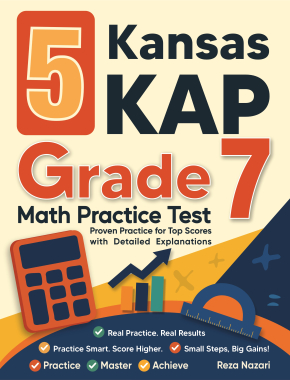
- Review helpful practice books like “5 Kansas KAP Grade 7 Math Practice Tests” to align with the test format.
- Utilize online resources and educational apps that offer interactive math practice and exercises.
- Select quality practice materials that cover the key math skills assessed on the KAP Math Test.
- Create personalized practice problems tailored to your child’s learning needs and areas of improvement.
- Collaborate with teachers and utilize school resources to supplement your child’s math preparation.
Creating a Test Day Success Plan
Our Top Picks for This Month
Prepare your child for test day success with these strategic tips:
Week Before the Test:
Ensure your child gets sufficient rest, stays hydrated, and reviews key concepts without overloading themselves with new information.
Day Before the Test:
Organize necessary materials, such as pencils, erasers, calculators, and snacks. Encourage your child to relax, engage in calming activities, and get a good night’s sleep.
Test Day Preparation:
Encourage your child to have a healthy breakfast, arrive at the test center early, and maintain a positive mindset. Establish a routine that promotes focus and confidence.
Healthy Habits:
Emphasize the importance of adequate sleep, balanced nutrition, and physical activity to support your child’s cognitive function and overall well-being on test day.
Morning of the Test:
Provide a nutritious breakfast, offer words of encouragement, and ensure your child feels prepared and supported as they embark on the test-taking journey.
After the Test:
Engage in a constructive discussion with your child about their test experience, celebrate their efforts, and address any concerns or questions they may have about the test content.
Final Thoughts
As you guide your 7th-grade student through the preparation process for the Kansas KAP Math Test, remember that your support and encouragement play a significant role in their success. By fostering a positive attitude towards math, providing effective study strategies, and nurturing emotional resilience, you empower your child to approach the test with confidence and determination.
Mathematics is not just about test scores; it’s about developing critical thinking skills, problem-solving abilities, and a lifelong love for learning. Embrace the journey of math education with your child, celebrate their progress, and continue to cultivate a growth mindset that values effort and growth over perfection.
To further support your child’s math journey, explore the full range of resources and materials available on EffortlessMath.com. From practice worksheets to comprehensive study guides, Effortless Math offers valuable tools to enhance your child’s math skills and test readiness.
| Day | Study Time | Focus Areas |
|---|---|---|
| Monday | 1-2 hours | Number Operations |
| Tuesday | 1-2 hours | Problem Solving |
| Wednesday | 1-1.5 hours | Review & Practice |
| Thursday | 1-2 hours | Geometry & Measurement |
| Friday | 1-2 hours | Data & Statistics |
| Weekend | 1 hour | Review & Games |
Our Featured Products

Related to This Article
More math articles
- 10 Most Common 4th Grade MCAS Math Questions
- How Is the ALEKS Test Scored?
- Alternating Series
- The Ultimate ParaPro Math Formula Cheat Sheet
- How to Find the Volume of Spheres? (+FREE Worksheet!)
- FREE 7th Grade Georgia Milestones Assessment System Math Practice Test
- How to Solve Word Problems by Adding Three or More Decimals
- 5th Grade CMAS Math Worksheets: FREE & Printable
- How to Handle Your Math Assignments?
- Top 10 GRE Math Books: To Help You Succeed on the GRE Math Test











What people say about "How to Help Your 7th Grade Student Prepare for the Kansas KAP Math Test - Effortless Math: We Help Students Learn to LOVE Mathematics"?
No one replied yet.