How to Help Your 4th Grade Student Prepare for the Florida FAST Math Test

FAST is a vital assessment that measures your child’s understanding of key math concepts and skills. By mastering these concepts, your child can demonstrate their proficiency and readiness for the challenges ahead. This guide will walk you through the test format, key math domains, study strategies, test-taking tips, and emotional support techniques to empower your child.
Throughout this guide, you will find actionable advice, real-world examples, and encouragement to help you navigate the preparation process effectively. Let’s work together to ensure your child is well-prepared and confident on test day.
Expect detailed insights on the test structure, essential math skills, effective study strategies, test-taking techniques, emotional support, practice resources, and a comprehensive test day success plan. Let’s embark on this journey to support your child’s math success with confidence and optimism.
This guide aims to empower you as a parent to guide your child through the preparation process with patience, positivity, and effective strategies. Together, we can help your 4th-grade student shine on the Florida FAST Math Test.
Understanding the Florida FAST 4th Grade Math Test
The FAST Math Test in Florida assesses your child’s mathematical knowledge across various domains essential for 4th-grade success. It covers operations, geometry, measurement, data analysis, and more. Understanding the test format, question types, time limits, scoring system, and proficiency levels is crucial for effective preparation.
Proficiency levels on the FAST test indicate your child’s mastery of specific skills. The test is administered at a specific time during the academic year, and the results play a significant role in evaluating your child’s math proficiency. Understanding these aspects will help you tailor your preparation efforts to meet your child’s needs effectively.
Key Math Skills Your 4th Grader Needs to Master
Your 4th grader needs to excel in various math domains to perform well on the FAST Math Test. Here are the key areas your child should focus on:
Operations & Algebraic Thinking
Operations and algebraic thinking involve understanding and applying mathematical operations, including addition, subtraction, multiplication, and division. Your child should be proficient in solving multi-step word problems and identifying patterns in numbers.

Number & Operations in Base Ten
In this domain, your child should understand place value concepts, perform operations with multi-digit numbers, and demonstrate fluency in addition and subtraction. Practice activities involving regrouping and place value understanding can strengthen these skills.
Number & Operations – Fractions
Mastering fraction concepts is crucial for 4th-grade success. Your child should be able to compare fractions, add and subtract fractions with like denominators, and understand fraction equivalence. Visual models and real-world examples can aid in developing a deep understanding of fractions.
Measurement & Data
Measurement skills involve understanding concepts of length, weight, capacity, and time. Data analysis requires interpreting graphs, tables, and charts. Engage your child in hands-on measurement activities and real-life data interpretation tasks to enhance these skills.
Geometry
Geometry concepts encompass understanding shapes, angles, area, and perimeter calculations. Practice identifying geometric shapes, measuring angles, and solving geometry problems to strengthen your child’s geometric reasoning abilities.
Building Strong Math Foundations at Home
Popular Math Books
Supporting your child’s math skills at home is key to their success on the FAST Math Test. Implement the following strategies to reinforce math concepts and foster a positive learning environment:
- Dedicate time for daily math practice with engaging activities.
- Integrate math into everyday tasks like grocery shopping and cooking.
- Utilize games and activities to enhance number sense and problem-solving skills.
- Incorporate manipulatives and visual aids to make abstract concepts tangible.
- Read math-related books together to explore mathematical concepts in a fun way.
- Explore technology resources such as math apps and websites for interactive learning.
Effective Study and Practice Strategies
To help your child prepare effectively for the FAST Math Test, consider the following study and practice strategies:
- Create a realistic study schedule that includes dedicated math practice time.
- Make practice sessions enjoyable by incorporating games and interactive activities.
- Utilize practice tests to simulate test conditions and identify areas for improvement.
- Review mistakes constructively to learn from errors and strengthen skills.
- Gradually increase practice session durations to build stamina for longer tasks.
- Track your child’s progress over time to monitor growth and celebrate achievements.
Test-Taking Strategies and Techniques
Equipping your child with effective test-taking strategies can boost their confidence and performance on the FAST Math Test. Consider the following techniques:
- Implement time management strategies to allocate time effectively for each question.
- Teach your child to read word problems carefully, identifying key information and steps.
- Encourage multiple problem-solving approaches to tackle complex math questions.
- Guide your child on when to skip difficult questions and return to them later.
- Emphasize the importance of checking work for accuracy and completeness.
- Provide strategies for handling different question types, such as multiple-choice and open-ended.
Supporting Your Child Emotionally
Emotional support plays a crucial role in your child’s test preparation journey. Consider the following strategies to nurture your child’s emotional well-being:
- Recognize and address test anxiety through relaxation techniques and positive affirmations.
- Build your child’s confidence by celebrating small victories and progress.
- Create a positive and encouraging learning environment at home to foster motivation.
- Help your child navigate setbacks constructively, emphasizing learning from challenges.
- Focus on celebrating progress and effort rather than perfection to instill a growth mindset.
- Use effective encouragement strategies to motivate and inspire your child throughout the preparation process.
Practice Resources and Tools
Accessing quality practice materials is essential for your child’s preparation. Explore the following resources to enhance your child’s math skills:
- Review helpful practice materials that align with the FAST Math Test requirements.
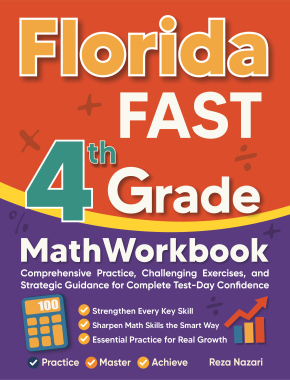
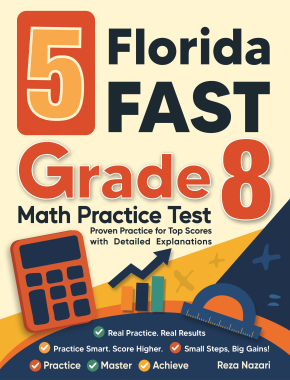
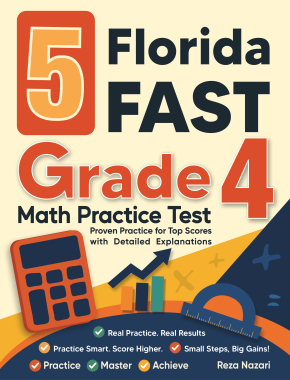
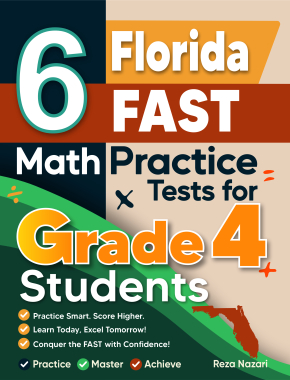
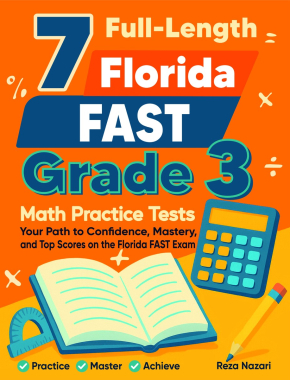
- Consider utilizing the “5 Florida FAST Grade 4 Math Practice Tests” book for targeted practice.
- Explore online resources and math apps that offer interactive and engaging practice opportunities.
- Learn how to select high-quality practice materials that cater to your child’s learning needs.
- Create custom practice problems based on your child’s strengths and areas for improvement.
- Collaborate with teachers and school resources to access additional support and practice opportunities.
Creating a Test Day Success Plan
Our Best Seller Books
Frequently Asked Questions
How do you add and subtract mixed fractions?
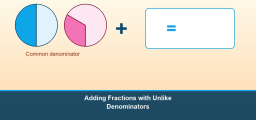
To add and subtract mixed fractions, first convert them to improper fractions. Then, for addition, find a common denominator, add the fractions, and simplify if needed. For subtraction, follow the same steps but subtract instead of adding. Make sure to simplify your final answer if possible. You can find more practice and examples on adding and subtracting fractions on the Effortless Math Fractions page to help your 4th-grade student prepare for the Florida FAST Math Test.
How do you multiply and divide decimals?
To multiply decimals, first, multiply the numbers as if they were whole numbers. Then, count the total number of decimal places in the factors. Place the decimal point in the product so that the total number of decimal places is equal to the sum of the decimal places in the factors. For division, move the decimal point in the divisor to make it a whole number, then move the decimal point in the dividend the same number of places. Practice these steps with your child using real-life examples to reinforce their understanding. For more practice problems and explanations, visit EffortlessMath’s pages on multiplying decimals and dividing decimals.
How do I add two angles?
To add two angles, you simply add their measures together. For example, if one angle measures 30 degrees and the other angle measures 45 degrees, you would add 30 + 45 to get a total of 75 degrees. This concept is important for understanding geometry and measurements, which are skills that may be tested on the Florida FAST Math Test. To practice adding angles and strengthen your child’s understanding, you can use interactive resources like the geometry section on EffortlessMath.com.

Related to This Article
More math articles
- FREE 7th Grade Georgia Milestones Assessment System Math Practice Test
- The Ultimate 6th Grade NHSAS Math Course (+FREE Worksheets)
- Multiplying 3-Digit by 1-Digit Numbers for 4th Grade
- How to Differentiate Trigonometric Reciprocals
- How is the ParaPro Test Scored?
- How to Use Measures of Center and Spread to Compare Populations
- How to Master Integrals
- TASC Math FREE Sample Practice Questions
- Convert Between Fractions and Decimals
- How to Construct and Interpret Scale Drawing? (+FREE Worksheet!)










What people say about "How to Help Your 4th Grade Student Prepare for the Florida FAST Math Test - Effortless Math: We Help Students Learn to LOVE Mathematics"?
No one replied yet.