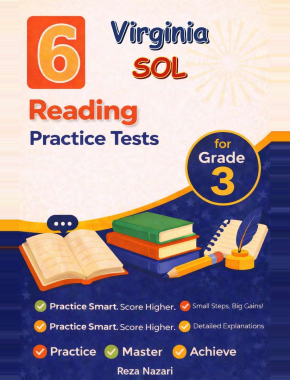
6 Virginia SOL Reading Grade 3 Full Practice Tests
🎯 Virginia SOL Reading Grade 3: 6 full-length practice tests — reading, vocabulary, language, and evidence-based items. Detailed answer key included.
Students also viewed
More Virginia books for this grade band and nearby math goals.
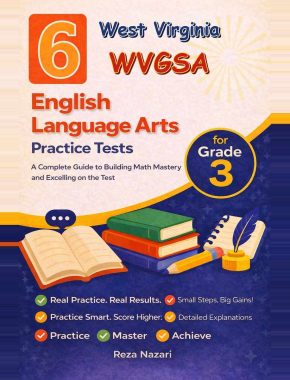 6 West Virginia WVGSA English Language Arts (ELA) Grade 3: Full Practice...
Original price was: $28.99.$18.99Current price is: $18.99.
6 West Virginia WVGSA English Language Arts (ELA) Grade 3: Full Practice...
Original price was: $28.99.$18.99Current price is: $18.99.
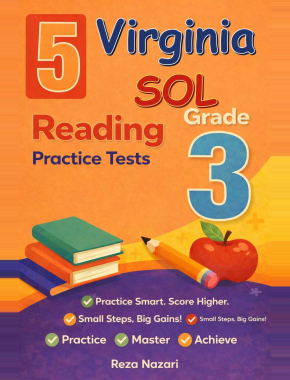 Virginia SOL Grade 3 ELA: 5 Full Practice Tests
Original price was: $28.99.$18.99Current price is: $18.99.
Virginia SOL Grade 3 ELA: 5 Full Practice Tests
Original price was: $28.99.$18.99Current price is: $18.99.
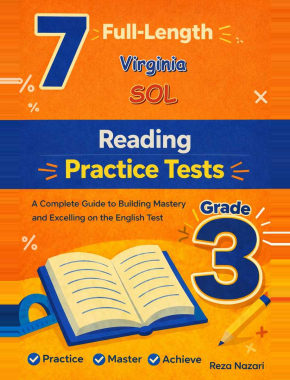 Virginia SOL Grade 3 ELA: 7 Full Practice Tests
Original price was: $29.99.$19.99Current price is: $19.99.
Virginia SOL Grade 3 ELA: 7 Full Practice Tests
Original price was: $29.99.$19.99Current price is: $19.99.
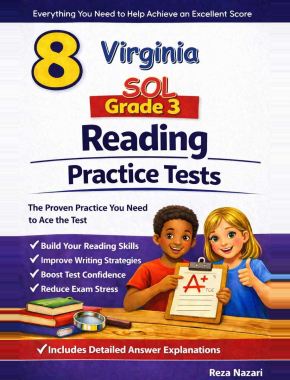 Virginia SOL Grade 3 ELA: 8 Full Practice Tests
Original price was: $30.99.$20.99Current price is: $20.99.
Virginia SOL Grade 3 ELA: 8 Full Practice Tests
Original price was: $30.99.$20.99Current price is: $20.99.
Evidence, Endurance, and Clarity — Six Assessments at a Sustainable Pace
Because the book is a printable PDF, you can adapt pacing to real life: one test per week, two tests before a break, or a focused sprint before testing season. 6 Virginia SOL Reading Grade 3: Full Practice Tests supports each approach without losing fidelity to the SOL Reading experience. Tutors can assign targeted sections; homeschool families can document improvement across all 6 assessments; classroom teachers can use tests as benchmarks that align tightly to Virginia expectations for Grade 3 reading and language.
Genre balance is intentional. 6 Virginia SOL Reading Grade 3: Full Practice Tests rotates fiction, literary nonfiction, and informational articles so students practice shifting gears the way the SOL Reading demands. Vocabulary stays embedded in sentences; grammar connects to meaning; paired passages require integration — hallmarks of modern ELA design in Virginia expectations for Grade 3 reading and language.
Whether you assign one test per week, stack two tests before a break, or run a short review sprint, 6 Virginia SOL Reading Grade 3: Full Practice Tests keeps the SOL Reading experience authentic while fitting real schedules in Virginia teachers and schools. The PDF is print-ready, so tutors can target sections, teachers can conduct full-class simulations, and families can archive results to show growth across all 6 assessments.
Finally, the six-test design respects classroom realities. There is enough volume to see growth, but not so much that teams lose weeks of core instruction. Use the suite as a spine for test readiness in Virginia teachers and schools, then supplement with your favorite read-alouds and writing projects so students stay motivated while they prepare for the SOL Reading.
What’s Inside Each Practice Test
Vocabulary stays tied to meaning. Students infer from context, attend to figurative language, and distinguish shades of meaning — competencies the SOL Reading measures repeatedly. Rather than memorizing lists, learners practice the way vocabulary actually grows: through reading, discussion, and reflection — the same cycle Virginia teachers and schools emphasize in workshop instruction.
Following each test, explanations highlight reasoning paths so learners see how a correct answer emerges from the passage. That transparency helps Virginia teachers and schools turn errors into mini-lessons and helps families coach with repeatable strategies before the SOL Reading.
Skills Covered Across All 6 Tests
Literary study includes character perspective, setting influence, and figurative language — explored with questions that require returning to the passage. That evidence-first habit distinguishes strong performances on the SOL Reading from guesswork.
Language skills — grammar, usage, capitalization, punctuation — appear in context so conventions read as tools for clarity. That mirrors instruction in Virginia teachers and schools and the language demands embedded in the SOL Reading.
Why Choose This Book for Virginia Test Preparation
Tutors and homeschool educators gain a defensible sequence — 6 assessments that approximate summative rigor while leaving room for literature and writing projects beyond test prep.
High-leverage habits recur: previewing questions, marking evidence lightly, managing time, and checking work — small moves that accumulate on the SOL Reading.
What Makes It Special
- Stamina for Long Sessions — Build focus for full-length testing experiences like the SOL Reading.
- 6 Full-Length Practice Tests — Complete assessments reflecting the structure and rigor of the SOL Reading.
- Literary & Informational Balance — Varied genres and text types aligned to Virginia expectations for Grade 3 reading and language.
- Vocabulary in Authentic Context — Words studied inside passages — the way the SOL Reading evaluates meaning.
- Language & Writing Integration — Conventions and short responses tied to reading — not isolated drills.
- Detailed Answer Key — Explanations that connect each correct answer to the text.
Perfect For
- Tutors building multi-week plans with clear checkpoints
- Homeschool families aligning to state literacy expectations
- Students who benefit from high-volume, realistic rehearsal before the SOL Reading
- Interventionists tracking skill growth across multiple data points
Your Grade 3 Literacy Practice Partner
third graders who finish this set walk into the SOL Reading having seen the formats, managed the length, and learned from mistakes — a powerful combination for reducing anxiety and raising performance in Virginia teachers and schools.
Print the tests, review the keys, and watch strategies stick — six focused steps toward strong performance on the SOL Reading.
You must be logged in to post a review.
There are no reviews yet.