Everything You Need to Know About Sketching Curves Using Derivatives
TL;DR: Curve sketching is a checklist sport. You note the domain, find intercepts and asymptotes, use the first derivative to track slope and critical points, and use the second derivative to nail down concavity and inflection points. Hit every check, plot the key landmarks, and the graph practically draws itself. Skip a step and the curve looks off. Get the routine down and even strange functions become something you can sketch clean by hand.
Key takeaways:
- First derivative gives slope, critical points, and intervals of increase/decrease.
- Second derivative gives concavity and inflection points.
- Always check the domain and any vertical or horizontal asymptotes first.
- Critical points: solve \(f'(x) = 0\) or where \(f'\) is undefined.
- End behavior: examine \(\lim_{x\to\pm\infty} f(x)\).
The first and second derivative tests are pivotal tools in calculus for analyzing the behavior of functions. They assess where functions increase or decrease, identify local extrema, and determine concavity. While the first derivative reveals increasing or decreasing trends and locates potential extrema, the second derivative offers insights into the function’s concavity, indicating whether a point is a local maximum or minimum. It also identifies inflection points where concavity changes. This comprehensive approach is essential, especially when derivatives present complexities, such as being zero or undefined, necessitating further exploration to fully understand the function’s nature and behavior.

Overview:
The first derivative test involves examining where the derivative changes sign to identify local maxima and minima: a function is increasing where its derivative is positive and decreasing where it’s negative.
The second derivative test further refines this analysis. A positive second derivative implies the graph is concave up, suggesting a local minimum; a negative second derivative indicates concave down, pointing to a local maximum.
Additionally, points where the second derivative changes sign are inflection points, marking transitions between concave up and down. Together, these tests provide a comprehensive toolkit for analyzing a function’s behavior and identifying key features of its graph.
Except for situations where the first derivative is zero or undefined and the second derivative test is inconclusive. In such cases, further analysis or alternative methods, like the first derivative test or examining function values around the critical point, might be needed to accurately determine the nature of the extrema. Additionally, if the second derivative is zero or undefined at a point, it may not conclusively indicate an inflection point, requiring additional investigation.
(An inflection point is where a function’s graph changes concavity, shifting from concave up to concave down, or vice versa.)
Example:
\( \text{Analyze and sketch the curve of } f(x) = x^3 – 3x^2 – 9x + 27. \)
First Derivative (for critical points and slope):
\( f(x) = x^3 – 3x^2 – 9x + 27 \)
\( f'(x) = 3x^2 – 6x – 9 \)
Find Critical Points(\(x\) points where first derivative is zero):
\( 3x^2 – 6x – 9 = 0 \)
After solving this using delta method (\( [(b^2)-4ac] \), we get \( 3 \) and \( -1 \) as the results. At these points, first derivative is zero.
So it’s decreasing at \( x=-1 \) until it reaches \( 3 \), [meaning it was increasing before \( -1 \)
and it’s increasing from \( x=3 \).
Second Derivative (for concavity and points of inflection):
\( f”(x) = 6x – 6 \)
\( 6x – 6 = 0 \)
So at \( x=1 \), concavity changes.
Let’s take a look at the functions graph:

Complete Curve Sketching Using Derivative Analysis
Curve sketching synthesizes calculus tools—the first derivative revealing increasing/decreasing intervals and local extrema, the second derivative showing concavity and inflection points—with geometric visualization. Mastering this skill means you can sketch accurate curves without extensive point-by-point plotting, relying instead on systematic derivative analysis.
The Five-Step Curve Sketching Methodology
Step One involves finding all critical points where f'(x) = 0 or where the derivative is undefined. These points represent candidates for local maxima and minima. Step Two determines whether the function increases or decreases on intervals created by critical points. Test the sign of f'(x) at sample points in each interval; positive values indicate increasing regions, negative values indicate decreasing regions. Step Three involves finding the second derivative f”(x) and locating points where it equals zero or is undefined—these are candidate inflection points. Step Four determines concavity by testing the sign of f”(x). Positive second derivative indicates concave-up curves (shaped like valleys), negative indicates concave-down curves (shaped like hills). Step Five calculates function values at critical points and inflection points to obtain coordinates for accurate curve sketching.
Worked Example: Cubic Function Analysis
Consider f(x) = x³ – 3x² + 2. The first derivative is f'(x) = 3x² – 6x = 3x(x – 2). Setting this equal to zero yields critical points at x = 0 and x = 2. Test the sign of f'(x) at sample points: for x = -1, f'(-1) = 3(-1)(-3) = 9, which is positive, indicating the function increases on (-∞, 0). For x = 1, f'(1) = 3(1)(-1) = -3, which is negative, indicating decrease on (0, 2). For x = 3, f'(3) = 3(3)(1) = 9, which is positive, indicating increase on (2, ∞). Therefore x = 0 is a local maximum and x = 2 is a local minimum.
The second derivative is f”(x) = 6x – 6. Setting this equal to zero yields x = 1. Testing: f”(0) = -6, which is negative (concave down). f”(2) = 6, which is positive (concave up). The function changes from concave-down to concave-up at x = 1, making this an inflection point. Calculate coordinates: f(0) = 2 (local max), f(2) = -2 (local min), f(1) = 0 (inflection point).
Key Information Extracted from Derivatives
From f'(x): identify critical points, determine increasing/decreasing intervals, classify local extrema as maxima or minima. From f”(x): identify inflection point candidates, determine concavity intervals, confirm actual inflection points where concavity changes. The combination of this information produces a complete picture of curve behavior without requiring the calculation of many individual points.
Common Mistakes and Prevention
Confusing critical points with extrema: not all critical points are maxima or minima—use the first derivative test to classify. Missing points where f'(x) is undefined: critical points include both where f'(x) = 0 and where the derivative doesn’t exist. Assuming inflection points at every f”(x) = 0: you must verify that concavity actually changes. Not evaluating the function at key points: you need coordinates for accurate sketching, not just x-values of critical points.
For comprehensive calculus study, visit our ultimate calculus course which includes additional curve sketching examples and applications.
Complete Curve Sketching Using Derivative Analysis
Curve sketching synthesizes calculus tools—the first derivative revealing increasing/decreasing intervals and local extrema, the second derivative showing concavity and inflection points—with geometric visualization. Mastering this skill means you can sketch accurate curves without extensive point-by-point plotting, relying instead on systematic derivative analysis.
The Five-Step Curve Sketching Methodology
Step One involves finding all critical points where f'(x) = 0 or where the derivative is undefined. These points represent candidates for local maxima and minima. Step Two determines whether the function increases or decreases on intervals created by critical points. Test the sign of f'(x) at sample points in each interval; positive values indicate increasing regions, negative values indicate decreasing regions. Step Three involves finding the second derivative f”(x) and locating points where it equals zero or is undefined—these are candidate inflection points. Step Four determines concavity by testing the sign of f”(x). Positive second derivative indicates concave-up curves (shaped like valleys), negative indicates concave-down curves (shaped like hills). Step Five calculates function values at critical points and inflection points to obtain coordinates for accurate curve sketching.
Worked Example: Cubic Function Analysis
Consider f(x) = x³ – 3x² + 2. The first derivative is f'(x) = 3x² – 6x = 3x(x – 2). Setting this equal to zero yields critical points at x = 0 and x = 2. Test the sign of f'(x) at sample points: for x = -1, f'(-1) = 3(-1)(-3) = 9, which is positive, indicating the function increases on (-∞, 0). For x = 1, f'(1) = 3(1)(-1) = -3, which is negative, indicating decrease on (0, 2). For x = 3, f'(3) = 3(3)(1) = 9, which is positive, indicating increase on (2, ∞). Therefore x = 0 is a local maximum and x = 2 is a local minimum.
The second derivative is f”(x) = 6x – 6. Setting this equal to zero yields x = 1. Testing: f”(0) = -6, which is negative (concave down). f”(2) = 6, which is positive (concave up). The function changes from concave-down to concave-up at x = 1, making this an inflection point. Calculate coordinates: f(0) = 2 (local max), f(2) = -2 (local min), f(1) = 0 (inflection point).
Key Information Extracted from Derivatives
From f'(x): identify critical points, determine increasing/decreasing intervals, classify local extrema as maxima or minima. From f”(x): identify inflection point candidates, determine concavity intervals, confirm actual inflection points where concavity changes. The combination of this information produces a complete picture of curve behavior without requiring the calculation of many individual points.
Common Mistakes and Prevention
Confusing critical points with extrema: not all critical points are maxima or minima—use the first derivative test to classify. Missing points where f'(x) is undefined: critical points include both where f'(x) = 0 and where the derivative doesn’t exist. Assuming inflection points at every f”(x) = 0: you must verify that concavity actually changes. Not evaluating the function at key points: you need coordinates for accurate sketching, not just x-values of critical points.
For comprehensive calculus study, visit our ultimate calculus course which includes additional curve sketching examples and applications.
Recommended EffortlessMath Books
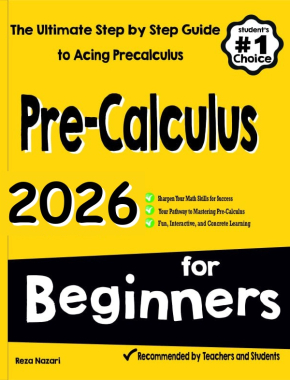
For a workbook that builds graphing intuition before calculus, the Pre-Calculus for Beginners covers functions, transformations, asymptotes, and graphing with worked examples. For the algebra foundation, the Algebra II for Beginners drills the polynomial and rational-function skills curve sketching depends on.
Frequently Asked Questions
Why use derivatives to sketch curves?
Plotting a function by hand-picking 20 points is slow and easy to mess up. Derivatives give you the underlying structure — where the function climbs, where it bends, where it has extreme values — in a few quick calculations. A good sketch from derivatives uses about 6-10 key points and captures the full shape.
What’s a critical point?
A critical point of \(f(x)\) is an \(x\) value where \(f'(x) = 0\) or \(f'(x)\) is undefined. These are the candidates for local maxima, local minima, or saddle-like behavior. Not every critical point is an extremum — that’s why the first- or second-derivative test is needed to classify each one.
What does it mean for f’ > 0?
If \(f'(x) > 0\) on an interval, \(f\) is increasing on that interval — the graph goes up from left to right. If \(f'(x) < 0\), \(f\) is decreasing — the graph goes down. \(f'(x) = 0\) means a horizontal tangent — a critical point.
What does it mean for f” > 0?
If \(f”(x) > 0\) on an interval, the curve is concave up (cup-shaped) on that interval. If \(f”(x) < 0\), the curve is concave down (cap-shaped). Changes in the sign of \(f''\) mark inflection points — where the curve switches from cup to cap or vice versa.
How do I find asymptotes?
Vertical asymptote: a value of \(x\) where the denominator is zero and the numerator isn’t. Horizontal asymptote: \(\lim_{x\to\pm\infty} f(x) = L\) gives a horizontal asymptote \(y = L\). Slant asymptote: divide numerator by denominator using polynomial long division and read off the quotient (ignoring the remainder).
How many points should I plot?
Usually 6-10. Always include: y-intercept, x-intercepts, critical points, inflection points, and one or two points just inside each asymptote so the curve’s approach is clear. More points are fine but rarely add to the picture once the structural points are placed.
How do I find inflection points?
Solve \(f”(x) = 0\) for candidates. Then check that \(f”\) actually changes sign at each candidate by testing one value on each side. A point where \(f”(x) = 0\) without a sign change (like \(f(x) = x^4\) at \(x = 0\)) is not an inflection point.
What if the function has no critical points?
Then it’s monotonic — always increasing or always decreasing. \(f(x) = e^x\) has derivative \(e^x\), which is always positive, so the function is increasing everywhere with no local max or min. Sketch the asymptotic behavior and intercepts; the curve is monotone between them.
How do I handle a piecewise function?
Sketch each piece separately on its piece’s domain, then check the boundary values for continuity and corners. Critical points can include the boundary \(x\) values where the formula switches — be sure to test those.
Where does curve sketching show up on tests?
AP Calculus AB and BC, college calc finals, engineering placement exams. Full curve-sketching FRQs appear regularly on the AP exam — they usually ask you to compute the first and second derivatives, identify critical points, determine concavity, and explain everything in writing.
Related EffortlessMath Lessons
If a topic on this page feels rusty, these short lessons go deeper:

Related to This Article
More math articles
- Preparing For SAT Math? DON’T Make These Big Mistakes!
- How to Interpret Categorical Data
- How to Evaluate Logarithm? (+FREE Worksheet!)
- FREE 6th Grade STAAR Math Practice Test
- How to Multiply and Divide in Scientific Notation? (+FREE Worksheet!)
- Unit Conversion Practice — Length, Mass, Volume & Time (Free)
- Full-Length 8th Grade MCAS Math Practice Test-Answers and Explanations
- The Best Grade 5 ELA Practice Tests for Rhode Island Students
- The Best Grade 3 Math Book for North Carolina Students
- Medical Word Parts and Procedure Families









What people say about "Everything You Need to Know About Sketching Curves Using Derivatives - Effortless Math"?
No one replied yet.