Grade 3 Math: Comparing Fractions
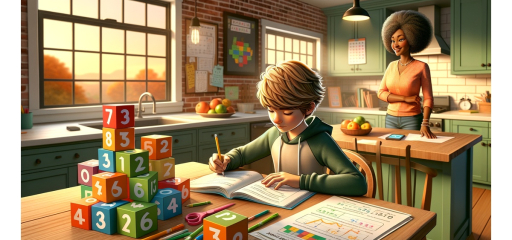
Once upon a time in the quirky town of Mathville, there were two best friends, Lily the Ladybug and Sam the Snail, who loved to bake delicious treats together. One sunny afternoon, they decided to make a giant fruit pie using fractions of their favorite fruits. Lily suggested cutting the pie into fractions so they could each have a fair share. However, they soon realized they had different ideas about what a fair share meant.
Understanding the Concept
Fractions are like puzzle pieces that show parts of a whole. To compare fractions, you need to understand how big each piece or fraction is compared to others. Lily, being the curious ladybug she was, decided to create a chart to help her visualize and compare the fractions of fruits they planned to use in their pie.
Lily’s Fraction Chart for the Fruit Pie:
| Fruit | Fraction |
|---|---|
| Apples | \(\frac{1}{4}\) |
| Oranges | \(\frac{1}{3}\) |
| Berries | \(\frac{1}{2}\) |
After creating the fraction chart, Lily decided to plot the fractions on a pie chart to get a better visual understanding of how different fractions compare to each other.
The Absolute Best Book to Ace Grade 3 Math
Lily’s Pie Chart for Fruit Fractions:
Looking at the pie chart, Lily and Sam could clearly see how the fractions compared. The berries fraction was the largest, followed by oranges, and then apples. Lily explained to Sam, “When the fractions have the same denominator, we can compare them by looking at their numerators. The larger the numerator, the larger the fraction.”
Key Concepts Explained
Lily decided to bake a mini fruit pie to demonstrate how to compare fractions practically. She \divided the pie into equal parts to represent different fractions of their favorite fruits. Here is how she did it:
Mini Fruit Pie Fractions:
Lily cut the mini pie into four equal slices, each representing \(\frac{1}{4}\) of the pie. She then \divided another pie into three equal parts, each representing \(\frac{1}{3}\) of the pie. Finally, she \divided a third pie into two equal parts, each representing \(\frac{1}{2}\) of the pie.
Lily arranged the slices side by side and asked Sam, “Which fraction represents the largest part of the pie?” Sam hesitated for a moment but then realized that \(\frac{1}{2}\) was the largest fraction as it covered half of the pie, followed by \(\frac{1}{3}\) and then \(\frac{1}{4}\).
The Most Comprehensive Grade 3 Math Workbook
Lily also emphasized that when fractions have different denominators, it’s essential to find a common denominator before comparing them. She showed Sam how to find a common denominator by looking at multiples of the denominators.
Common Mistakes to Avoid
One common mistake when comparing fractions is forgetting to check if the fractions have the same denominator. If the denominators are different, comparing fractions directly can lead to incorrect conclusions.
Another mistake is comparing fractions based solely on numerators without considering the denominators. The size of the pieces or parts must be viewed in context with the total number of parts to get an accurate comparison.
Summary and Key Takeaways
Understanding fractions and comparing them is like solving a delicious puzzle. By using visual representations like charts, diagrams, and practical examples, you can explore the world of fractions with ease. Remember, fractions help us \divide and share things fairly, just like Lily and Sam did with their fruit pie.
💡 Teaching Tip: Same denominator? Compare numerators!
Additional Practice Resources

Related to This Article
More math articles
- Decimals in Action: How to Master Multiplication and Division
- Substitution Rule of Integrals: Integral Problems Made Simple
- Unlock the Answers: “ASVAB Math for Beginners” Complete Solution Reference
- 4th Grade AZMerit Math Worksheets: FREE & Printable
- Rounding Numbers for 5th Grade: Nearest Ten, Hundred, and Thousand
- 3rd Grade MCAS Math FREE Sample Practice Questions
- Full-Length 6th Grade MCAS Math Practice Test-Answers and Explanations
- 10 Most Common 6th Grade MEAP Math Questions
- Area Models Unveiled: How to Complete Decimal Division Equations
- 4th Grade Wisconsin Forward Math Worksheets: FREE & Printable










What people say about "Grade 3 Math: Comparing Fractions - Effortless Math: We Help Students Learn to LOVE Mathematics"?
No one replied yet.