How Casino Math Works – Understanding Odds, RTP, and House Edge
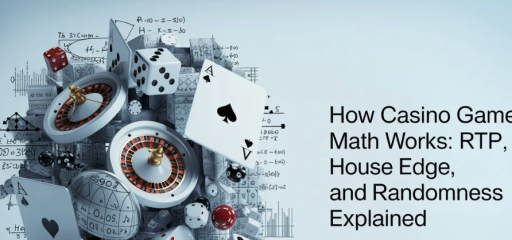
Casino math explains how casinos design their games using probability and statistics. Every casino game uses mathematical rules that determine the chances of winning or losing. These calculations give casinos a small advantage called the house edge, which helps them make a profit over time. In this guide, you will learn how casino math works, why casinos usually win in the long run, and how concepts like probability, RTP, and house edge affect casino games.
What Is Casino Math?
Casino math refers to the mathematical rules that determine how casino games work. It uses probability and statistics to calculate the chances of winning or losing in each game. Casinos design their games using this math so that the results remain fair while still giving the house a small long-term advantage. Concepts like casino probability help determine payouts, odds, and game outcomes. Many players also look for bonuses or a promo code for 1xBet to increase their starting balance, but the mathematical structure of the game still controls the overall odds.
The Concept of House Edge
The house edge is the small mathematical advantage that a casino has in every game. In simple terms, it is the percentage of each bet that the casino expects to keep over time. This house edge explained shows why casinos usually make a profit in the long run, even if players win some rounds. For example, games like roulette, slots, and blackjack all include a built-in casino advantage that favors the house. Because players make many bets over time, this small edge helps the casino stay profitable.
Understanding RTP (Return to Player)
RTP, or Return to Player, shows the percentage of total bets that a casino game returns to players over time. In simple terms, the RTP casino meaning tells you how much money the game is expected to pay back in the long run. For example, if a slot machine has a 96% RTP, it returns about $96 for every $100 wagered over many spins. This does not guarantee wins in a short session, but it helps players understand the expected payout level. The idea of slot RTP explained also applies to other casino games, including some table games that use similar long-term probability calculations.
Probability in Casino Games

Probability plays a big role in casino games because it determines the chances of different outcomes. Every game uses mathematical probabilities to decide how often players win or lose. Many casino games rely on random events and chance, which means players cannot predict the exact result of each round. For example, roulette uses probability based on the number of slots on the wheel, blackjack uses card probabilities from the deck, and slot machines generate random results for each spin. These probabilities help casinos design games that remain fair while maintaining their long-term advantage.
Random Number Generators (RNG)
Online casinos use Random Number Generators (RNG) to create random results in their games. An RNG is a computer system that constantly generates numbers, and these numbers determine the outcome of each spin, card, or game round. This system ensures that every result is unpredictable and independent from previous results. The RNG casino explained concept helps players understand how games stay random and fair. To maintain online casino fairness, licensed casinos test and certify their RNG systems through independent agencies that check if the games work correctly and produce unbiased outcomes.
Volatility and Variance in Casino Games
Volatility, also called variance, describes how often a casino game pays out and how big the wins can be. Low volatility games give smaller wins more frequently, which makes the gameplay steady and predictable. High volatility games pay out less often but offer larger rewards when a win happens. This difference affects the player experience because low variance games may keep players playing longer, while high variance games can create bigger excitement but also longer losing streaks. Understanding volatility helps players choose games that match their risk level and playing style.
Examples of Casino Math in Popular Games
Casino math appears in many popular games. In slot machines, the system uses probability and RNG to decide each spin and determine payouts. In roulette, the odds depend on the number of pockets on the wheel, which gives the casino a small advantage. Blackjack uses card probabilities, and skilled players sometimes use strategy to reduce the house edge. In poker, players compete against each other and use probability to make decisions during the game. These casino odds explained examples show how gambling probability examples shape the outcomes and rules of different casino games.
Can Players Beat Casino Math?
Casino math gives the house a built-in advantage, so players usually cannot beat it in the long run. Some strategies can help players manage their bets and reduce losses, but they cannot remove the house edge. In skill-based games like blackjack or poker, players can improve their chances by using good strategy and decision-making. However, luck-based games like slots or roulette depend mostly on chance. Because of this, players should keep realistic expectations and treat casino games mainly as entertainment.
Why Understanding Casino Math Matters
Understanding casino math helps players make better decisions while playing. When players know about concepts like probability, RTP, and house edge, they can choose games more wisely. This knowledge also helps with managing a bankroll, because players can set limits and control how much they spend. Most importantly, understanding casino math encourages responsible gaming by helping players recognize that casino games are designed for entertainment, not guaranteed profit.
Conclusion
Casino math explains how probability, RTP, and the house edge control the outcomes of casino games. These mathematical rules help casinos maintain a small advantage over time. When players understand how these systems work, they can make better decisions and set realistic expectations. Learning about odds also helps players manage their money more carefully. For this reason, players should always understand the game rules and probabilities before they start playing and practice responsible gambling.
FAQs
Do casinos always win?
Casinos usually win in the long run because every game includes a house edge. This small advantage allows the casino to make a profit over many bets. However, individual players can still win during short sessions.
What game has the lowest house edge?
Some games have a lower house edge than others. Blackjack and certain poker games often offer some of the lowest house edges when players use good strategy.
Is casino math predictable?
Casino math explains the probabilities and odds behind games, but it does not make individual results predictable. Each round is independent, so outcomes still depend on chance.

Related to This Article
More math articles
- Top Free Websites for FTCE General Knowledge Math Preparation
- A Comprehensive Collection of Free CLEP College Mathematics Practice Tests
- Counting the Change: How to Master the Subtraction of Money Amounts
- How to Use Place Value Blocks to Compare Decimals
- How to Find Domain and Range of Relations
- How to Compare and Order Rational Numbers?
- 5th Grade OST Math Practice Test Questions
- The Ultimate Algebra 2 Course
- Best Laptops for High School Students: 6 Things to Consider
- Why Privacy Needs Math: A Student’s Guide to Staying Safe Online












What people say about "How Casino Math Works – Understanding Odds, RTP, and House Edge - Effortless Math: We Help Students Learn to LOVE Mathematics"?
No one replied yet.