Place Values Relationship

| Hundred-Thousands | Ten-Thousands | Thousands | Hundreds | Tens | Ones |
| 100,000 | 10,000 | 1000 | 100 | 10 | 1 |
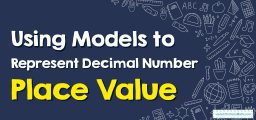
A step-by-step guide to finding place value relationships
Here is a step-by-step guide to finding place value relationships:
- Identify the digits in the number: To find the place value relationships in a number, you must first identify each digit in the number.
- Write down the value of each digit: Write down the value of each digit in the number based on its position. For example, in the number 135, the digit 5 has a value of 5 ones, the digit 3 has a value of 3 tens or thirty, and the digit 1 has a value of 1 hundred.
- Determine the place value of each digit: Determine the place value of each digit by looking at its position in the number. For example, in the number 135, the digit 5 is in the ones place, the digit 3 is in the tens place, and the digit 1 is in the hundreds place.
- Understand the relationship between adjacent place values: To find the relationship between adjacent place values, you can divide the value of the digit in the larger place by the value of the digit in the smaller place. For example, to find the relationship between the tens and ones place values in the number 135, you would divide the value of the digit in the tens place (3 tens) by the value of the digit in the ones place (5 ones). This gives you a result of 6, which means that the number 30 is 6 times the number 5.
A Perfect Book for Grade 4 Math Word Problems!
By understanding the relationships between adjacent place values, you can better comprehend the structure of the number and perform arithmetic operations more efficiently. This can be helpful in a variety of contexts, such as in math class or in everyday life.
Example 1:
What digit is in the hundreds place in the number 1528?
| Thousands | Hundreds | Tens | Ones |
| 1 | 5 | 2 | 8 |
Solution: Use a place-value chart to find out its place value.
Therefore, digit 5 is in the hundreds place, so its value is 500.
The Best Math Books for Elementary Students
The 10 Times Rule, With Examples
| Place | Value | Compared with the place to its right |
|---|---|---|
| Thousands | 1,000 | 10 times hundreds |
| Hundreds | 100 | 10 times tens |
| Tens | 10 | 10 times ones |
| Ones | 1 | 10 times tenths |
| Tenths | 0.1 | 10 times hundredths |
| Hundredths | 0.01 | (next is thousandths) |
Example 1: One place apart
Compare the 7 in 3,725 with the 7 in 4,572. In 3,725 the 7 is in the hundreds place, so it is worth 700. In 4,572 it is in the tens place, worth 70. Since 700 = 10 × 70, the first 7 is worth 10 times the second.
Example 2: Two places apart
Compare the 6 in 6,210 with the 6 in 3,068. The first is worth 6,000 and the second is worth 60. The digits are two places apart, so the first is 10 × 10 = 100 times the second.
Example 3: Decimals
In 0.5 the 5 is worth five tenths. In 0.05 it is worth five hundredths. Five tenths is 10 times five hundredths, so the rule keeps working to the right of the decimal point.
Where Students Trip Up with the 10 Times Rule
- Mixing up hundreds and hundredths. Hundreds (100) are left of the decimal point; hundredths (0.01) are two places to the right of it.
- Confusing a digit with its value. In 352 the digit is 5, but its value is 50.
- Forgetting zeros. In 3,068 the 0 holds the hundreds place. Without it, the 6 would move into the hundreds place.
- Comparing different digits. Place value relationships compare places, or the same digit in different places. Saying 30 is 6 times 5 is true, but it says nothing about place value.
A quick self-check: when a digit moves one place left, its value should end in one more zero. If it does not, recount the places.
Frequently Asked Questions
What are place value relationships?
Place value relationships describe how the value of each place compares with its neighbors. In our base-ten system, each place is worth 10 times the place to its right and one tenth of the place to its left. So the hundreds place is 10 times the tens place, and the tens place is one tenth of the hundreds.
How are place values related to each other?
Each place is ten times the value of the place to its right. Moving a digit one place left multiplies its value by 10, and moving it one place right divides by 10. In 7,770, the 7 in the hundreds place is worth 700, which is 10 times the 70 in the tens place.
What is adjacent place value?
Adjacent place values are places that sit right next to each other, like tens and hundreds. Any two adjacent places differ by a factor of 10. To compare them, divide the larger place value by the smaller: 1,000 ÷ 100 = 10. Places two apart differ by 100, and three apart by 1,000.
What are place value relationships in 4th grade?
In 4th grade, students learn that a digit in one place is worth ten times what it would be worth in the place to its right, for whole numbers up to a million. For example, the 3 in 300 is 10 times the 3 in 30. In 5th grade, this idea extends to decimals, such as 0.3 being 10 times 0.03.
Is place value and value the same thing?
No. Place value is the worth of a position, such as ones, tens or hundreds. The value of a digit is the digit times its place value. In 582, the 8 sits in the tens place (place value 10), so its value is 8 × 10 = 80.

Related to This Article
More math articles
- AFOQT Math Formulas
- Health, Illness, and Medicine
- Finding Derivatives Made Easy! Derivative of A Chain of Functions
- Free Grade 2 English Worksheets for South Dakota Kids
- What Kind of Math Is on the HiSET Test?
- Understanding the Integral Test for Series Convergence
- The Best Grade 5 Math Book for Minnesota Students
- Money and Decimals Relation: A Step-by-Step Guide
- Reading Clocks
- FREE 4th Grade MAP Math Practice Test







What people say about "Place Value Relationships: The 10 Times Rule Explained"?
No one replied yet.