GRE General Test · Quant, Verbal & Writing
GRE Practice Test: Free GRE General Test Prep, Flashcards & Vocabulary
Prepare for GRE General Test with the independent study resources available here. Learn the official assessment context, choose a subject route, and use practice feedback to plan your next study step.

GRE General Test Practice Tests
Use the existing practice view for study feedback, not an official GRE score.
GRE General Test Flashcards
Recall a concept and explain it in context.
GRE General Test Study Guides
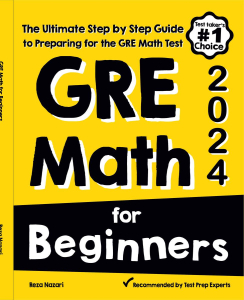
GRE Math for Beginners 2026: The Ultimate Step by Step Guide to Preparing for the GRE Math Test
The catalog lists a 2026 GRE Math guide. It supports Quantitative Reasoning preparation; it does not replace Verbal Reasoning or Analytical Writing study.
View book & purchase options → $17.99 · PDF
GRE General Test Quick Review
Choose one skill to refresh before another activity.
MEET THE ASSESSMENT · CHOOSE YOUR NEXT SKILL
Know GRE General Test before you start.
ETS lists one 30-minute Analyze an Issue writing task, two Verbal Reasoning sections totaling 27 questions in 41 minutes, and two Quantitative Reasoning sections totaling 27 questions in 47 minutes. Independent fixed practice provides study feedback rather than official section-adaptive routing or GRE scores. Prepare writing and verbal reasoning as well as Math.
Verbal reasoning
Use passage evidence and sentence logic rather than vocabulary recognition alone.
Quantitative reasoning
Compare quantities carefully and check whether the information is sufficient.
Analytical writing
Develop a position with reasons and examples; a selected-response quiz cannot assess your essay.
Official test readiness
Use ETS guidance and practice tools to understand current sections and timing.
Full-Length GRE General Test · Practice Form 01
Take one complete timed 1-hour-58-minute practice form: one Issue essay and both timed sections of Verbal and Quantitative Reasoning. It includes 54 original objective questions, raw section results, and answer explanations.
Take the interactive practice test
Five timed sections, question navigation, raw results, answer explanations, and an Issue essay workspace.
Review after you finish
Use the answer explanations and error log to turn missed questions into a focused plan.
Practice one measure at a time
The measure files are sections of this same form, not separate independent test forms.
Free interactive practice
GRE Study Lab: Flashcards, Question of the Day and Study Plan
Short, active practice for the GRE General Test: flip Quant flashcards for number properties, algebra, geometry and data analysis, learn Verbal question strategies, quiz yourself on 1,200 vocabulary words in context, answer a new question every day and build a week-by-week plan for your test date.
GRE Quantitative Reasoning flashcards
Number properties, algebra, geometry and data analysis facts, Quantitative Comparison strategy and quick “solve it” problems. Mark each card “Got it” or “Review again”; cards you miss collect in your review list.
Keys: Space flip · ← → move · 1 review again · 2 got it
See all 39 cards as a list
GRE Verbal Reasoning strategy cards
How to approach Text Completion, Sentence Equivalence, Reading Comprehension and the Analytical Writing task.
Keys: Space flip · ← → move · 1 review again · 2 got it
See all 11 cards as a list
GRE vocabulary in context
1,200 words, each in a context sentence. Study with flashcards, then test yourself with a four-choice quiz; words you miss come back more often.
Keys: Space flip · ← → move · 1 review again · 2 got it
GRE question of the day
A new original practice question every day. Answer it to keep your streak going.
Data Analysis
Show the answer
Answer: D. 1 − P(no heads) = 1 − 1/8 = 7/8.
GRE study plan by test date
Pick your test date and how much time you have each day. You get a week-by-week plan that starts with a practice test, rotates through the main topics and ends with a light final review.
The GRE General Test is offered year-round at test centers and at home. Book your date in your ETS account.
Jump into GRE review
Review a skill. Recall a strategy. Practice it.
Use the Quick Review and flashcards, then answer focused questions in the measure practice.
Three measures · complete topic map · timed practice
Prepare with a clear view of the GRE
This study center organizes original practice, topic review, and study tools into a repeatable routine. Section details follow ETS public materials.
Questions and review materials created for independent preparation.
Timed sections, question families, and topic maps reflect published GRE descriptions.
Answer rationales help you see the reasoning behind a correct response.
Start With a Full Practice Test
Begin with practice, mark missed or guessed questions, then return to the matching topics and review tools.
Use timed conditions
Complete all five timed sections in order and follow the on-screen section clock.
Mark uncertain answers
Record both incorrect and guessed responses so review catches shaky reasoning.
Read every explanation
Identify the decisive clue, rule, or reasoning step behind the correct answer.
Choose one skill to revisit
Use the topic map and error log to select your next focused practice.
GRE General Test Snapshot
The real test is computer-delivered and section-level adaptive. The second section of Verbal and Quantitative Reasoning depends on performance in the first section. This practice tool follows one fixed route.
GRE Test Outline
The GRE General Test has one writing task and two timed sections each in Verbal and Quantitative Reasoning. The real test adapts between sections within each reasoning measure.
Analytical Writing
30 minutes · 1 Analyze an Issue task. Develop a defensible position with reasons, evidence, and relevant examples.
- Read the task instruction
- Organize one focused argument
- Review clarity and development
Verbal Reasoning
27 questions in two sections: 12 questions / 18 minutes, then 15 questions / 23 minutes.
- Reading Comprehension
- Text Completion
- Sentence Equivalence
Quantitative Reasoning
27 questions in two sections: 12 questions / 21 minutes, then 15 questions / 26 minutes.
- Arithmetic and algebra
- Geometry and data analysis
- On-screen calculator on the real test
GRE Quick Review and Topic Checklist
Review the test structure, full topic map, response formats, pacing reminders, and post-test checklist. Open the on-page review for quick lookup or download the TeX source.
- Verbal: use passage evidence and sentence logic
- Quantitative: identify the response type before solving
- Writing: answer the exact Issue prompt and support a clear position
Check time, section order, question types, and the practice form’s fixed-route limitation.
GRE Focused Practice
Work through one measure at a time. These files are extracts from Practice Form 01.
Verbal Reasoning practice
Two timed sections with Reading Comprehension, Text Completion, Sentence Equivalence, and worked explanations.
Quantitative Reasoning practice
Two timed sections with all four response formats, an on-screen-calculator note, and worked explanations.
Analyze an Issue practice
One Issue-pool prompt with a timed writing workspace and self-review guidance.
GRE Topics: Learn, Practice, and Review
Use this complete topic map to plan targeted study. ETS describes broad content areas but does not publish a fixed question quota for each topic or item subtype.
Verbal Reasoning
Read precisely, connect claims and evidence, and use context to select words or sentences.
Reading Comprehension
- Identify the main idea and purpose
- Find supporting details and accurate summaries
- Draw inferences from stated and incomplete information
- Track paragraph structure, transitions, and relationships
- Evaluate evidence, assumptions, explanations, and viewpoints
- Interpret words and claims in context
- Single-answer, select-all, and select-a-sentence responses
Text Completion
- Use sentence logic and contrast cues
- Read transitions, cause, concession, and qualification
- Predict a blank before evaluating options
- Solve one-, two-, and three-blank items using the whole sentence
Sentence Equivalence
- Identify the sentence’s central idea and logical cue
- Predict a completion that fits the context
- Select two choices that create equivalent sentence meanings
- Remember that both choices are required for credit
Quantitative Reasoning
Translate the question into a mathematical relationship, then check the answer in the format requested.
Arithmetic
- Integers, divisibility, factors, primes, remainders, and parity
- Operations, exponents, and roots
- Estimation, decimals, absolute value, and number lines
- Percentages, ratios, rates, and sequences
Algebra
- Exponent rules; factoring and simplifying expressions
- Relations, functions, and function notation
- Linear and quadratic equations and inequalities
- Systems of equations and inequalities
- Word problems modeled with equations
- Coordinate graphs, intercepts, slope, and line equations
Geometry
- Parallel and perpendicular lines; angle relationships
- Triangles, including isosceles, equilateral, and 30°–60°–90°
- Circles, quadrilaterals, and other polygons
- Congruence, similarity, and three-dimensional figures
- Area, perimeter, volume, and the Pythagorean theorem
Data Analysis
- Mean, median, mode, range, standard deviation, IQR, quartiles, and percentiles
- Tables, line, bar, circle, box, scatter, and frequency-distribution displays
- Elementary, compound, independent, and conditional probability
- Random variables, probability distributions, and normal distributions
- Counting methods, combinations, permutations, and Venn diagrams
Analytical Writing
Plan and develop one clear response to the exact Analyze an Issue task.
Analyze an Issue
- Read the task instruction and identify what it asks you to do
- Take a defensible position and qualify it when useful
- Develop reasons with specific, relevant examples
- Consider implications, exceptions, or counterarguments
- Organize a coherent discussion and revise for clarity
Common GRE Practice Gaps
When reviewing a missed or uncertain item, name the decision that led to the error. That makes the next practice attempt more useful.
Choosing a word before reading the whole sentence
For Text Completion, use contrast, cause, and qualification cues before evaluating vocabulary choices.
Relying on memory instead of passage evidence
For Reading Comprehension, return to the exact lines that support each choice.
Solving without checking the response format
For Quantitative Comparison or select-all items, test every permitted case and follow the item’s answer rule.
Writing a list instead of an argument
For the Issue task, connect each example to a reason that supports your position.
Choose Your GRE Prep Tool
GRE Quick Review
Refresh structure, response formats, topic coverage, pacing, and the post-test checklist.
1,200-word GRE Vocabulary Flashcards
Practice each word in an original sentence. Check its part of speech, precise meaning, and related or contrasting words.
GRE Error Log
Record the skill, decisive clue, error type, and next step for each missed or uncertain question.
1,200 original study cards
GRE Vocabulary Flashcards
Study words with concise definitions and contextual examples. The deck is an original learning resource; ETS does not publish an official GRE vocabulary list. Use vocabulary in context alongside passage evidence and sentence logic.
- 1,200 headwords organized for manageable review
- Retrieve the meaning before turning to the definition
- Use the example to notice tone and context
Choose the Right GRE Review Resource
Pair each practice attempt with the review that matches your goal.
GRE General Test Quick Review
Full test structure, topic maps, response formats, strategy, and review checklist.
Verbal Review + Cards
Reading, completion, and equivalence strategies with a focused card set.
Quant Review + Cards
Arithmetic, algebra, geometry, data analysis, formulas, and common traps.
Issue-task Review + Cards
Plan, develop, organize, and check one Analyze an Issue response.
4-Week GRE Study Roadmap
This is a flexible sequence. Adjust it to your schedule and spend more time on the measure your diagnostic shows needs attention.
Learn the format and find your starting point
Take Practice Form 01 under timed conditions. Review every wrong or uncertain answer and start an error log.
Build evidence and context habits
Rotate Reading Comprehension, Text Completion, and Sentence Equivalence. Explain why the answer fits.
Strengthen setup before calculation
Practice arithmetic, algebra, geometry, and data analysis. Track assumptions, units, and response formats.
Refresh writing and practice stamina
Review the Issue task, revisit difficult cards, and repeat timed practice on your remaining gaps.
GRE General Test FAQ
How long is the current GRE General Test?
The five scored sections total about 1 hour 58 minutes: one 30-minute Analyze an Issue task, two Verbal sections, and two Quantitative sections. ETS may include an additional unscored or research section.
How many questions are in each reasoning measure?
Verbal Reasoning has 27 questions in two sections (12 in 18 minutes and 15 in 23 minutes). Quantitative Reasoning has 27 questions in two sections (12 in 21 minutes and 15 in 26 minutes).
Does the practice form adapt like the real GRE?
No. The GRE is section-level adaptive, while this printed form follows one fixed medium-to-hard route. It cannot reproduce ETS routing, the on-screen environment, or official scoring.
Is there an official ETS vocabulary list?
No. ETS does not publish an official GRE vocabulary list. The 1,200-card deck is an original study aid; use words in context and rely on passage or sentence evidence.
Can this practice test estimate my official score?
No. Use the explanations and error patterns to guide review. This form does not reproduce official item calibration or adaptive scoring.
Are these materials endorsed by ETS?
No. GRE and ETS are trademarks of Educational Testing Service. Effortless Math’s original study materials are not sponsored or endorsed by ETS.
Related Online Centers
Make this your GRE starting point
Begin with the complete practice form, then use your results to choose a measure and topic for focused review.
A USEFUL NEXT STEP
GRE General Test: study questions
What is the current GRE General Test structure?
ETS lists one 30-minute Analyze an Issue writing task, two Verbal Reasoning sections totaling 27 questions in 41 minutes, and two Quantitative Reasoning sections totaling 27 questions in 47 minutes. Independent fixed practice provides study feedback rather than official section-adaptive routing or GRE scores. Prepare writing and verbal reasoning as well as Math.
Official source ↗How should I use these independent GRE General Test study tools?
Start with a practice activity, review explanations for missed questions, and use quick review or flashcards for one weak topic. The practice results are study feedback, not official exam scores. Compare a book’s contents with your course or test requirements before buying.
Resources from Effortless Math · Editorial standards